Quantcast
Channel: Armenia Archives - Aniarc
Viewing all 129 articles
Browse latest View live

Հրաժեշտ Կարսին [արեւմտահայերէն, մեսրոպեան ուղղագրութիւն]

$
0
0

ԹԱԹՈՒԼ ՅԱԿՈԲԵԱՆԻ ՀԱՅԵԱՑՔ ԱՐԱՐԱՏԷՆ. ՀԱՅԵՐԸ ԵՒ ԹՈՒՐՔԵՐԸ գիրքէն

Ութերորդ գլուխ

Իշխանութենէն Հ. Յ. Դ.ի հեռացումը դեռ չէր նշանակեր Հայաստանի Հանրապետութեան անկախութեան կորուստ: Երկու տարի` 1920-ի Դեկտեմբերէն մինչեւ 1922-ի Դեկտեմբերը, Խորհրդային Հայաստանը թէեւ ձեւականօրէն, բայց անկախ էր: Հայ պոլշեւիկները 1920-ի Մայիսին իշխանութիւնը դաշնակցական կառավարութենէն զէնքի ոյժով գրաւելու անյաջող փորձ ըրած էին: 1921-ի Փետրուարին անոնց դէմ ապստամբեցան իշխանութիւնը քանի մը ամիս առաջ առանց կրակոցի յանձնած դաշնակցականները:

Պատճառը պոլշեւիկներու իրականացուցած հալածանքներն ու բռնութիւններն էին զինուորականութեան, մտաւորականութեան, յատկապէս` դաշնակցական գործիչներուն նկատմամբ: Հայաստանի նախարարներէն Աբրահամ Գիւլխանդանեանի վկայութեամբ, պոլշեւիկեան կառավարութեան առաջին գործն եղաւ բանտերը նետել դաշնակցական նախարարները, խորհրդարանի կարեւոր անդամները եւ ուրիշ աչքի ինկող գործիչները, կազմալուծել հայկական բանակը:

ՙՀրաւիրելով բոլոր հայ սպաները իբր թէ ցուցակագրութեան համար` ամբողջ շէնքը շրջապատեցին կարմիր զինուորներով, բանտարկեցին աւելի քան 1500 սպաներ, որոնց մէջ` զօրավարներ Նազարբէկեանը, Սիլիկեանը եւ Հախվերտեանը: Ապա ոտքով, ձիւնին վրայ, ցուրտ ձմրան, առանց տաք հագուստի, բոլորը Ռուսաստան քշեցին: Անոնցմէ շատերը ցուրտէն մեռան: Ինքնասպանութեան դէպքեր ալ եղան: Հայութիւնն այսպէս զինաթափ ընելէ յետոյ պոլշեւիկներն սկսան կողոպտել քաղաքացիներուն ունեցուածքը` հագուստը, ուտելիքը, կահ-կարասին, դրամը: Այս բոլորէն ետք սկսան գնդակահարութիւնները: Փետրուար ամսուն, ամէն գիշեր, դահիճները բանտը կը մտնէին եւ մէկը կամ միւսը դուրս կանչելով, կը տանէին կը գնդակահարէին կամ կը կացնահարէին: Հայաստանի մեծ մասամբ կարեւոր գործիչներն եղող բանտարկեալները, գիշեր ժամանակ սարսափով կը սպասէին, թէ ահա՛ կու գան ու գնդակահարելու կը տանին: Այս բոլոր սարսափները տեսնելով` Հայաստանի ամբողջ բնակչութիւնը, առանց սեռի ու տարիքի խտրութեան, ծառացաւ պոլշեւիկ ոճրագործներուն դէմ՚:

Միւս կողմէ, քեմալականները կը կողոպտէին Շիրակի սովահար գիւղերը, եւ հիասթափութիւնն ու զզուանքը թուրք-պոլշեւիկներէն` կատարեալ էր:

ՙՀայաստանի Կոմիտէին յանձնարարութեամբ ես քանի մը տեսակցութիւն ունեցայ Յեղկոմի նախագահ Կասեանի եւ Արտակարգ Յանձնաժողովի (յայտնի է ռուսերէն անուան յապաւումով` Չեքա) վարիչ Աթարբէկեանի հետ, որոնց ամէն կերպ կ’աշխատէի համոզել վերջ տալ այս կոյր քաղաքականութեան՚,- կը գրէ Վրացեանը, որ դէմ էր յեղափոխութեան, սակայն հակառակ այդ իրողութեան, գլխաւորեց Հայրենիքի Փրկութեան Կոմիտէն:

Կարօ Սասունին կ’աւելցնէ. ՙՎրացեանը եւ քանի մը ուրիշ ընկերներ նախապէս համաձայն չէին ապստամբութեան: Փետրուարի սկիզբներուն սկսած խելագար հալածանքները եւ գաղտնի գնդակահարութիւնները զանոնք ստիպեցին կողմնակից դառնալ յեղափոխութիւն յառաջացնելուն՚:

10-լոյս 11 Փետրուար 1921-ի գիշերը 200-է աւելի դաշնակցականներ կը ձերբակալուին Երեւանի մէջ: Այս դէպքը եղաւ վերջին կաթիլը, որմէ ետք պայթեցաւ ժողովրդային զայրոյթը: Կոտայքի Զար գիւղին մէջ տեղի կ’ունենայ խորհրդակցութիւն մը, ուր կ’որոշուի յեղաշրջում իրականացնել: Ապստամբ ոյժերու պետ կը նշանակուի անկուսակցական սպայ Կուռօ Թարխանեանը, որ քանի մը ամիս առաջ Իգդիր-Մարգարա հատուածին մէջ մարտնչած էր թրքական ոյժերուն դէմ:

18 Փետրուարին ապստամբները գրաւեցին Երեւանը, Վրացեանի ղեկավարութեամբ ստեղծուեցաւ Հայրենիքի Փրկութեան Կոմիտէ, Յեղկոմը հեռացաւ Ղամարլու-Վեդիի շրջան: Վրացեանի խօսքերով` ՙ18 Փետրուարին Երեւանն այլեւս զարդարուած էր Եռագոյն դրօշներով: Յուզիչ էր ու ցնցիչ այն վայրկեանը, երբ ժողովրդային ցասման տակ խորտակուեցան պոլշեւիկեան արիւնոտ բանտի ու Չեքայի դռները եւ հազարաւոր բանտարկեալներ դուրս եկան Եռագոյն դրօշներով պճնուած փողոցը, ուր զանոնք ողջունեց ՙՄեր Հայրենիք՚ը: Աւա՜ղ, անոնց մէջ չկային Համազասպը, Բանուոր Սերգօն, հերոս գնդապետ Ղորղանեանը եւ ուրիշներ, որոնք մահացեր էին պոլշեւիկեան կացիններուն տակ՚:

ՙՃառերը շարունակուեցան, իսկ մենք կառավարութեան տունն անցանք: Նոր ներս մտած էինք, երբ իրարու ետեւէ շնորհաւորելու սկսան գալ օտար պետութեանց ներկայացուցիչները եւ քաղաքական կուսակցութեանց ու հասարակական կազմակերպութեանց պատգամաւորութիւնները: Մասնաւորապէս, բուռն ուրախութիւն կ’արտայայտէր Անգարայի ներկայացուցիչ Պահաէտտինը, որ շտապեր էր առաջինը շնորհաւորելու եւ շատ վշտացած կ’երեւէր, որ իրմէ առաջ արդէն պարսից ներկայացուցիչն ու ամերիկացիք շնորհաւորած էին՚,- կը գրէ Վրացեանը:

Գիւլխանդանեանի խօսքերով` նոր կառավարութիւնն անհրաժեշտ սեպեց հեռագրել արտասահման` Մոսկուա, Թեհրան, Անգարա եւ Թի‎ֆ‎լիս` հաղորդելով Հայաստանի մէջ յեղաշրջման մասին: ՙԱյն ժամանակ, երբ Հայաստանի մէջ խորտակուեցաւ պոլշեւիկեան լուծը, Վրաստանի սահմանագլուխներուն վրայ կռիւներ սկսած էին, եւ պոլշեւիկները կը սպառնային Թի‎ֆ‎լիսին: 21 Փետրուարին, Վրաստանի արտաքին գործոց նախարարը շնորհաւորեց յեղաշրջումը եւ առաջարկեց զինուորական դաշինք կնքել պոլշեւիկներուն դէմ: Սակայն ատիկա ուշացած առաջարկ էր, որովհետեւ ընդամէնը երեք օր ետք Թի‎ֆ‎լիսը պոլշեւիկներուն ձեռքն ինկաւ: Վրաստանի պոլշեւիկեան Յեղկոմը մտնելով Վրաստան, երբեք չդիմեց այնպիսի բռնութեանց, ինչպիսիք հայ պոլշեւիկները գործադրեցին Հայաստանի մէջ: Վրաստանի մէջ իշխանութեան փոփոխութիւնը բուն ժողովուրդին համար գրեթէ աննկատ անցաւ: Ճիշդ է, տարիներ ետք, 1924-ին, պոլշեւիկները Վրաստանի մէջ ալ բռնութեանց դիմեցին, բայց այդ ըրին, քանի որ վրացի ժողովուրդը ապստամբեցաւ պոլշեւիկեան լուծին դէմ՚:

Ղամարլուի ճակատի հրամանատար խմբապետ Սմբատն առաջիններէն էր, որ ապստամբութեան ընթացքին առաջարկեց օգնութիւն խնդրել թուրքերէն: Վրացեանի խօսքերով` ՙԱյդ հարցը կը զբաղցնէր նաեւ ուրիշներու, նոյնիսկ Քաջազնունիի նման զգաստ մարդոց միտքերը` այնքան որ ատելութիւն կար Յեղկոմի իշխանութեան ու առհասարակ պոլշեւիզմին հանդէպ՚:

18 Փետրուարէն` Քաջազնունին մասնակցեցաւ Հայրենիքի Փրկութեան Կոմիտէի բոլոր աշխատանքներուն: Քաջազնունիի անմիջական մասնակցութեամբ առնուած են քանի մը պատասխանատու քայլեր, ինչպէս բանակցութիւնները թուրքերուն հետ կամ Չիչերինին տրուած հեռագիրը, որով Ալեքսանդր Բէկզատեանը կը յայտարարուէր լիազօրութենէ զուրկ` Հայաստանի կողմէ թուրք-պոլշեւիկեան խորհրդաժողովին մասնակցելու: Այս հեռագիրն ամբողջապէս անոր գաղափարն է եւ կազմուած է անոր ձեռքով: Ան ստանձնած էր նաեւ Անգարա երթալիք յանձնաժողովի նախագահի պաշտօնը:

1921-ի Փետրուարին Քաջազնունին այսպէս կը մտածէր. ՙՊոլշեւիզմի դէմ կռուելու եւ ընդհանրապէս մեր երկրին մէջ խաղաղ կեանք վերսկսելու համար մենք մեծապէս պէտք ունինք դրացի Թուրքիոյ բարեկամութեան, նոյնիսկ աջակցութեան: Ամէն մէկ քայլ, զոր հակառակ է մեր եւ թուրքերու միջեւ բարեացակամ կապեր հաստատելուն, կրնայ ճակատագրական ըլլալ մեզի համար: Մեր իրական դրութիւնը կը պահանջէ հաշտ եւ բարեկամական կացութիւն մեր դրացի Թուրքիոյ հետ՚:

Վրացեանի խօսքերով` Հայրենիքի Փրկութեան Կոմիտէն կը ձգտէր ՙնոր հիմքերու վրայ դնել հայ-թրքական յարաբերութիւնները եւ փոխադարձ համաձայնութեամբ, թէկուզ զիջումներով, լուծել սահմանային վէճը՚, քանի որ կեանքի փորձը ցոյց կու տար, որ Հայաստանի անկախ գոյութեան համար ՙամէնէն առաջ թրքական բարեացակամութիւնն անհրաժեշտ է՚: ՙԱպստամբութենէն առաջ Երեւանի թուրք հիւպատոսը վստահեցուցեր էր, որ Թուրքիան խիստ չէզոքութիւն կը պահպանէ: Նոյնիսկ թրքական հրամանատարութիւնը Նախիջեւանի թուրքերուն հրահանգեր էր չէզոք մնալ եւ հայոց դէմ չկռուիլ: Երեւանի թուրքերը բարեկամական տրամադրութիւն ցոյց կու տային: Մենք կը վախնայինք, որ թուրքերը կրնան որեւէ պատրուակով մտնել Երեւան: Մենք կ’աշխատէինք ամէն կերպ ցոյց տալ մեր բարեկամութիւնը թուրքերուն եւ մեր նկատմամբ հաւատք ներշնչել անոնց: Նոյնիսկ դիմեցինք թուրքերուն` խնդրելով զինուորական օգնութիւն պոլշեւիկներուն դէմ: Այդ նպատակով յատուկ սպայ մը ղրկեցինք Իգդիր` թրքական հրամանատարութեան քով: Մենք գիտէինք, որ թուրքերը պիտի չօգնեն, բայց դիմումով կը կամենայինք շեշտել մեր բարեկամական վերաբերմունքը եւ մեր հանդէպ վստահութիւն ներշնչել: Պէտք է մէկանգամընդմիշտ հասկնալ, որ անկախ Հայաստանի համար Թուրքիան ճակատագրական ոյժ է՚:

Խորհրդահայ պատմաբանները ուրիշ կերպ կը ներկայացնեն: Երեւանի մէջ քեմալականներու ներկայացուցիչ Պահաէտտինին հասցէագրած նամակին մէջ Վրացեանը Թուրքիոյ Ազգային Մեծ Ժողովի կառավարութենէն կը խնդրէ. ՙԱռաջին` ռազմաճակատը գտնուող հայ գերիները վերադարձնել Երեւան, երկրորդ` հայկական բանակին համար ռազմամթերք տալ որոշակի պայմանով, երրորդ` հաղորդել, թէ Ազգային Մեծ Ժողովին կառավարութիւնը հնարաւոր կը սեպէ՞ Հայաստանին զինուորական օժանդակութիւն հասցնել, ու եթէ կրնայ` ի՞նչ չափով եւ ի՞նչ եղանակով՚:

Արտաքին գործոց ժողովրդական կոմիսար Ասքանազ Մռաւեանը Արեւելեան ճակատի հրամանատար Գարապէքիրին յղած նոթային մէջ կը գրէ. ՙԿապիտան Պահաէտտինը քանի մը անգամ ռազմաճակատ մեկնած է եւ Հայրենիքի Փրկութեան Կոմիտէի զօրքերը քաջալերած, իսկ Երեւանի մէջ ողջունած է Կոմիտէին իշխանութիւնը եւ օգնութիւն խոստացած անոնց՚:

Կարօ Սասունին կը գրէ, որ Հայրենիքի Փրկութեան Կոմիտէն ռատիոյով աշխարհին յայտնած է Հայաստանի մէջ տեղի ունեցող յեղափոխութեան մասին. ՙՄասնաւոր ռատիօ-հեռագիր մը ուղղուեցաւ Լենինին, (որուն մէջ) յոյս կը յայտնուէր, որ Ռուսաստանը կը դադրեցնէ թշնամական գործողութիւնները եւ բարեկամական ձեռք կը մեկնէ Հայաստանի աշխատաւորութեան: Հայաստանի նոր կառավարութիւնը բարեկամական յարաբերութեան մէջ մնաց Թուրքիոյ հետ: Մենք կը գիտակցէինք թրքական վտանգը եւ հնարաւոր խոհեմութիւնը կը գործադրէինք Թուրքիան հանդարտ պահելու` գոնէ ժամանակաւորապէս: Կոմիտէն իր միտքէն չէ անցուցած Հայաստան կանչել թրքական զօրքեր, բացի անոնցմէ ռազմամթերք խնդրելէն: Եթէ ստանար` շատ լաւ կ’ըլլար: Թուրքիան, առանց խառնուելու մեր ներքին խնդիրներուն, կռիւներուն ելքը կը սպասէր՚:

2 Ապրիլ 1921-ին Յեղկոմը Երեւան վերադարձաւ ռուսական բանակին օգնութեամբ, ապստամբութիւնը ճնշուեցաւ: Հայրենիքի Փրկութեան Կոմիտէն կռուող բոլոր ոյժերուն եւ գրեթէ ողջ մտաւորականութեան հետ` շուրջ 10 հազար մարդ, ոտքով, ուժասպառ եւ հիւծուած հասաւ Զանգեզուր, ուրկէ քանի մը ամիս ետք գրեթէ բոլորը Արաքսի վրայով անցան Պարսկաստանի տարածք:

Սպանդ ու աւեր. քեմալականները Ալեքսանդրապոլի մէջ

Խորհրդային Հայաստանի կառավարութիւնը քեմալականներուն հետ բնականոն յարաբերութիւններ հաստատելու համար առանցքային կը սեպէր Ալեքսանդրապոլի պայմանագիրը չեղեալ յայտարարելն ու հայ-թրքական նոր բանակցութեանց վարումը: Արտաքին գործոց ժողովրդական կոմիսար Ալեքսանդր Բէկզատեանը 10 Դեկտեմբեր 1920-ին նոթա կը յղէ քեմալականներու արտաքին գործոց կոմիսարին, Արեւելեան ճակատի հրամանատար Քեազիմ Գարապէքիրին եւ Ալեքսանդրապոլի մէջ Ռ. Խ. Ֆ. Ս. Հ.ի ներկայացուցիչին` ակնկալելով, որ անոնք չեղեալ կը նկատեն ՙԴաշնակցականներու ստորագրած (Ալեքսանդրապոլի) հաշտութիւնը՚ եւ կը հրաւիրուի նոր խորհրդաժողով մը` ՙյեղափոխական յեղաշրջման նոր պայմաններէն բխող համաձայնութեան գալու համար՚:

Նոթային մէջ կ’ըսուէր, որ ՙթրքական հրամանատարութեան գրաւած տարածքներուն մէջ կը շարունակուի Հայաստանի նկատմամբ անհաշտ թշնամական քաղաքականութիւնը՚: Բէկզատեանը կը գանգատէր, որ ՙԱլեքսանդրապոլի օքրուկին մէջ գիւղացիներուն բոլոր անասունները կը քշուին, քաղաքներուն մէջ կը բռնագրաւուին նպարեղէնի պահեստները, որոնք նախատեսուած են անտուն երախաներու եւ որբերու համար՚: Խորհրդային Հայաստանը կ’առաջարկէ ՙապագայ բանակցութեանց վայր ընտրել Երեւանը, Պաքուն կամ Ալեքսանդրապոլը՚:

Հայկական կողմի նոթային ի պատասխան քեմալական Թուրքիոյ արտաքին գործոց կոմիսար Ահմէտ Մուխթարը կոշտ թոնով կը գրէ, որ Հայաստանը ուրիշ տարածքներու նկատմամբ չի կրնար յաւակնութիւններ ունենալ, քանի որ ՙայդ տարածքները անգլիացիք էին տուած դաշնակցականներուն` անոնց ծառայութեանց դիմաց՚: Քեմալականները կը պնդէին, որ տարածքային հարցերը պէտք է լուծուին Մոսկուայի մէջ սպասուող ռուս-թրքական բանակցութեանց ընթացքին` հիմք ընդունելով Ալեքսանդրապոլի պայմանագիրը:

Աւելին, 13 Դեկտեմբեր 1920-ին Գարապէքիրը, վկայակոչելով նոյն Ալեքսանդրապոլի դաշնագիրը, Հայյեղկոմէն կը պահանջէ 85 ձի եւ ամբողջ ռազմամթերքի տեղափոխումը Իգդիր, ինչպէս նաեւ թրքական բանակին համար Երեւանի մէջ մթերքներ գնելու թոյլտուութիւն:

Հայ պոլշեւիկները կը փորձէին հաւատացնել, թէ հայոց հանդէպ թուրքերուն թշնամութիւնը դաշնակցականներու նկատմամբ թուրքերու ունեցած ատելութեան հետեւանքն է, եւ կը բաւէ Հայաստանը խորհրդային յայտարարել ու եղբայրական ձեռք մեկնել թուրքերուն, եւ ահա՛ թուրք-հայկական յարաբերութիւնները կը բարելաւուին եւ թրքական բանակն անմիջապէս կը հեռանայ Ալեքսանդրապոլէն ու Կարսէն: Այս ոգիով էր ներշնչուած Հայյեղկոմի առաջին յայտարարութիւնը. ՙՄենք համոզուած ենք, որ ոչ թէ յաղթողի սուրն է թելադրելու Խորհրդային Հայաստանի ու աշխատաւոր Թուրքիոյ միջեւ կայանալիք հաշտութեան պայմանները, այլ` Խորհրդային Հայաստանի ու աշխատաւոր Թուրքիոյ ազատ ժողովուրդներու եղբայրական համերաշխութիւնն ու համաձայնութիւնը՚:

Մինչ նման խօսքեր կը հնչէին, քեմալականներու ասպատակութիւնները կը շարունակուէին նոր թափով: Ալեքսանդրապոլի Յեղկոմի անդամ Զաւարեանի զեկուցագիրին մէջ իրավիճակը մանրամասնօրէն նկարագրուած է. ՙԳաւառը ամբողջովին ամայացած է, ողջ անասունը քշուած է, բնակչութիւնը մասամբ կոտորածի ենթարկուած է, մասամբ` փախուստի դիմած: Կը խնդրենք որբ երախաները հոսկէ փոխադրել Երեւան, որովհետեւ սնունդի ու վառելիքի լիակատար բացակայութեան պայմաններուն մէջ անոնք հոս անխուսափելի մահուան դատապարտուած են, բացի 1000 որբերէ, որոնք ամերիկեան որբանոցներուն մէջ են: Քաղաքին մէջ սովի մատնուած են շուրջ 4000 որբ երախաներ, գոնէ զանոնք ընդունեցէ՛ք՚:

Ալեքսանդրապոլի գաւառի կոմիսարի` Հայյեղկոմին ուղղուած 1 Յունուար 1921-ի զեկուցագիրին մէջ կ’ըսուէր. ՙՍարսափահար մարդիկ անտառները փախած են, գիւղերը վերջնականապէս աւերուած են, ժողովուրդը կը կործանի, հարստութիւնը կը կորչի, սովահարութեան դաժան ուրուականը կը մօտենայ՚:

Գարապէքիրի զօրքերը քանի մը ամիսներու ընթացքին մահ ու աւեր կը սփռէին Ալեքսանդրոպոլի գաւառին մէջ: Ալեքսանդրապոլի Յեղկոմի` Հայյեղկոմին ուղղուած եւ 25 Դեկտեմբերին գրուած զեկուցագիրին մէջ կ’ըսուէր, որ ՙդրութեան լիակատար տէրերը թուրքերն են, իսկ մեր իշխանութիւնը ‎‎պատրանք է՚: Կը նշուէր, որ ՙասկեարներու շրջանին մէջ քարոզչութեան գործը լայն հիմքերու վրայ դնելու ի վիճակի չենք, քանի որ մեր տրամադրութեան տակ որեւէ թուրք կոմունիստ չունինք՚, հետեւաբար` ՙկը խնդրենք Երեւանի մէջ գտնուող թուրք կոմունիստները արագօրէն գործուղել Ալեքսանդրապոլ, իսկ եթէ չկան` Պաքուէն կանչեցէ՛ք՚:

Արեւելեան Բանակի Երեւանի ներկայացուցիչ Պահաէտտինը 1 Յունուար 1921-ին Բէկզատեանին կը բողոքէ, որ նամակատուն-հեռագրատունը չէ ընդունած Գարապէքիրին ուղղուած իր ծածկագիրը: Թուրքերը իրենք զիրենք իրենց տան մէջ կը զգային: Անոնց հետ միջպետական բնականոն յարաբերութիւններ հաստատելու Հայյեղկոմի ջանքերն ապարդիւն կ’անցնին: Թուրքիոյ ներկայացուցիչին համար գործունէութեան նպաստաւոր պայմաններ կը ստեղծուէին: Բէկզատեանի հրամանով` 6 Յունուար 1921-ին կ’աւելցուի թրքական ներկայացուցչութեան շէնքին տարածքը: Հեռագրատան կը կարգադրուի Պահաէտտինի բոլոր հեռագիրներն ընդունիլ առանց արտաքին գործոց ժողովրդական կոմիսարի ստորագրութեան: Դիւանական փաստաթուղթերը կը վկայեն, որ այս միջադէպէն ետք Հայաստանի կառավարութիւնը փաստօրէն կատարած է քեմալականներուն բոլոր միջնորդութիւնները:

Խորհրդային Հայաստանի արտաքին գործոց ժողովրդական կոմիսարիատը 8 Յունուար 1921-ին նոթա կը յղէ քեմալական կառավարութեան` պահանջելով ազատել Ալեքսանդրապոլի շրջանը թրքական զօրքերէն եւ վերադարձնել ռազմագերիները, զորս թրքական զօրահրամանատարութիւնը կեդրոնացուցած էր Էրզրումի մէջ եւ անասելի ծանր վիճակի մէջ կը պահէր:

13 Յունուարին Օրճոնիկիծէին յղած հեռագիրին մէջ Չիչերինն այսպէս կը նկարագրէ Հայաստանի կացութիւնը. ՙԹուրքերը ոչ միայն աջակցութիւն ցոյց չեն տար եղբայրական խորհրդային հանրապետութեան, այլեւ շրջափակման կ’ենթարկեն զայն, կը կողոպտեն, սովի կը մատնեն՚: Նոյն օրը Հայյեղկոմի անունէն Ահմէտ Մուխթարին բողոքի նոթա կը յղէ Բէկզատեանը. ՙՓաստօրէն, Ալեքսանդրապոլի Յեղկոմը զէնք դարձուցեր էք թրքական գրաւման ջոկատի ձեռքին: Հայաստանի Յեղկոմը կը գտնէ, որ նման մարմինի յետագայ գոյութիւնը չի կրնար ճանչնալ՚:

Բէկզատեանը 19 Յունուար 1921-ին կը հեռագրէ Անգարայի կառավարութեան` ՙխոր վրդովմունք՚ յայտնելով ՙԿարսի, Ալեքսանդրապոլի գաւառներուն մէջ եւ չէզոք գօտիին մէջ՚ քեմալական զօրքերու կողմէ բնակչութեան նկատմամբ շարունակուող ՙբռնութեանց, կողոպուտի եւ սպանութեանց՚ առիթով. ՙԱլեքսանդրապոլն ամայացած է, բոլոր անասունները` քշուած: Թուրքիա ղրկուելու համար Նալպանտ կայարանին մէջ կեդրոնացած է հացահատիկներու մեծ պաշար մը, զոր խլուած է շրջակայ գիւղերէն, այսպիսով` գիւղացիները դատապարտուած են սովամահութեան: Աշխատանքի ընդունակ 18-50 տարեկան տղամարդիկը բռնի կերպով կը քշեն իրենց հայրենի տուներէն դէպի Սարիղամիշի ու Էրզրումի շրջանները` ծանր ու բռնի աշխատանքներու: Ձեր զօրքերուն կողմէ գրաւուելէ յետոյ, Կարսի մէջ առաջին երեք օրերը տեղի ունեցած են եւ զանգուածային բնոյթ ստացած են կողոպուտը, բռնութիւններն ու սպանութիւնները: Աղբուլաղի ու Համամլուի շրջաններուն մէջ ասկեարներու առանձին զինուած խումբեր հայ գիւղերը կը ներխուժեն, կը կողոպտեն ու կը սպառնան, իսկ կիները կը բռնաբարեն՚:

Այս հեռագիրին եւ 8 Յունուարի նոթային ի պատասխան քեմալականներու նորանշանակ արտաքին գործոց կոմիսար Պէքիր Սամի պէյը կը հերքէ մեղադրանքները, գրելով, թէ ՙթրքական բանակին վարքը օրինակելի է՚: Քեմալականները կը յայտնեն նաեւ, թէ ՙԱլեքսանդրապոլի պայմանագիրը կը մարմնաւորէ արդարութիւն, անոր կատարումն անհրաժեշտ է Կովկասի մէջ կայուն խաղաղութիւն հաստատելու համար՚:

19 Յունուար 1921-ին Մռաւեանը Ատրպէյճանի մէջ Խորհրդային Հայաստանի դիւանագիտական ներկայացուցիչ Միքայէլ Աթաբէկեանին եւ Գրիգորի Օրճոնիկիծէին յղած հեռագիրին մէջ կ’ընդգծէ, որ ՙթուրքերը կատարելապէս լկտիացեր են՚ ու ՙկիսաքաղց երկրին վերջին հիւթերը կը քամեն՚. ՙԵրկիրը դատապարտուած է սովամահութեան, անմեղ բանուորներ կը գնդակահարեն, քաղաքացիները Էրզրում կը ղրկեն: Երեք կին խեղդած են ջրհորի մէջ, աննկարագրելի գազանութեանց բազմաթիւ դէպքեր կան: Թուրքերը նպատակ ունին հակամարտութիւն ստեղծել, որպէսզի հայ ժողովուրդին նկատմամբ բռնութիւններն արդարացնելու ձեւական հիմք ունենան: Յեղկոմին նկատմամբ վերաբերմունքը բացայայտ եւ յոյժ թշնամական է: Անոնք մեզի կ’ըսեն, թէ կոմունիզմին չեն հաւատար, իբր թէ մենք սոսկ դիմակաւորուած, վախցած դաշնակցականներ ենք՚:

25 Յունուարի նիստին Ալեքսանդրապոլի Յեղկոմը կը հրաժարի իշխանութենէն` չցանկանալով ՙվարկաբեկել խորհրդային իշխանութեան գաղափարը՚, ինչպէս նաեւ` ՙկը հրաժարի թրքական գրաւման հրամանատարութեան ճնշման, քայքայման ու բնաջնջման քաղաքականութեան պատասխանատուութենէն՚: ՙՄենք կ’ենթադրէինք, որ Անթանթին դէմ մարտնչող Մուսթա‎‎‎‎‎‎‎‎‎‎‎‎‎‎‎‎‎‎‎‎ֆա Քեմալի բանակը մեզի ազատութիւն կը բերէ դաշնակցականներու մաուզերներէն եւ խորհրդային իշխանութիւն հաստատելէ յետոյ չի յապաղիր Հայաստանի տարածքը լքելու՚,- կ’ըսուէր Յեղկոմի նախագահ Գրիգորեանի ու եօթը անդամներու ստորագրած դիմումին մէջ, որուն մէջ կը ներկայացուին քեմալականներուն բռնարարքները. Էրզրում քշուած է 15 հազար հայ, անհետ կորած կամ սպաննուած է հինգ հազարը, գիւղերն աւերուած են, ողջ անասունը քշուած է:

Քեմալականները Խորհրդային Հայաստանի ղեկավարութեան հետ վերջնագիրներու եւ սպառնալիքներու լեզուով կը խօսէին: Երբ 12 Յունուար 1921-ին Ղարաքիլիսայի Յեղկոմը տեղի թրքական առաքելութեան անդամներուն իսկութիւնը պարզելու համար փաստաթուղթերու ստուգում կատարած էր, ատիկա զայրացուցեր էր Արեւելեան Բանակի հրամանատարը: 29 եւ 30 Յունուարին Գարապէքիրը երկու նոթա կը յղէ Հայաստանի արտաքին գործոց ժողովրդական կոմիսարին, որոնց մէջ կը փորձէ միջադէպը որպէս թշնամանք ներկայացնել:

Ի պատասխան, արտաքին գործոց ժողովրդական կոմիսարի տեղակալ Մռաւեանը 4 Փետրուարին Գարապէքիրին կը գրէ, որ Ղարաքիլիսայի Յեղկոմին գործելակերպը կը բխի միջազգային դիւանագիտութեան կանոններէն, ու կը յիշեցնէ, որ Հայաստանի ոեւէ քաղաքացի Ալեքսանդրապոլ անցած չէ առանց Երեւանի մէջ Արեւելեան Բանակի ներկայացուցիչ Պահաէտտինի անցագիրին:

Թրքական կամայականութիւնները սովորական երեւոյթ էին նաեւ Նախիջեւանի մէջ, զոր Ատրպէյճանը համաձայնած էր Խորհրդային Հայաստանի մասը նկատել: Նախիջեւանի մէջ էր թրքական 300 հոգինոց ջոկատ մը, որու գործուն մասնակցութեամբ Հայաստանի առջեւ փակուեցաւ Պարսկաստան տանող ճամբան: Թուրք զինուորները Նախիջեւանի բնակչութեան մէջ քարոզչութիւն կը տանէին շրջանը Թուրքիոյ միացնելու օգտին: Ի վերջոյ, քեմալականները յաջողեցան այնպէս ընել, որ Նախիջեւանը չմիացուի Հայաստանին:

26 Փետրուար 1921-ին սկսաւ ռուս-թրքական երկրորդ խորհրդաժողովը: Ռուսաստանը կը ներկայացնէին Կէորկիյ Չիչերինը եւ Ճէլալ էտ-Տին Կորկմասովը, քեմալական Թուրքիան` Եուսուֆ Քեմալը, Ռիզա Նուրին եւ Ալի Ֆուատը: Տարածքային հարցերը քննարկելու ատեն խորհրդաժողովի աշխատանքներուն մասնակցեցան Ռուսաստանի ազգութիւններու ժողովրդական կոմիսար Սթալինը եւ Խորհրդային Ատրպէյճանի պատուիրակութեան ղեկավար Շահթախթինսքին: Խորհրդաժողովի աշխատանքներուն մօտիկ չձգեցին միայն Խորհրդային Հայաստանի պատուիրակութեան ղեկավար Բէկզատեանը: Խորհրդաժողովն աւարտեցաւ 16 Մարտին, եւ Մոսկուայի պայմանագիրն ստորագրուեցաւ:

Չիչերինի եւ Օրճոնիկիծէի գրագրութենէն կը պարզուի, որ քեմալականները նախապէս մտադրութիւն ունեցած են Ալեքսանդրապոլի գաւառն ալ փրցնել Խորհրդային Հայաստանէն: 16 Մարտին ստորագրուած Մոսկուայի պայմանագիրէն ետք իսկ` թուրքերը Հայաստանէն չէին հեռանար:

16 Մարտ 1921-ի Մոսկուայի եւ 13 Հոկտեմբեր 1921-ի Կարսի պայմանագիրները Հայաստանի մասով աւելի վնասակար էին, քան Ալեքսանդրապոլի հայ-թրքական դաշնագիրը:

Խորհրդային Ռուսաստանի կառավարութեան յանձնարարութեամբ, 11-րդ բանակի հրամանատար Կեքքէրը 13 Ապրիլ 1921-ին Թիֆլիսէն վերջնագիր-ռատիօգիր կը ղրկէ թրքական զօրահրամանատարութեան, պահանջելով, ըստ Մոսկուայի մէջ կնքուած խորհրդա-թրքական պայմանագիրին, Ալեքսանդրապոլի շրջանը թրքական զօրամասերէն անյապաղ կերպով պարպել:

11-րդ բանակին զօրամասերը Միխայիլ Վելիքանովի հրամանատարութեամբ Ալեքսանդրապոլ կը մտնեն 22 Ապրիլին: Ապրիլի վերջերուն, ներքին գործոց ժողովրդական կոմիսար Պօղոս Մակինցեանը ՙԿոմունիստ՚ թերթին հետ զրոյցին մէջ կը ներկայացնէ Ալեքսանդրապոլ քաղաքին եւ նոյնանուն գաւառին վիճակը. ՙՔաղաքն աւերուած է: Ահա՛ առաջին տպաւորութիւնը, զոր կը ստանաս քաղաքէն` թուրքերու երթալէն յետոյ: Մեծ կոտորածներու հետքեր գտնուած են: Միայն Նալպանտ կայարանին մօտակայ ձորին մէջ, ուրկէ ես անձամբ անցայ ու տեսայ, մօտ 3000 դիակներ կան՚:

Յատուկ յանձնաժողովին թիւերը սարսափազդու էին: Մեծ Քեափանակ գիւղին մէջ սպաննուած, սուրէ քաշուած էր մօտ 1500 մարդ` տղամարդ, կին ու երախայ, դիակները փռուած էին խրճիթներուն, գոմերուն, մարագներուն եւ հորերու մէջ: Մօտ 1500 մարդ սպաննուած էր Հաճի Նազար-Ղուլի գիւղին մէջ, որոնցմէ 500-ին դիակը` մօտակայ ձորին մէջն էր: Փոքր Քեափանակի եւ Չոռլիի մէջ սպաննուածներուն թիւը, իւրաքանչիւրին մէջ, կը հասնէր հազարի, Դիրաքլարի մէջ` երեք հարիւրի, Ջաջուռի մէջ` մինչեւ հարիւր մարդու: Փրկուած եւ ականատես բնակիչները նշած են թրքական քանի մը զօրամասերու եւ Ատրպէյճանի հեծելազօրին գազանութիւնները:

Խորհրդային Ռուսաստանի արտաքին գործոց ժողովրդական կոմիսար Չիչերինը 13 Մայիսին Ռ. Խ. Ֆ. Ս. Հ-ի մէջ Թուրքիոյ դեսպան Ալի Ֆուատին յղած նոթային մէջ կը բողոքէ, որ ՙթրքական զօրքերը, Ալեքսանդրապոլը պարպելով, նիւթական մեծ վնաս պատճառած են Ռուսաստանի հանրապետութեան միաւորուած բանակներուն եւ անդրկովկասեան հանրապետութիւններուն՚: Չիչերինը ՙվճռականապէս կը բողոքէ բարեկամական երկրի ռազմական իշխանութեանց թշնամական գործողութեանց դէմ՚, որոնք կը կատարուին ճիշդ այն պահուն, երբ ՙՌուսաստանի կառավարութիւնը բարեկամական Ազգային Մեծ Ժողովի կառավարութեան ցոյց կու տայ այն ամբողջ օգնութիւնը, զոր ան տրամադրելու ի վիճակի է՚:

Մոսկուայի եւ Կարսի պայմանագիրները

Յաղթական Քեազիմ Գարապէքիր փաշան Լաթվիոյ մէջ Ռուսաստանի լիազօր ներկայացուցիչ Եաքով Կանեցքին ու Անդրկովկասեան երեք հանրապետութեանց պոլշեւիկ ներկայացուցիչները Կարսի իր նստավայրին մէջ կը սպասէր: Քաղաքը գրեթէ մէկ տարիէ ի վեր քեմալականներուն ձեռքը կը գտնուէր: 2 Դեկտեմբեր-լոյս 3-ի գիշերը Գարապէքիրին ու Խատիսեանին ստորագրած Ալեքսանդրապոլի դաշնագիրին մէջ թէեւ կ’ըսուէր, որ ՙԿարսի նահանգը եւ Սուրմալուն վիճելի կը նկատուին մինչեւ երեք տարի, որու ընթացքին հայոց կառավարութիւնը հանրաքուէ կրնայ յայտարարել` որոշելու այդ նահանգներուն վերջնական բախտը՚, սակայն ինչպէս Կարսի եւ Սուրմալուի, այնպէս ալ Նախիջեւանի ճակատագիրը կանխորոշեր էր 16 Մարտ 1921-ին Մոսկուայի մէջ կնքուած ռուս-թրքական պայմանագիրը:

Նոյն տարուայ աշնան խորհրդային ներկայացուցիչ Կանեցքին ու անդրկովկասեան երեք հանրապետութեանց պատուիրակները Կարս մեկնեցան` ստորագրելու նոր համաձայնագիր մը, զոր վերահաստատեց քանի մը ամիս առաջ Մոսկուայի մէջ կնքուած ռուս-թրքական պայմանագիրը: Ճիշդ այս շրջանին էր, որ քեմալականները կրցան ձեռք բերել սահմանային հողաշերտ մը եւ տասներկու քիլոմեթրնոց անմիջական կապ ստեղծել Նախիջեւանի հետ:

26 Սեպտեմբեր 1921-ին Կարս ժամանած պատուիրակութեան պատուին կայարանին մէջ զօրահանդէս տրուեցաւ ու պատուոյ պահակ կանգնեցուեցաւ, որմէ ետք Կանեցքին, Հայաստանի արտաքին գործոց ժողովրդական կոմիսար Ասքանազ Մռաւեանը, ներքին գործոց ժողովրդական կոմիսար Պօղոս Մակինցեանը, Ատրպէյճանի ու Վրաստանի ներկայացուցիչներ Պէհպութ Շահթախթինսքին եւ Շալվա Էլիաւան ու Ալեքսանդր Սվանիծէն այցելեցին Գարապէքիրին:

Նոյն օրը երեկոյեան կը բացուի խորհրդաժողովը Կարսի նախկին նահանգապետի բնակարանին մէջ: Տան առջեւ բացուող հրապարակը լուսաւորուած էր ջահերով, զինուորական վաշտերը պատրաստ էին ողջոյնի: Խորհրդաժողովի դահլիճ առաջինը մտեր էր թրքական պատուիրակութիւնը:

Բացման պատիւն ու առաջին ճառի իրաւունքը տրուած էր Գարապէքիրին. ՙԹուրք ժողովուրդը դրամատիրական եւ կայսերապաշտական պետութեանց պարտադրած Սեւրի պայմանագիրը չի ճանչնար: Դո՛ւք, Կովկասի ազգութիւննե՛ր, թրքական կառավարութեան եւ Խորհրդային Ռուսաստանի միջեւ Արեւելքի յարգարժան ժողովուրդներն էք: Մոսկուայի մէջ հիմքերը դրուած դաշնագիրը կրկին անգամ հաստատելը կը նշանակէ մշտատեւ եղբայրութիւն Արեւելքի մէջ՚:

Ապա բացման խօսքի իրաւունք կը տրուի Կանեցքիին, որ կը յայտարարէ, թէ Կարսի մէջ կարեւոր ու մեծ խնդիր մը պիտի լուծուի. ՙՓառապանծ թուրք եւ հայ ժողովուրդները ոչ թէ խօսքով, այլ գործով ցոյց պիտի տան, որ ընդմիշտ վերացած է անոնց փոխադարձ թշնամութիւնը: Անոնք ոչ թէ պահած սուրերով կը մօտենան իրարու, այլ` եղբայրական ջերմագին սիրով՚:

Անդրկովկասեան երեք պատուիրակութեանց կողմէ բացման ելոյթի համար ընտրուած էր Ասքանազ Մռաւեանը, որու ՙուժգին ու հաստ թոնով արտասանած ճառը խոր տպաւորութիւն ձգեց՚: Դիմելով ՙթուրք մեծապատիւ պատուիրակներ՚ուն` Մռաւեանը կը հաւաստիացնէ, որ իրենք Կարս եկած են ՙոչ-թշնամական զգացումներով՚: Յոյս յայտնելով, որ թուրք ժողովուրդը կը յաղթէ ու կը ջախջախէ իր թշնամիները, Մռաւեանը կ’ըսէ. ՙՄենք այս խորհրդաժողովին եկած ենք ոչ որպէս յաղթողներ ու յաղթուածներ: Անդրկովկասեան ժողովուրդները համոզուած են, որ ներկայ խորհրդաժողովը թուրք ժողովուրդին հետ բարեկամութեան եւ եղբայրութեան դաշինքի ամուր հիմքեր կու տայ մեզի՚:

Խորհրդաժողովի առաջին նիստի աւարտէն ետք ու երեկոյեան, Կարսի իսլամներն ու զինուորականները մեծ ցոյց մը կը կազմակերպեն Կանեցքիին իջեւանած բնակարանին առջեւ: Ռուս ներկայացուցիչի ճառէն ետք իսլամ ազգաբնակչութեան կը դիմեն նաեւ Մռաւեանն ու վրացի եւ ատրպէյճանցի ներկայացուցիչները: ՙԵրկու դրացի ազգերուն միջեւ արիւնահեղութիւն պիտի չըլլայ այլեւս: Եկած ենք բարեկամութեան հիմքեր հաստատելու ձեզի հետ՚,- կ’ըսէ Մռաւեանը: Բոլոր ճառերը կ’ընդմիջուէին ՙխանդավառ ուռռաներով՚, իսկ նուագախումբը կը հնչեցնէր ՙԻնթերնասիոնալ՚ը: Ժողովուրդը, խանդավառուած, ՙկեցցէ՜ հաշտութիւնը՚,  ՙկեցցէ~ Ռուսաստանը՚, ՙկեցցէ~ Հայաստանը՚  կը գոչէր:

Հայ ժողովուրդի պատմութեան ամենատխուր իրադարձութիւններէն Կարսի խորհրդաժողովն ահա՛ այսպիսի տօնակատարութեան վերածեր էին ՙհամաշխարհային յեղափոխութեան յաղթանակ՚ին համար մարտչնող հայ պոլշեւիկները, որոնք ամիսներ առաջ օգնած էին ռուսերուն ու քեմալականներուն` տապալելու Հայաստանի Հանրապետութիւնը: Խորհրդային Հայաստանն իր ստորագրութիւնը կը դնէր փաստաթուղթի մը տակ, որով Թուրքիոյ կը մնային նաեւ Արեւելեան Հայաստանի հողերէն Արտահանը, Կարսի մարզն ու Սուրմալուի գաւառը:

Չնայած Կարսի խորհրդաժողովին արդիւնքները կանխորոշուած էին, հայ պատուիրակները Կանեցքիի միջնորդութեամբ փորձեցին հայ-թրքական սահմանի որոշ փոփոխութիւններ կատարել յօգուտ Հայաստանի: 27 Սեպտեմբերին, խորհրդաժողովի երկրորդ նիստին, ռուս պատուիրակը կը ներկայացնէ երկու սահմանային պահանջ, որոնցմէ առաջինը Անիի աւերակներուն կը վերաբերէր: ՙԱնին հայոց համար պատմական ու գիտական մեծ արժէք ունի՚,- Գարապէքիրին կը բացատրէ Կանեցքին ու կը ներկայացնէ երկրորդ հողային պահանջը. ՙԿողբն իր աղի հանքերով համակովկասեան նշանակութիւն ունի՚:

Գարապէքիրը, սակայն, անդրդուելի էր: Ան կ’ըսէ, որ իր պատուիրակութիւնը Մոսկուայի պայմանագիրով գծուած սահմաններուն մէջ փոփոխութիւն կատարելու որեւէ իրաւասութիւն չունի եւ ատոր համար պէտք է հրահանգ ստանայ Անգարայէն: Արեւելեան ռազմաճակատին հրամանատարը կը սպառնայ դադրեցնել խորհրդաժողովը, որուն ի պատասխան Կանեցքին կ’առաջարկէ շարունակել աշխատանքները ուրիշ հարցերու շուրջ, մինչեւ Անգարայէն ստացուի համապատասխան հրահանգը:

Կարսի մարզն ու Սուրմալուի գաւառը թուրքերուն յանձնելու անարդարութիւնը ստիպած է Խորհրդային Հայաստանի կառավարութեան ներկայացուցիչներ Մռաւեանն ու Բէկզատեանը նամակներով ու հեռագիրներով Լենինին, Սթալինին եւ Չիչերինին դիմել դեռ 16 Մարտ 1921-ին Մոսկուայի մէջ ստորագրուած ռուս-թրքական պայմանագիրի նախօրեակին: Մռաւեանը Լենինին գրած է. ՙԵս կը գտնեմ, որ Անի քաղաքն իր յուշարձաններով` հայ ժողովուրդին համար ունենալով ազգային-պատմական նշանակութիւն, եւ մինչեւ Կարս շրջակայ տարածքները, որոնք այնքան կարեւոր են Ալեքսանդրապոլի երկաթուղիին պաշտպանութեան համար, պէտք է մտնեն Խորհրդային Հայաստանի կազմին մէջ՚: Պատասխան հեռագիրին մէջ Լենինը գրած է, որ ՙյեղափոխութեան եւ երիտասարդ խորհրդային պետութեան շահերը մէկ անգամ չէ, որ պահանջած են նման զոհաբերութիւններ կատարել, բայց ատիկա ժամանակաւոր է, եւ անհրաժեշտ է թուրքերուն հետ համաձայնութիւն կնքել՚:

13 Հոկտեմբեր 1921-ին կնքուած Կարսի պայմանագիրի 5-րդ կէտով` Երեւանի նահանգի Նախիջեւանի մարզը ինքնավար տարածքի կարգավիճակով դրուեցաւ Ատրպէյճանի ՙխնամակալութեան տակ՚: Թուրքիան Վրաստանին զիջեցաւ Պաթում քաղաքն ու Սեւ Ծովու աճարական հատուածը, սակայն ասոր դիմաց ստացաւ Սուրմալուի գաւառը, Կարսի մարզն ու Արտահանի եւ Արդվինի շրջանները (վերջին երեքին նկատմամբ յաւակնութիւններ ունէր նաեւ Վրաստանը): Խորհրդային Հայաստանի պետական բարձրագոյն մարմինը` Կեդրոնական Գործադիր Կոմիտէն (Կենտգործկոմ) 20 Մարտ 1922-ին կը հաստատէ 13 Հոկտեմբեր 1921-ին Թուրքիոյ հետ կնքուած Կարսի պայմանագիրը: Կարսի պայմանագիրին վաւերացուած փաստաթուղթերը փոխանակուեցան Երեւանի մէջ` 11 Սեպտեմբեր 1922-ին:

Կարսի պայմանագիրի ստորագրումէն մէկ օր ետք` 14 Հոկտեմբեր 1921-ին, Երեւան կը վերադառնան ռուսաստանեան, ատրպէյճանական եւ հայկական պատուիրակութիւնները ու կ’երթան ներկայ ըլլալու Հայաստանի Կոմկուսի մայրաքաղաքային կազմակերպութեան ընդհանուր ժողովին: ՙԺողովականները զանոնք դիմաւորեցին բուռն ծափահարութիւններով՚,- կը գրէ պոլշեւիկեան մամուլը: Հիւանդութեան պատճառով ներկայ չէր միայն Վրաստանի պատուիրակութեան ղեկավարը: Կանեցքին հայ պոլշեւիկներուն կը ներկայացնէ խորհրդաժողովին արդիւնքները, հաստատելով, որ ՙԿարսի դաշնագիրով նաեւ կը վերացուի Հայաստանի աշխատաւորներու թշնամի Խատիսեանի կնքած Ալեքսանդրապոլի պայմանագիրը՚: Կանեցքին կ’ընդունի, որ խորհրդաժողովին դրական ընթացքը կանխորոշեր էր Մոսկուայի 1921-ի Մարտի պայմանագիրը, ինչպէս նաեւ` ՙթուրք եւ անդրկովկասեան ժողովուրդներու միջեւ բարեկամական յարաբերութիւնները՚:

Մուսթաֆա Քեմալը թրքական խորհրդարանին մէջ 1 Մարտ 1922-ին ունեցած ելոյթին մէջ` գովաբանելով ռուս-թրքական յարաբերութիւնները, կը յայտարարէ, որ Մոսկուայի պայմանագիրին շարունակութիւնը Կարսի պայմանագիրն է Ռուսաստանի դաշնակիցներ Ատրպէյճանի, Վրաստանի եւ Հայաստանի հետ, որով կը հաստատուի, թէ ՙանհնար է կիրառել Սեւրի դաշնագիրը՚, եւ ՙՀայկական Հարցը Կարսի պայմանագիրին մէջ գտած է իր ամենաճիշդ լուծումը՚:

Հայ ժողովուրդին համար Կարսի խորհրդաժողովին ունեցած թերեւս միակ դրական արդիւնքը հայ գերիներու վերադարձի թոյլտուութիւնն էր: 1920-ի թուրք-հայկական պատերազմէն ետք, երբ մէկը միւսի ետեւէն կ’իյնային Կաղզուանը, Սարիղամիշը, Կարսը, Ալեքսանդրապոլն ու բազմաթիւ ուրիշ բնակավայրեր, հազարաւոր հայեր գերի ու պատանդ ինկան եւ քշուեցան դէպի Արեւմտեան Հայաստանի խորքերը, ուր արդէն հաստատուած էին Մուսթաֆա Քեմալի ոյժերը: 1921-ի Հոկտեմբերի սկիզբին շուրջ 400 հայեր ազատեցան թրքական գերութենէն ու վերադարձան Ալեքսանդրապոլ:

Հայաստանի եւ քեմալականներուն միջեւ 1920-ի Նոյեմբերին զինադադար յայտարարելէ յետոյ Երեւանի մէջ հիմնադրուեր էր Թուրքիոյ Ազգային Մեծ Ժողովի արեւելեան ռազմաճակատի հրամանատարութեան ներկայացուցչութիւնը, զոր քաղաքական ‎‎գործառոյթներով շարունակեց գործել նաեւ Հայաստանի մէջ խորհրդային կարգեր հաստատուելէ յետոյ` մինչեւ 1923-ի Հոկտեմբերը: Երեւանի մէջ թուրք-քեմալական ներկայացուցչութիւնը 11 աշխատակից ունէր:

Ալեքսանդրապոլէն 1921-ի գարնան թրքական զօրքերու հեռանալէն յետոյ քաղաքին մէջ բացուեցաւ թրքական հիւպատոսարան, որ ինը հոգիէ բաղկացած էր:

Իր կարգին, Խորհրդային Հայաստանը դիւանագիտական ներկայացուցչութիւններ ունէր քեմալականներուն մօտ: Թուրքիոյ Ազգային Մեծ Ժողովի արեւելեան ռազմաճակատի հրամանատարութեան մօտ Հայաստանի ներկայացուցչութիւնը կազմակերպուեցաւ 20 Օգոստոս 1921-ին, Կարսի մէջ. ղեկավարը Գէորգ Սարգսեանն էր: 31 Օգոստոսին Սարիղամիշի մէջ ան իր հաւատարմագիրը յանձնեց Գարապէքիրին: Կարսի մէջ Խորհրդային Հայաստանի ներկայացուցչութիւնը կը պահպանէր հայ կարմիրբանակայիններու չորս հոգինոց խումբը:

Շարունակելի

Յ. Գ. Այս գիրքը կը վաճառուի Երեւանի (Նոյյան Տապան, Բիւրոկրատ, Հայ գիրք, Մայր Աթոռի գրատուն, Արթբրիջ) եւ Պէյրութի (Անթիլիաս, Համազգային, Շիրակ) գրախանութներին մէջ

Հայացք Արարատէն. Հայերը եւ Թուրքերը, արևմտահայերենՀայեացք Արարատէն. հայերը եւ թուրքերը` պատերազմ, պաղ պատերազմ, դիւանագիտութիւն գիրքը բաղկացած է երեք մասերէ` հայ-թրքական յարաբերութիւնները 1918-1921, Խորհրդային Միութեան տարիներուն կայացած յարաբերութիւնները եւ Հայաստան-Թուրքիա յարաբերութիւնները 1988-էն այսօր: Գիրքի պատրաստութեան համար Թաթուլ Յակոբեան բազմաթիւ զրոյցներ ունեցած է պետական պաշտօնեաներու հետ, օգտագործած է բազմատեսակ աղբիւրներ, կատարած է այցելութիւններ եւ ուսումնասիրած է բազմաթիւ հրատարակութիւններ: Հեղինակը հայ-թրքական յարաբերութիւններու հարիւրամեայ պատմութիւնը ներկայացնելով պատմաբանասիրականը կը միացնէ լրագրականին եւ առարկայականը` վերլուծականին:

Փափուկ կազմ, 515 էջ,
լեզուն՝ արեւմտահայերէն,
2012, Անթիլիաս,
ISBN 978-995302343-4,
Գինը՝ 7.000 դրամ (15 $):

Կարգավորման բանակցային գործընթացը. Թաթուլ Հակոբյանի հոդվածը «Անալիտիկոն» հանդեսում

$
0
0

54a6922deca67_medium
Թաթուլ ՀԱԿՈԲՅԱՆ

Լրագրող
Երևան

Քանի դեռ Հայաստանը և Ադրբեջանը Խորհրդային Միության մաս էին կազմում, Լեռնային Ղարաբաղի հարցի կարգավորման հարցով նրանք դիմում էին Կրեմլ: 1992-ին, երբ արդեն աշխարհի քարտեզի վրա չկար Խորհրդային Միությունը, Արցախյան հարցը միջազգայնացվեց: Առաջինը ԵԱՀԿ-ն էր, որ 1992-ի մարտի 24-ին ընդունեց փաստաթուղթ, որում ասվում էր, որ կարգավորման բանակցություններին պետք է մասնակցեն Հայաստանը, Ադրբեջանը, ինչպես նաև՝ Լեռնային Ղարաբաղի “ընտրված և այլ ներկայացուցիչները”: “Ընտրված” անվան տակ նկատի էր առնվում 1991-ի դեկտեմբերի վերջերին Արցախում ընտրությունների ճանապարհով ձևավորված խորհրդարանը: “Այլ”-ը, հավանաբար, Լեռնային Ղարաբաղի ադրբեջանցիներն էին, որոնք հանդես էին գալիս ի դեմս Շուշի քաղաքի իշխանությունների: 1991-ի աշնանը խաղաղարար նախաձեռնություն էին սկսել Ռուսաստանի ու Ղազախստանի նախագահները: Սեպտեմբերի 24-ին ռուսական Ժելեզնովոդսկ քաղաքում ստորագրվեց համատեղ հուշագիր: Նոր-նոր սկսվող ռազմական առճակատումից խուսափելու այդ փորձը ձախողվեց:

1992-1994թթ. բանակցություններն ընթանում էին պատերազմական գործողություններին զուգահեռ: Եվ՛ ԵԱՀԿ-ի ու նրա հովանու ներքո գործող Մինսկի խմբի, և՛ Ռուսաստանի խաղաղարար ջանքերն այդ տարիներին առաջին հերթին ուղղված էին կրակի դադարեցմանը, ինչը հաջողվեց 1994-ի մայիսին`Մոսկվայի միջնորդությամբ: Սկզբնական շրջանում ԼՂ-ն հրաժարվում էր բանակցություններին մասնակցելուց, քանի որ նախ՝ չէր հստակեցվում նրա կարգավիճակը, երկրորդ` “ղարաբաղյան կողմ” անվան տակ միջազգային հանրությունն ու Ադրբեջանը համարում էին “ԼՂ-ի հայկական ու ադրբեջանական համայնքները”: Երևանի հորդորներից հետո Ստեփանակերտը ներգրավվեց բանակցություններում:

Մայիսյան հրադադարից հետո մինչև Լիսաբոն բանակցությունները եռակողմ էին` Հայաստան, Ադրբեջան, Լեռնային Ղարաբաղ: Ադրբեջանի պատվիրակության կազմում բանակցություններին մշտապես ներկա էր լինում նաև Շուշիի նախկին քաղաքապետը: Այդ բանակցությունների ընթացքում հիմնականում քննարկվում էին հակամարտության հետևանքների վերացման հարցերը` տարածքների վերադարձ, ապաշրջափակումներ, փախստականների վերադարձ, անվտանգության երաշխիքեր, միջազգային խաղաղապահներ: Արցախի իրավական կարգավիճակի հարցը, որ հակամարտության անկյունաքարն է, խորությամբ չէր քննարկվում:

Բանակցությունների սեղանի շուրջ վիճում էին մի կողմից Հայաստանն ու Լեռնային Ղարաբաղը, մյուս կողմից` Ադրբեջանը: Երբեմն միմյանց հետ վիճում էին միջնորդ կազմակերպություններն ու պետությունները: Հիմնական հակասությունը Ռուսաստանի և ԵԱՀԿ-ի միջև էր: Ռուսաստանը ոչ միայն Մինսկի խմբի կազմում էր մասնակցում բանակցություններին, այլ իրականացնում էր առանձին նախաձեռնություններ, ընդ որում՝ երկու ուղղություններով (արտգործնախարարության և պաշտպանության նախարարության), առաջ բերելով Արևմուտքի դժգոհությունը:

1996-ի դեկտեմբերին` ԵԱՀԿ Լիսաբոնի գագաթաժողովում, Ռուսաստանը և Արևմուտքը միասնական դիրքորոշում որդեգրեցին և պաշտպանեցին կազմակերպության գործող նախագահ, Շվեյցարիայի արտգործնախարար Ֆլավիո Կոտտի նախաձեռնությունը: ԼՂ կարգավորման հարցում ներկայացվեց երեք կետանոց մի փաստաթուղթ, որում ընդունվում էր Ադրբեջանի տարածքային ամբողջականությունն ու նրա կազմում Արցախի բարձր ինքնավարությունը:

Հայաստանի առաջին նախագահ Լևոն Տեր-Պետրոսյանը Լիսաբոնում օգտվեց վետոյի իրավունքից՝ իր ելույթում ընդգծելով. “Ղարաբաղյան հիմնախնդիրը Ադրբեջանի կողմից առաջարկված սկզբունքների հիման վրա լուծելու դեպքում Լեռնային Ղարաբաղի բնակչության վրա կախված կլինի ցեղասպանության կամ բռնի տեղահանության մշտական սպառնալիքը։ Սումգայիթի (1988թ. փետրվար), Կիրովաբադի (1988թ. նոյեմբեր) եւ Բաքվի (1990թ. հունվար) հակահայկական ջարդերի, ինչպես նաեւ Ղարաբաղի 24 հայկական գյուղերի բնակչության տեղահանության (1991թ. մայիս – հունիս) փորձը ամենայն ակներեւությամբ ցույց է տալիս, որ Ադրբեջանը, չնայած բոլոր հավաստիացումներին, չի կարող Լեռնային Ղարաբաղի բնակչության անվտանգության երաշխիքներ ապահովել։ Ուստի, մենք այն կարծիքին ենք, որ նոր ողբերգության բացառման միակ հնարավորությունը Լեռնային Ղարաբաղի ժողովրդի ինքնորոշման իրավունքի հարգումն է”։

1997թ. գարնանը Մոսկվայում տեղի ունեցավ եռակողմ` Հայաստան-Լեռնային Ղարաբաղ-Ադրբեջան ձևաչափով բանակցությունների վերջին փուլը: Հայկական կողմը լքեց բանակցությունները, քանի որ Ադրբեջանը պնդեց կարգավորման հիմք ընդունել 1996-ի Լիսաբոնյան սկզբունքները: Այսպես, 1997-ի գարնանից առ այսօր եռակողմ ձևաչափով բանակցություններ տեղի չեն ունեցել, ղարաբաղյան կողմի մասնակցությունը բանակցություններին դադարեցվել է:

1997-ի ամռանը և աշնանը Մինսկի խումբը հակամարտության երեք կողմերին պաշտոնապես, գրավոր ներկայացրեց երկու առաջարկներ, որոնցից առաջինը ընդունված է անվանել փաթեթային, երկրորդը` փուլային: Փաթեթային առաջարկը, որը մերժեց Ստեփանակերտը, հիմնված էր Լիսաբոնյան սկզբունքների վրա: Միջնորդների կազմած փաստաթուղթը ենթադրում էր, որ ԼՂ-ն Ադրբեջանի կազմում պետք է ունենա բարձր ինքնավարություն, իսկ ԼՂ-ի վերահսկողության տակ գտնվող շրջանները, բացի Լաչինից, վերադարձվեն Ադրբեջանին:

Ստեփանակերտը մերժեց նաև երկրորդ առաջարկը` փուլայինը, որը ԼՂ կարգավիճակի հարցը թողնում էր ապագային, իսկ առաջին փուլում վերացվում են պատերազմի հետևանքները: Ադրբեջանն ընդունելի համարեց այդ տարբերակը ևս: Տեր-Պետրոսյանը և նրա քաղաքական թիմի մի մասը հակված էին որպես բանակցությունների հիմք ընդունել փուլայինը, որի իրականացման դեպքում Ադրբեջանը հետ էր ստանում վեց շրջան, բացի Լաչինից:

1998-ի վերջերին Մինսկի խումբը ներկայացրեց պաշտոնական, գրավոր նոր առաջարկներ, որոնք ընդունված է անվանել “Ընդհանուր պետություն”: Այս անգամ Երևանը որոշ, Ստեփանակերտը` լուրջ վերապահումներով ընդունեցին այն որպես բանակցությունների հիմք, մինչդեռ Բաքուն մերժեց:

Ընդհանուր պետության առաջարկությունը հակամարտության հետևանքների վերացման հարցում գրեթե չէր տարբերվում նախորդ երկու փաստաթղթերից: Հիմնական տարբերությունը վերաբերում էր ԼՂ կարգավիճակին: Ներկայացված առաջարկության հենց սկզբում ասվում էր, որ “Լեռնային Ղարաբաղը հանրապետության ձևի պետական և տարածքային կազմավորում է և Ադրբեջանի հետ կազմավորում է ընդհանուր պետություն` նրա միջազգայնորեն ճանաչված սահմաններում”: Հեյդար Ալիևը հայտարարեց, որ այդ առաջարկը անընդունելի է Ադրբեջանի համար, քանի որ, փաստացի, Ադրբեջանի կազմում ստեղծվում են երկու անկախ պետություններ, և Բաքուն վերահսկողություն չի ունենում Ստեփանակերտի վրա:

1999-ի գարնանը Վաշինգտոնում սկիզբ դրվեց Քոչարյան-Ալիև երկկողմ բանակցություններին: Նախագահների մակարդակով երկկողմ ձևաչափով բանակցություններ են տեղի ունեցել նաև անցյալում. Տեր-Պետրոսյանը բազմաթիվ հանդիպումներ է ունեցել ինչպես Այազ Մութալիբովի, Աբուլֆազ Էլչիբեյի, այնպես էլ` Հեյդար Ալիևի հետ:

Քոչարյան-Ալիև բազմաթիվ հանդիպումների արդյունքում 2001-ի գարնանը ծնվեց ոչ պաշտոնական մի փաստաթուղթ, որը կրում էր “Քիվեսթյան” անունը: Ինչպես 1998-ի ընդհանուր պետությունը, Քիվեսթյանը ևս մերժեց Ադրբեջանը: Այդ փաստաթուղթը, ի տարբերություն նախորդ երեքի, չի հրապարակվել: Հայտնի է, որ այն մասամբ հիմնված էր տարածքների փոխանակման փլիսոփայության վրա: Լեռնային Ղարաբաղը Լաչինի միջանցքով միացվում էր Հայաստանին, իսկ Ադրբեջանը, որպես փոխհատուցում, ստանում էր Նախիջևանի հետ ցամաքային կապի հնարավորություն` “սուվերեն անցում” Մեղրիի շրջանով:

2004-ից սկսվեց բանակցությունների նոր փուլ, որն ընդունված է անվանել Պրահյան գործընթաց: Թվում էր, թե կողմերը 2006-ին Փարիզի մերձակա Ռամբույե ամրոցում մոտ են ընդհանուր սկզբունքների շուրջ համաձայնության հասնելուն, սակայն բանակցությունները փակուղի մտան Քարվաճառը վերադարձնելու և ԼՂ-ում հանրաքվե անցկացնելու ժամկետների համաձայնեցման անհնարինության պատճառով: Պրահյան գործընթացի հիմնական նորամուծությունը հետաձգված հանրաքվեի գաղափարն էր, որը ենթադրում էր հետևյալը. ղարաբաղյան ուժերը դուրս են գալիս հինգ շրջաններից, իսկ Քարվաճառի վերադարձը կապվում էր ԼՂ-ում սպասվելիք հանրաքվեի ժամկետների հետ: Քանի դեռ հանրաքվե չի կայացել ԼՂ-ում՝ Քարվաճառը մնալու էր հայկական ու միջազգային համատեղ հսկողության տակ: Վիճելի էր նաև Լաչինի միջանցքի կարգավիճակի հարցը:

2007-ի նոյեմբերին ԵԱՀԿ Մադրիդի նախարարական հանդիպմանը Մինսկի խմբի եռանախագահությունը ներկայացնող ավագ դիվանագետները Երևանին ու Բաքվին փոխանցեցին 14 կետանոց շրջանակային մի փաստաթուղթ, որը ևս հիմնված էր հետաձգված հանրաքվեի (պլեբեսցիտ) փիլիսոփայության վրա: Այդ փաստաթուղթը Հայաստանը և Ադրբեջանը ոչ մերժեցին, ոչ էլ ընդունեցին:

Հայաստանում 2008-ին տեղի ունեցած նախագահական ընտրություններից հետո նոր իշխանությունը որպես հիմք ընդունելի համարեց բանակցությունները շարունակել հենց Մադրիդյան սկզբունքների հենքով: Նույն տարվա նոյեմբերի 2-ին Ռուսաստանի միջնորդությամբ և նախագահ Դմիտրի Մեդվեդևի մասնակցությամբ Հայաստանի ու Ադրբեջանի նախագահները ստորագրեցին Մայենդորֆյան 5-կետանոց հռչակագիրը: Հակամարտության կարգավորման պատմության ընթացքում` սկսած 1994-ի մայիսյան հրադադարից, սա առաջին փաստաթուղթն է, որտեղ բացակայում էր հակամարտության հիմնական կողմի` Լեռնային Ղարաբաղի ստորագրությունը:

2008-ից մինչև այսօր միջնորդները Մադրիդյան փաստաթուղթը պահել են սեղանին, սակայն կողմերից մեկի, մյուսի կամ երրորդի համար անընդունելի է եղել այդ փաթեթը՝ կախված նրանից, թե “նորացված, թարմացված” տարբերակում ինչպիսի դետալ է փոխվել: Մադրիդյան փաստաթղթում սատանան հենց մանրամասների մեջ է:

Թաթուլ Հակոբյանը Բեյրութի «Ազդակ» օրաթերթի Երևանի թղթակիցն է, Սիվիլիթաս հիմնադրամի վերլուծաբան, ԵՊՀ դասախոս և Հայկական ուսումնասիրությունների ԱՆԻ կենտրոնի համակարգող: Նա հեղինակն է «Արցախյան օրագիր. Կանաչ եւ սև» և «Հայացք Արարատից. Հայերը և թուրքերը» գրքերի

Լուսանկարում՝ ձախից աջ. Լեոնարդ Պետրոսյան, Բորիս Ելցին, Նուրսուլթան Նազարբաև, 22 սեպտեմբեր, 1991թ., Ստեփանակերտ

Переговорный процесс по урегулированию конфликта. Аналитикон

$
0
0

http://theanalyticon.com/?p=7927&lang=ru

54a6922deca67_medium
Татул АКОПЯН

Журналист
Ереван

Пока Армения и Азербайджан были частью Советского Союза, по вопросу об урегулировании нагорно-карабахской проблемы они обращались в Кремль. В 1992-м, когда Советский Союз исчез с карты мира, Арцахская проблема стала международной. Первой отреагировала СБСЕ (ныне ОБСЕ), которая 24 марта 1992 года приняла резолюцию, в которой отмечается, что в переговорах по урегулированию должны принимать участие Армения, Азербайджан, а также «избранные и иные представители» Нагорного Карабаха. Под «избранными» представителями имелся в виду парламент Арцаха, сформированный в ходе выборов конца декабря 1991 года. Под «иными», видимо, подразумевались азербайджанцы Нагорного Карабаха, в лице властей города Шуши.
Осенью 1991 года с инициативой об урегулировании выступили президенты России и Казахстана. 24 сентября в российском Железноводске был подписан совместный меморандум. Но попытка избежать только-только разворачивающихся военных действий не удалась.

В 1992-1994 годах переговоры происходили параллельно боевым действиям. Миротворческие усилия и ОБСЕ вместе с действующей под ее эгидой Минской группой, и России в первую очередь, были нацелены на прекращение огня, что удалось в мае 1994 года при посредничестве России. На начальном этапе НК отказывался принимать участие в переговорах, пока, во-первых, не определен его статус, во-вторых, под «карабахской стороной» международное сообщество и Азербайджан подразумевали «армянскую и азербайджанскую общины НК». После настойчивых призывов Еревана Степанакерт подключился к переговорам.

После майского перемирия и до Лиссабонского саммита переговоры были трехсторонними – Армения, Азербайджан, Нагорный Карабах. В составе азербайджанской делегации на переговоры в обязательном порядке приезжал бывший мэр Шуши. В ходе переговоров в основном обсуждались вопросы, связанные с устранением последствий конфликта – возвращение территорий, деблокада, возвращение беженцев, гарантии безопасности, международные миротворцы. Вопрос правового статуса Арцаха, который является краеугольным в конфликте, не обсуждался в достаточной мере.

За переговорным столом с одной стороны сидели Армения и Нагорный Карабах, а с другой – Азербайджан. Порой вступали в спор друг с другом международные посредники – государства и организации. Основные противоречия возникали между Россией и ОБСЕ. Россия не только участвовала в переговорах в составе Минской группы, но и осуществляла отдельные инициативы, причем, в двух направлениях (по линии министерств иностранных дел и обороны), вызывая недовольство Запада.

В декабре 1996 года на Лиссабонском саммите ОБСЕ Россия и Запад сформировали единую позицию и поддержали инициативу действующего председателя ОБСЕ, министра иностранных дел Швейцарии Флавио Котти. Был презентован документ по карабахскому урегулированию из трех пунктов, который признает территориальную целостность Азербайджана и высокий статус автономии Арцаха в его составе.

Первый президент Армении Левон Тер-Петросян воспользовался в Лиссабоне правом вето, отметив в своем слове: «В случае урегулирования карабахского конфликта на основе предложенных Азербайджаном принципов над населением Нагорного Карабаха нависнет постоянная угроза геноцида или насильственной депортации. Армянские погромы в Сумгаите (февраль 1988 года), Кировабаде (ноябрь 1988 года) и Баку (январь 1990 года), а также насильственная депортация 24 армянских сел в Карабахе (май-июнь 1991 года) со всей очевидностью указывают на то, что Азербайджан, несмотря на все заверения, не может обеспечить гарантии безопасности населению Нагорного Карабаха. Следовательно, мы придерживаемся мнения, что единственным способом избежать новой трагедии является уважение права народа Нагорного Карабаха на самоопределение».

Весной 1997 года в Москве состоялся последний раунд трехсторонних – Армения-Нагорный Карабах-Азербайджан – переговоров. Армянская сторона покинула переговоры, поскольку Азербайджан настаивал на том, чтобы в качестве основы переговоров были приняты принципы Флавио Котти, озвученные на Лиссабонском саммите 1996 года. Так, с весны 1997 года и по сей день трехсторонних переговоров не происходит, участие карабахской стороны в переговорах прекратилось.

Летом и осенью 1997 года Минская группа официально представила трем сторонам конфликта два письменных предложения, первое из которых принято называть пакетным, а второе – поэтапным. Пакетное предложение, которое было отклонено Степанакертом, строилось на лиссабонских принципах. Документ, составленный посредниками, предполагал высокую степень автономии НК в составе Азербайджана и возврат Азербайджану находящихся под контролем НК районов, за исключением Лачина.

Степанакерт отклонил и второе предложение – поэтапное, которое откладывает вопрос статуса НК на потом, а на первом этапе устраняет последствия конфликта. Азербайджан счел приемлемым и этот вариант. Тер-Петросян и часть его команды были склонны принять в качестве основы для переговоров поэтапный вариант, при реализации которого Азербайджану могут отойти 6 районов, за исключением Лачина.

В конце 1998-го Минская группа официально представила новые письменные предложения, которые принято называть «Общим государством». На этот раз Ереван, с определенными оговорками, а Степанакерт – со серьезными приняли их как основу для переговоров, а вот Баку отклонил.

Предложения об общем государстве в плане подходов по устранению последствий конфликт почти ничем не отличались от прежних предложений. Основная разница заключалась в предлагаемом статусе НК. В самом начале представленных предложений говорится, что «Нагорный Карабах – государственное и территориальное образование в форме Республики, которое составляет общее государство с Азербайджаном». Гейдар Алиев заявил, что предложение неприемлемо для Азербайджана, поскольку, фактически, в составе Азербайджана образуются два независимых государства, и у Баку не будет контроля над Степанакертом.

Весной 1999 года в Вашингтоне было заложено начало двусторонним переговорам Кочарян-Алиев. Переговоры на уровне президентов в двустороннем формате происходили и в прошлом: Левон Тер-Петросян неоднократно встречался с Аязом Муталибовым, Абульфазом Эльчибеем и Гейдаром Алиевым.

По итогам многочисленных встреч Кочарян-Алиев весной 2001 года родился неофициальный документ, который получил название «Ки-уэстского». Азербайджан отклонил «ки-уэст» так же, как проект «общего государства» в 1998-ом. Этот документ, в отличие от прежних, никогда не публиковался. Известно, что он был выстроен на философии обмена территориями. Нагорный Карабах вместе с Лачинским коридором присоединялся к Армении, а Азербайджан в качестве компенсации получал сухопутный «суверенный коридор» к Нахиджевану через Мегри.

С 2004-го начался новый этап, который называют Пражским процессом. Казалось, что стороны, встретившиеся в замке Рамбуйе близ Парижа, близки к достижению согласия по основополагающим принципам, но переговоры вновь зашли в тупик из-за невозможности достичь согласия по вопросам о возвращении Карвачара и сроках проведения плебисцита в НК. Основной идеей Пражского процесса является «отложенный референдум», который предполагает следующее: карабахские силы выводятся из пяти районов, а возвращение Карвачара увязывается со сроками проведения плебисцита в НК. Пока плебисцит не состоится, Карвачар остается под совместным контролем армянских и международных сил. Вопрос Лачинского коридора также оставался спорным.

В ноябре 2007 года на министерской встрече в Мадриде представляющие страны-сопредседатели Минской группы ОБСЕ старшие дипломаты передали Еревану и Баку рамочный документ из 14 пунктов, который также основан на философии отложенного референдума (плебисцита). Этот документ Армения и Азербайджан не приняли и не отклонили.

После состоявшихся в Армении в 2008 году президентских выборов новые власти приняли в качестве основы для продолжения переговоров Мадридские принципы. 2 ноября того же года при посредничестве России и в присутствии в то время президента РФ Дмитрия Медведева Армения и Азербайджан подписали состоявшую из 5 пунктов Майндорфскую декларацию. В течение всей истории урегулирования конфликта, начиная с майского перемирия 1994 года, это стало первым документом, под которым отсутствует подпись основной стороны конфликта – Нагорного Карабаха.Eltsin-Nazarbaev-1991-September-21

С 2008 года и по сей день посредники держат Мадридские принципы на столе, но то для одной из сторон, то для другой, то кого-то третьего этот документ становится неприемлемым – в зависимости от того, какая деталь менялась в «обновленном» варианте. Сатана мадридских принципов в деталях.

Татул Акопян – ереванский корреспондент бейрутской газеты «Аздак», аналитик фонда «Сивилитас», преподаватель ЕрГУ и координатор Центра армянских исследований АНИ. Автор книг «Арцахский дневник: Зеленое и черное» и «Взгляд с Арарата: Армяне и турки».

Հայկական սահման` Տավուշ. Ռազմավարական նշանակությունը և աշխարհագրական դիրքը

$
0
0

              ՌԱԶՄԱՎԱՐԱԿԱՆ ՆՇԱՆԱԿՈՒԹՅՈՒՆԸ ԵՒ ԱՇԽԱՐՀԱԳՐԱԿԱՆ ԴԻՐՔԸ

Caucasus
Անդրկովկաս, Ռուսաստան և Թուրքիա

Տավուշի մարզը գտնվում է Հայաստանի հյուսիս-արևելյան հատվածում: Մարզը Վրաստանի հետ ունի մոտ 50, իսկ Ադրբեջանի հետ՝ 300 կիլոմետր ընդհանուր սահման: Տավուշի մարզով են անցնում ռազմավարական և անփոխարինելի նշանակություն ունեցող հյուսիս-կովկասյան գազատարը, անդրկովկասյան երկաթուղին և Հայաստանը Վրաստանով Ռուսաստանին կապող ցամաքային ճանապարհը՝ Նոյեմբերյան-Սադախլո-Թբիլիսի-Ստեփանծմինդա-Վերին Լարս:

գազատար
Գազատարը, որով Հայաստանը Վրաստանի տարածքով գազ է ստանում Ռուսաստանից

Այսպիսով, Տավուշի մարզը ունի անգնահատելի և անփոխարինելի նշանակություն: Մարզի, մասնավորապես սահմանամերձ գյուղերի ամրությունը առաջնահերթ է: Հետևաբար, կառավարության՝ սահմանամերձ գյուղերին սոցիալական արտոնություններ տրամադրելու և այդ համայնքներում գործարարությունը հարկերից ազատելու որոշումը ուշացած, բայց էական քայլ է:

Երևան-Բաթում գնացք
Երևան-Թբիլիսի-Բաթում մարդատար գնացքը

Հյուսիս-կովկասյան գազատարով ռուսական գազը Վրաստանի տարածքով հասնում է Տավուշի մարզ, ապա խողովակաշարային ցանցով տարածվում Հայաստանի բոլոր մարզերում և Արցախում: Այս գազատարը կառուցվել է Խորհրդային Միության փլուզման նախօրեին, երբ Բաքվի իշխանությունները որոշում կայացրին փակել Ադրբեջանից Հայաստան մտնող գազատարը: Արցախյան պատերազմի տարիներին նորակառույց գազատարը, որն անցնում է Վրաստանի գերազանցապես ադրբեջանաբնակ Քվեմո Քարթլի երկրամասով (անմիջական սամանակից է Ադրբեջանին), ավելի քան 40 անգամ պայթեցվել է: Հայկական կողմը կասկած չուներ, որ դա արվում է Ադրբեջանի հատուկ ծառայությունների ուղղակի կամ անուղղակի մասնակցությամբ: 2007-ին կառուցվեց Իրան-Հայաստան գազատարը, սակայն մինչև այսօր իրանական գազը կենցաղային նպատակներով չի օգտագործվում: Այն Հայաստանում վերածվում է էլեկտրաէներգիայի և բարձրավոլտ լարերով հետ ուղարկվում Իրան:

Բագրատաշենի մաքսակետ
Բագրատաշեն-Սադախլո հին մաքսակետը

Հայաստանից դուրս եկող միակ գործող երկաթուղին ևս անցնում է Տավուշի մարզով: Այդ երկաթուղով են իրականացվում Երևան-Թբիլիսի, ամառային շրջանում՝ Երևան-Թբիլիսի-Բաթում չվերթերը, ինչպես նաև՝ Հայաստանի ապրանքաշրջանառության հիմնական մասը: Արցախյան պատերազմի տարիներին երկաթուղին Վրաստանի ադրբեջանաբնակ Քվեմո Քարթլիի երկրամասում պայթեցվել է ավելի քան 20 անգամ:

Վերին Լարս
Ստեփանծմինդա-Վերին Լարս ճանապարհը, որով Հայաստանը կապվում է Ռուսաստանին

Քանի դեռ Թուրքիան և Ադրբեջանը շարունակում են Հայաստանը շրջափակման տակ պահելու թշնամական քաղաքականությունը, Հայաստանի համար դեպի Վրաստան և Ռուսաստան, ինչպես նաև դեպի Իրան ցամաքային ուղին կունենա կենսական նշանակություն:

529985_125011424309227_354300123_n
Մուղրուզ լեռը

Տավուշի մարզը տարածվում է Փոքր Կովկասի լեռնաշղթաների արտաքին շարի՝ Վիրահայոց, Գուգարաց և Միափորի լեռների վրա: Ծովի մակարդակից ամենաբարձր կետը Մուրղուզ լեռն է՝ 2993 մետր: Հայաստանում ծովի մակարդակից ամենացածր կետը Տավուշի մարզում է՝ Դեբեդի հովտում՝ հայ-վրացական սահմանին՝ 379 մետր:

Աղստև
Աղստև գետը

Տավուշի մարզով հոսող գետերը պատկանում են Կասպից ծովի՝ Քուռ գետի ավազանին: Մեծ և փոքր գետերից են Դեբեդը, Աղստևը, Խնձորուտը, Ոսկեպարը, Տավուշը, Հախումը, Քարահանը, Բաղանիսը, Կողբը: Բոլոր գետերը հոսում են անմիջապես դեպի Ադրբեջան, բացի Դեբեդից, որը նախ մտնում է Վրաստան, ապա այնտեղից՝ Ադրբեջան:

Debed river before entering Alaverdi city, December, 2009 (by Aghavni Harutyunyan)_thumb
Դեբեդ գետը

Ոռոգման նպատակով Խորհրդային Միության տարիներին մարզում կառուցվել են մի քանի ջրամբարներ՝ Ջողազը, Տավուշը, Խնձորուտը, Չինարին, Հախումը, Այգեձորը: Ջրամբարներից ամենամեծը Ջողազն է, որը հենց հայ-ադրբեջանական սահմանին է: Արդեն 25 տարի ջրամբարը ոռոգման նպատակով չի օգտագործվում: Ձկնորսությունը ևս վտանգավոր է, քանի որ կրակում են:

600x399xberkaber-village.jpg.pagespeed.ic.jmCCOq9IZJ
Ջողազի ջրամբարը՝ Բերքաբերից

Ջողազի ջրամբարը շահագործման է հանձնվել 1980-ականների սկզբին: Այն կառուցվել էր Խորհրդային Հայաստանի Նոյեմբերյանի և Իջևանի, ինչպես նաև՝ Խորհրդային Ադրբեջանի Ղազախի շրջանի հողերը ոռոգելու նպատակով: Հայ-ադրբեջանական դիմակայության հենց սկզբում ադրբեջանցիները թալանեցին պոմպակայանն ու խողովակները:

parz-lich-dilijan
Պարզ լիճը

Տավուշի մարզում կա բնական մեկ լիճ՝ Պարզ լիճը: Մարզի ավելի քան 50 տոկոսը անտառապատ է, ինչը Տավուշին տալիս է անկրկնելի գեղեցկություն տարվա բոլոր եղանակներին: Հայաստանում անտառները կազմում են հանրապետության տարածքի շուրջ 13 տոկոսը, որոնց մեծ մասը հենց Տավուշում է: Մարզի տարածքի մեծագույն մասը հետանտառային՝ ցածրլեռնային է (379-ից 800 մետր) և անտառային՝ ցածր ու միջինլեռնային (800-ից 2300 մետր), իսկ փոքր հատվածը՝ ալպյան և մերձալպյան բարձրլեռնային:

07_big
Մակարավանքը

Պատմամշակութային հուշարձաններից հայտնի են Հաղարծինը, Մակարավանքը, Գոշավանքը, Կիրանց վանքը, Մշկավանքը, Խորանաշատը, Նոր Վարագավանքը, Տավուշի բերդը (հիշատակվում է Բագրատունիների թագավարության շրջանից՝ 10-րդ դարից):

7409198066_30cf0b9400_b
Գոշավանքը

Մետաղային օգտակար հանածոներից մարզի տարածքում կա կապար, ցինկ, մանգան, պղինձ, մոլիբդեն և երկաթ: Ոչ մետաղային օգտակար հանածոներից են տուֆը, դոլոմիտը, մարմարը, կրաքարը, տրավերտինը, կավը, բենտոնիտը, ֆելզիտը, բազալտը: Հանքային ջրերից հայտնի է «Դիլիջանը»:

category_1407927228_IMG_0109w
Դիլիջանի ոսկե աշունը

2015 թվականի փետրվարին Հայկական ուսումնասիրությունների ԱՆԻ կենտրոնը պատրաստել է 50 էջանոց համապարփակ զեկույց Տավուշի մարզի մասին, որը կարող եք կարդալ այս հասցեում՝ http://www.aniarc.am/2015/02/11/special-report-tavush-armenian-border-ani/ 


Հայաստան-Պարսկաստան հարաբերությունները 1918-1922 թթ.

$
0
0

Վեց մասերից բաղկացած այս արժեքավոր հրապարակման հեղինակը իրանագետ, Հայաստանի փորձառու դիվանագետներից արտակարգ դեսպանորդ և լիազոր նախարար Գառնիկ Բադալյանն է: Այս հրապարակումը լույս է տեսել http://www.diplomat.am/ կայքում 2013-ին՝ “Հայաստանի դեսպանությունները Իրանում” խորագրի ներքո: Այս օրերին (հուլիս, 2015թ.), երբ համաշխարհային լրատվամիջոցների ուշադրության կենտրոնում Իրանն է և նրա միջուկային ծրագրերի շուրջ պամական համաձայնության ձեռքբերումը 5+1 երկրների (Ռուսաստան, ԱՄՆ, Չինաստան, Մեծ Բրիտանիա, Ֆրանսիա և Գերմանիա) հետ, ամեն բան, որ վերաբերում է Իրանին, ընթերցվում է ամենայն հետաքրքրությամբ: Թեհրանում Հայաստանի դեսպանությունում երկար ժամանակ աշխատած դիվանագետ Բադալյանի այս հրապարակումը պարունակում է ուշագրավ մանրամասներ Հայաստան-Իրան դիվանագիտական հարաբերությունների պատմությունից:

ՄԱՍ ԱՌԱՋԻՆ

Նորանկախ Հայաստանի Հանրապետության ղեկավարությունն առաջին իսկ օրերից առավելագույնս կարևորում էր հարևան Իրանի հետ անմիջական հարաբերությունների և բազմաբնույթ կապերի հաստատումը:

Հայաստանի անկախացումից հետո (1918) Պարսկաստանը հարևան երկրների մեջ միակն էր, որ տարածքային պահանջ, քաղաքական կամ տնտեսական խնդիրներ չունենար Հայաստանի հետ և անկեղծորեն ցանկանում էր առևտրական և քաղաքական կապեր հաստատել իր հյուսիսային սահմանների մոտ կազմավորված նորանկախ պետության հետ: Ցանկություն կար նաև նման հարաբերություններ հաստատել Վրաստանի և Ադրբեջանի հետ: Այդ նպատակի համար էլ Անդրկովկասի նորանկախ երկրների հետ հարաբերություններ հաստատելու նպատակով Բաքու էր ժամանել Իրանի վարչապետ Սեյեդ Զիա էդ-Դին Թաբաթաբայի գլխավորած առևտրատնտեսական պատվիրակությունը, որը ցավոք, չի կարողանում այցելել Հայաստան Իրանում ներքաղաքական վիճակի սրման պատճառով:

1918-19թթ. ակտիվ շփումներ են տեղի ունենում Հայաստանի և Իրանի միջև, Հայաստան է այցելում պարսկական մի պատվիրակություն առևտրատնտեսական հարցերի շուրջ բանակցություններ վարելու նպատակով: Նույն պատվիրակության հետ Իրան է մեկնում ՀՀ կառավարական պատվիրակությունը: Մակուի խանությունում Հայաստանի ներկայացուցիչները սկսում են հացահատիկ և անասուն գնել սովից հյուծված Հայաստանի ազգաբնակչությանը հասցնելու համար: Նման կապերը և հարաբերությունները կանոնակարգելու համար անհրաժեշտություն է զգացվում երկու երկրների հարաբերություններին տալ քաղաքական բնույթ:

1919թ. հունիսի 11-ին վարչապետ Ալեքսանդր Խատիսյանը (Հայաստանի Հանրապետության առաջին արտգործնախարար) Պարսկաստանի կառավարության նախագահ Վոսուղ էդ Դովլեի հետ գրագրություն է հաստատում: Առաջին հեռագրում մասնավորապես նշված է լինում, որ Հայաստանի Հանրապետության կառավարությունը հայ և պարսիկ ժողովուրդների միջև գոյություն ունեցող բարեկամական կապերն ամրապնդելու, ինչպես նաև գաղթականության, տրանզիտի, երկաթուղագծի և երկու երկրների կենսական շահերին վերաբերող այլ հարցերի լուծման համար խնդրում է շահի կառավարության համաձայնությունը` Հայաստանի հատուկ ներկայացուցչին Թեհրան ուղարկելու և վերոհիշյալ հարցերը լուծելու համար բանակցություններ սկսելու առաջարկով: Խատիսյանն իր հեռագրում հույս է հայտնում, որ պարսից կառավարությունը դրական լուծում կտա հարցին:

Պատասխանը երկար սպասեցնել չի տալիս: Հունիսի 18-ին Երևանում Պարսկաստանի հյուպատոս Միրզա Ասդուլլահ խան Մանի օլ Մոլքը Ալեքսանդր Խատիսյանին է հանձնում Պարսկաստանի կառավարության պատասխան հեռագիրը, որում մասնավորապես նշվում է, որ Պարսկաստանի Ահմադ շահը հավաստում է Պարսկաստանի տարածքում իր կառավարության բարյացկամությունն ու հատուկ ուշադրությունը հայ ժողովրդի նկատմամբ և ցանկանում, որ հայ ժողովրդի իղձերը ի կատար ածվեն:

Հուլիսի 7-ին Պարսկաստանը պաշտոնապես ճանաչում է Հայաստանի Հանրապետության անկախությունը և դիվանագիտական հարաբերություններ հաստատում նրա հետ:

Օգոստոսի 1-ին Ալեքսանդր Խատիսյանը հեռագրում է Թեհրան, որում, մասնավորապես, ասվում է «Որպես Պարսկաստանի կառավարության բարյացակամ պատասխանի հետևանք, Հայաստանի կառավարությունը Նորին կայսերական մեծության Շահի կառավարությանը կից լիազոր ներկայացուցիչ է նշանակում իշխան Արղությանին և նրան տալիս է մանդատ ` լուծելու բոլոր այն հարցերը, որոնք վերաբերում են Հայաստանին»:

Վոսուղ էդ Դովլեն Ալեքսանդր Խատիսյանին հասցեագրված Ֆրանսերեն պատասխան նամակով հայտնում է. «…Պարսից կառավարությունը կատարելապես տրամադիր է Հայաստանի մասնավոր ներկայացուցչին պաշտոնապես ընդունել Թեհրանում»:

Կառավարությունը հրամանագրով Թեհրանում ՀՀ դեսպան է նշանակում Հովսեփ Արղությանին: Իրանահայ գաղութն այդ մասին տեղեկանում է Ադրբեջանում Հայաստանի Հանրապետության դեսպան Մարտիրոս Հարությունյանից: Դեսպանը տեղեկացնում է նաև, որ շուտով Արղությանը կճանապարհվի Թեհրան: Այդ օրերին Թեհրան մեկնող Արղությանը Բաքվում մասնակցում է հայ-ադրբեջանական խորհրդաժողովի աշխատանքներին, որում քննարկվում էին հայ-ադրբեջանական սահմանների, երկաթուղու, գաղթականների, հյուպատոսական և դատաիրավական հարցեր:

Հայաստանի դեսպան նշանակելու լուրը կայծակի արագությամբ տարածվում է ամբողջ Պարսկաստանով մեկ, հայ համայնքն անհամբեր սպասում է նորանկախ հայրենիքի առաջին դեսպանի ժամանմանը:

ՄԱՍ ԵՐԿՐՈՐԴ

Իշխան Հովսեփ Արղությանը է ծնվել է 1865թ. Թիֆլիսում և սերում էր իշխանական տոհմից: Ավարտել ԹիՖլիսի Ներսիսյան դպրոցը: Արղությանը մանկավարժական գործունեություն է ծավալել Տրապիզոնում, Երևանում և Թիֆլիսում: 1892թ. Արղությանը վերադառնալով աքսորից կեղծ անձնագրով անցնում է Ատրպատական և մինչև 1897թ. լծվում կուսակցական- հեղափոխական աշխատանքի:
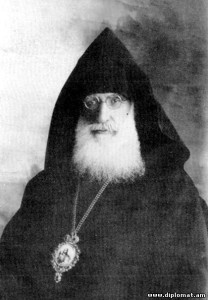
1894թ. Արղությանը տեղափոխվում է Վան, որտեղից կարևոր հանձնարարություններ ստացած, կրկին Պարսկաստան է վերադառնում 1895թ. գարնանը:

1897թ.-ին տեղի ունեցած Խանասորի արշավանքի ժամանակ Արղությանը հայդուկների կողմից ընտրվում է հրամանատարի տեղակալ: Սալմաստում պարսկական իշխանությունները սաստիկ հալածանքնքների են ենթակում արշավանքի մասնակիցներին, նրանց մի մասը ձերբակալվում է որպես ՙղաչաղ բաշի՚, այդ թվում նաև Հովսեփ Արղությանը: Բանտում նա մնում է ծանր և անտանելի պայմաններում և ենթարկվում պարսկական շահական բանտին հատուկ սոսկալի տանջանքներին: Թավրիզի ռուսական հյուպատոսի պահանջով նրան Սալմաստի բանտից տեղափոխում են Թավրիզի բանտ: Հյուպատոսը նրան ուղարկում է Կովկաս, որտեղից էլ ռուսական կառավարության որոշմամբ աքսորվում է Վոլոգդա քաղաքը:

Առաջին աշխարհամարտի տարիներին նա եղել է հայ կամավորական շարժման ջոկատների յոթ հրամանատարներից մեկը: Ընտրվել է Հայաստանի Հանրապետության խորհրդարանի պատգամավոր: Հայաստանի Հանրապետության նորանշանակ արտակարգ և լիազոր դեսպան Հովսեփ Արղությանը Բաքվից Կասպից ծովի Էնզելի նավահանգիստ է ժամանում 1919 դեկտեմբերի 24-ին: Քաղաքի հայ բնակչության մի ստվար զանգված ՀՀ դեսպանի դիմավորման համար կոչված հանձնախմբի գլխավորությամբ նավահանգստում ցնծությամբ դիմավորում և բարի գալուստ է մաղթում Հ. Արղությանին: Դիմավորողների մեջ է լինում նաև քաղաքի դատավորը, արտաքին գործերի նախարարության ներկայցուցիչը, որը Պարսկաստանի կենտրոնական կառավարության անունից շնորհավորում է Հովսեփ Արղությանին Հայաստանի Հանրապետության անկախության առիթով և բարի գալուստ մաղթում վերջինիս: Իշխանը շնորհակալություն հայտնելով ջերմ խոսքերի և բարձր մակարդակով դիմավորելու համար դրվատում է հայ-պարսկական հարաբերությունները և հայտարարում, որ այսուհետև ավելի սերտ հիմքերի վրա է դրվելու երկու հարևան երկրների բարեկամությունը:

Հ.Արղությանի հետ էնզելի են ժամանում իշխանուհի Սաթենիկ Արղությանը, օրիորդ Արփիկ Արղությանը, դեսպանության խորհրդական, մասնագիտությամբ բժիշկ Բ.Հարությունյանը և դեսպանության գլխավոր քարտուղար Սուրեն Առաքելյանը: Հայաստանի անդրանիկ դեսպանի ժամանման մասին անհապաղ հեռագրեր են հղվում Պարսկաստանի բոլոր հայաբնակ քաղաքներ:

Արղությանը բարձր ընդունելության է արժանանում նաև Ռեշտում և Ղազվինում, իսկ Թեհրան է հասնում հունվարի 4-ին: Նորանշանակ դեսպանն արարողակարգային այցելություններ է կատարում Իրանում Մեծ Բրիտանիայի, Բելգիայի և Ֆրանսիայի դեսպանություններ: Հանդիպում ունենում Ֆինանսների, հանրային աշխատանքի, կրթության, փոստի և հեռագրի նախարարների հետ: Հունվարի 16-ին դեսպան Արղությանը հանդիպում է ունենում նաև պատերազմի նախարար Ռեզա խանի հետ (հետագայում` Ռեզա Փեհլևի շահ): Բոլոր հանդիպումների ժամանակ ընդգծված կերպով արտահայտություն է գտնում հարգանքը Հայաստանի և դեսպանի նկատմամբ:

Հունվարի 16-ին Արղությանի նստավայր է ժամանում Պարսկաստանի արտաքին գործերի նախարարության արարողապետ Ջալալ էլ Մոլքը և Հայաստանի դեսպանին հայտնում, որ հաջորդ օրը նախատեսվել է հանդիպում և հավատարմագրերի հանձնում թագաժառանգին, քանի որ Ահմադ Ալի շահը գտնվում է եվրոպայում և նրան փոխարինում է եղբայրը:

Հունվարի 17-ին Արղությանն ու իրեն ուղեկիցները մեկնում են «Գոլեսթան» պալատ որտեղ «Ադամանդե» սրահում տեղի է ունենում թագաժառանգ Վալիահդ Մոհամմադ Հասան Միրզային հավատարմագրերի հանձնման արարողությունը:

Թագաժառանգը, որ երկար տարիներ ապել էր Ատրպատականում և մոտիկից ծանոթ էր հայերին և բարեկամական հարաբերություններ ուներ թեմակալ առաջնորդ Ներսես աքեպիսկոպոս Մելիք-Թանգյանի հետ Արղությանի ելույթից հետո բարձր է գնահատում պարսիկ և հայ ժողովուրդների բարեկամական կապերը և խոստանում աջակցել դրանց զարգացմանը:

Արղությանը ՀՀ կառավարությունից հանձնարարական էր ստացել Պարսկաստանի հետ կնքել բարեկամության և առևտրական պայմանագիր, ինչպես նաև երկաթուղային ու փոստ-հեռագրական համաձայնագիր: Նա պետք է պարզեր պարսկահայերի թիվը և կապեր նրանց Հայաստանի հետ` մասնակից դարձնելով Հայաստանի շինարարության գործին:

Հանձնարարված էր նաև ճշտել Միջագետքում (Բաքուբա) գտնվող գաղթականության թիվը, պարզել նրանց կեցության պայմաններն ու Հայաստանում վերաբնակեցնելու հնարավորությունները: Թեհրանում ՀՀ նորաստեղծ դեսպանությունը պետք է կապեր հաստատեր Հնդկաստանի և Միջագետքի հայերի հետ, պարզեր այն միջոցները, որոնք կնպաստեն երկու երկրների միջև առևտրատնտեսական հարաբերությունների հաստատմանը:

ՄԱՍ ԵՐՐՈՐԴ

1920թ. հունվարի19-ին Անտանտի գերագույն խորհուրդը որոշում է ճանաչել Անդրկովկասի երկրների անկախությունը (Ադրբեջանինը և Վրաստանինը` մեկ շաբաթ առաջ): Այդ մասին դեսպան Արղությանին հայտնում է Թեհրանում Մեծ Բրիտանիայի դեսպան Պերսի Քոկսը, որ մինչ այդ խուսափում էր ՀՀ դեսպանի հետ պաշտոնապես հանդիպելուց:

1920թ. փետրվարին ՀՀ դեսպանությունում կազմավորվում է տեղեկատվական կենտրոն, որը նպատակ ուներ հայկական գաղութին տեղյակ պահել Հայաստանի քաղաքական, ֆինանսական և տնտեսական կյանքի առավել կարևոր իրադարձությունների մասին և պարսկահայությանը կապեր հայրենիքի հետ: Կենտրոնն ուներ երկու բաժին և ամեն շաբաթ հրատարակում էր տեղեկագիր:

ՀՀ դեսպանությունը մեծ ջանքեր է գործադրում Հայաստանի օգտին հանգանակություններ կատարելու «Ոսկու ֆոնդ»-ի համար և փոխառություններ կազմակերպելու հարցում: Արղությանն իր Երևան ուղարկած հեռագրերում և նամակներում կառավարությունից համապատասխան թույլտվություն է խնդրում այդ գործը սկսելու համար: Կազմավորվում է Իրանի «Անկախության փոխառության կենտրոնական մարմին»-ը:

Ստանալով կառավարության համաձայնությունը, Արղությանը 1920թ. ամռան ընթացքում Թեհրանում, Թավրիզում, Սպահանում, Ղազվինում և մյուս հայաշատ քաղաքներում ստեղծում է հանձնաժողովներ և կոմիտեներ, ձեռնամուխ լինում հանգանակության գործին` անձամբ շրջագայելով այդ վայրերում:

Nerses-ark-melik-tangyan

Մինչև Արղությանի ներկայացուցչության Իրան ժամանելը և նրան կից հյուպատոսական բաժին ստեղծելը, հյուպատոսական գործառույթները իրագործում էր Ատրպատականի առաջնորդարանը: Անձնագրերը տրվում էին անվճար, սակայն Ատրպատականի Հայոց թեմի թեմակալ առաջնորդ Ներսես արքեպիսկոպոս Մելիք-Թանգյանը նամակով դիմում է ՀՀ արտգործնախարարությանը և խնդրում անձնագրերի համար գանձումներ կատարելու թույլտվություն:

Արտգործնախարարությունը տալիս է նման թույլտվություն, սահմանվում են համապատասխան սակագներ: Առաջնորդարանին տրվում են հաշվեմատյաններ, տարբեր բլանկներ, անձնագրեր և այլն:

Թեհրան ժամանելուց հետո Արղությանը ՀՀ ներկայացուցչությանը կից ստեղծում է հյուպատոսական բաժին: Պատրաստվում են անձնագրեր, հյուպատոսական գրքեր, տպագիր դիմումներ, որոնք, մյուս քաղաքներում հյուպատոսություններ չլինելու պատճառով, տարածվում էին տեղական համայնքների խորհուրդների միջոցով: ՀՀ քաղաքացիություն ընդունել ցանկացողները պարտավոր էին լրացնել այդ դիմումները և կից ներկայացնել երկու լուսանկար: Սահմանվում են նաև հյուպատոսական գանձումների չափերը`մեկ տարով տրվող անձնագրի համար գանձվում էր հինգ թուման, կես տարվա համար` երեք թուման: Անձնագրերի վիզավորման համար տասնհինգ ղռան, իսկ վկայականնների, տեղեկանքների և ամեն կարգի ակտերի համար տաս ղռան: Հինգ ղռան էր գանձվում ստորագրությունների հաստատման համար: Աղքատ խնդրատուներին անձնագիրը տրվում էր անվճար, իսկ գաղթականներին` անձնագրի փոխարեն ժամանակավոր վկայականներ: Ի դեպ, գանձումների այս սակագները կազմվել էին ռուսական և Թեհրանում գործող այլ երկրների հյուպատոսական գանձումների օրինակով:

Դեսպանությունը զբաղվում է հպատակության հարցերով: Առաջին համաշխարհային պատերազմից հետո Հայոց Մեծ Եղեռնից մազապուրծ տասնյակ հազարավոր հայերի Իրանը ապաստան էր տվել: Չնայած իրանական կառավարության հոգատար վերաբերմունքին, նրանց վիճակը ծանր էր: Բազմաթիվ հայեր ցանկություն են հայտնում դառնալ Հայաստանահպատակ և վերադառնալ հայրենիք: Դեսպանությունը պատրաստում է հատուկ անկետաներ և դրանք տարածում գաղթականության շրջանում:

Գաղթականների ամենամեծ կուտակումը Թավրիզում էր, ուստի այդտեղ էլ որոշվում է հիմնել Հայաստանի հյուպատոսություն:

tehran-1920

Առևտրտնտեսական հարաբերություններ սկսելու նպատակով Արղությանը ՀՀ կառավարության լիազորագրով բանակցություններ է սկսում Պարսկաստանի կառավարության ներկայացուցիչների հետ, սակայն 1920թ. հունիսին Իրանում տեղի է ունենում կառավարության նախագահի փոփոխություն: Վոսուղ Էդ Դոուլեին փոխարինում է Մոշիր Էդ Դոուլեն:

Բանակցություններն ընդհատվում են: ՀՀ դեսպանությունը փորձում է Պարսկաստանից մի առևտրական պատվիրակություն ուղարկել Հայաստան երկու երկրների միջև առևտրատնտեսական հարաբերությունները կարգավորելու համար, որը ցավոք տեղի չի ունենում Պարսկաստանի ներքաղաքական կյանքի լարվածության և Ղարաբաղի հարցով սկսված հայ-ադրբեջանական հակամարտության պատճառով:

1920թ. հոկտեմբերին Արղությանը Իրանական կառավարության համաձայնությամբ Թավրիզում հյուպատոսական գործակալ է նշանակում Մուշեղ Տեր-Զաքարյանին, որը հազիվ կարողանում է տեղավորվել, սակայն որևէ լուրջ գործողություն չի հասցնում անել Խորհրդային Հայաստանի հյուպատոսի ժամանման պատճառով:

Ի դեպ, հյուպատոսությունների մասին, Իրանն օրինակ, Անդրկովկասում դեսպանություններ չուներ: Թիֆլիսի հյուպատոսությունը համարվում էր կենտրոնական, իսկ գլխավոր հյուպատոսը համադրում էր Կարսի, Երևանի և Բաքվի հյուրատոսությունների աշխատանքները, կատարում դեսպանության գործառույթներ և ուներ լայն լիազորություններ:

1920թ. նոյեմբերին Հայաստանի Հանրապետության կառավարությունը ելնելով նյութական միջոցների սղությունից, որոշում է կայացնում լուծարել Թեհրանում ՀՀ ներկայացուցչությունը և դիվանագիտական անձնակզմին ետ կանչել Երևան: Արղությանին հրահանգ է տրվում գործերը հանձնել տեղացիներից մեկին, նշանակելով նրան ՀՀ պատվավոր ներկայացուցիչ, առանց պետական գանձարանից վճարումներ ստանալու իրավունքի:

ՀՀ դեսպանության աշխատակիցներից Ս.Առաքելյանը հետագայում համաձայնվում է աշխատել Խորհրդային Հայաստանի դեսպանությունում, իսկ Հովսեփ Արղությանը լքված վիճակում մնալով մինչև 1922թ. ստիպված է լինում ընտանիքով տեղափոխվել Ֆրանսիա, որտեղ էլ մահանում է 1925թ.-ին և թաղվում Փարիզում: Այսպսով ընդհատվում է Հայաստանի Հանրապետության առաջին դեսպանության մոտ մեկամյա գործունեությունն Իրանում:

Հայաստանի Հանրապետությունը գոյատևեց երկուսուկես տարի: Հայտնվելով միջազգային հակասությունների բարդ ու խառնակ հանգուցակետում, պարտվելով Թուրքիային, մշտապես ենթարկվելով Խորհրդային Ռուսաստանի ճնշմանը, լքված Արևմուտքի օգնությունից` Հայաստանի առաջին հանրապետությունը դադարել է գոյություն ունենալուց: Նրան հաջորդել է Հայկական Խորհրդային Սոցիալիստական Հանրապետությունը:

ՄԱՍ ՉՈՐՐՈՐԴ

1920թ. նոյեմբերի 29-ին Հայաստանում խորհրդային կարգեր հաստատվելուց հետո նոր փուլ է սկսվում հայ – իրանական հարաբերություններում:

ՀԽՍՀ-ն Հայաստանի երկրորդ հանրապետությունն էր`առաջին հանրապետության իրավահաջորդը և մտնում էր ԽՍՀՄ-ի կազմի մեջ: Իրանի հետ առևտրատնտեսական, քաղաքական, բարիդրացիական, բարեկամական հարաբերությունների հաստատումը ինչպես դաշնակցության, այնպես էլ հայ բոլշևիկների համար կարևոր նպատակներից էր, որ կարճ ժամանակում դրանք իրականացնելով` կարողացան Հայաստանն ինչ որ չափով դուրս բերել միջազգային մեկուսացումից:

Պարսկաստանի հետ բնականոն հարաբերություններ հաստատելու շնորհիվ հնարավոր եղավ Իրանից գնել զգալի քանակությամբ նավթ, հացահատիկ, անասուններ, գյուղատնտեսական մթերք, դրանով մեղմացնելով Հայաստանի պարենային ճգնաժամը:

Խորհրդային Հայաստանի կառավարությունն ինչպես և Հայաստանի առաջին Հանրապետության կառավարությունը իր դիվանագիտական և հյուպատոսական ներկայացուցչություններն է բացում Թեհրանում և Թավրիզում: ՀԽՍՀ ղեկավարությունը միջազգային հարաբերություններում հենվում էր Ռուսաստանի օգնության վրա:

1920թ. դեկտեմբերի 6-ին հատուկ հրահանգով Հայաստանի հեղկոմը դադարեցնում է արտասահմանյան երկրներում Հայաստանի Հանրապետության դիվանագիտական ներկայացուցչությունների լիազորությունները:

Մինչև Խորհրդային Հայաստանի լիազոր ներկայացուցիչների ժամանումը դեսպանությունների գույքի և նյութական միջոցների պահպանության պատասխանատվությունն ընկնում է այդ հիմնարկությունների նախկին ղեկավարների վրա:

1921թ. փետրվարին Հայաստանում տեղի է ունենում հակաբոլշևիկյան ապստամբություն, վերակնագնվում է ՀՀ նախկին իշխանությունը, Իրանի վարչապետ Սեյեդ Զիյա էդ Դին Թաբաթաբային այցելում է Թեհրանում ՀՀ դեսպանություն և իր աջակցությունը հայտնում հայ ժողովրդին՝ բոլշևիկների դեմ պայքարում: Մայիսին կրկին վերակնգնվում է բոլշևիկների իշխանությունը:

1921թ. մայիսին Խորհրդային Հայաստանի ատգործժողկոմի տեղակալը հուշագիր է ուղարկում Իրանի արտաքին գործերի նախարարին, նշելով, որ շուտով ՀՍԽՀ-ը կառավարությունը իր լիազոր ներկայացուցչին ուղարկելու է Թեհրան, իսկ մինչև նրա ժամանումը Հայաստանին վերաբերող բոլոր հարցերով անհրաժեշտ է դիմել ՌԽՖՍՀ լիազոր ներկայացուցիչ Ֆեոդոր Ռոտշտեյնին:

Նույն հուշագրով խնդրվում է, որ Հովսեփ Արղությանին դիտել որպես բոլոր լիազորություններից զրկված մասնավոր անձնավաորության: Արղությանը հրաժարվում է ՀԽՍՀ կառավարության պահանջը կատարելուց և մի որոշ ժամանակ շարունակում իր դիվանագիտական գործունեությունը:

Պարսկական կառավարության թողտվությամբ մի անհասկանալի վիճակ է ստեղծվում հայ-իրանական հարաբերություններում: Թեհրանում միժամանակ գործում են Հայաստանի երկու դիվանագիտական ներկայացուցչություններ:

1921թ. հունիսին Թավրիզ է ժամանում Խորհրդային Հայաստանի հյուպատոս Եզեկել Երզնկյանը: Նրան համայնքը դիմավորում է բավակնին սառը և անշուք: Հայաստանի Հանրապետության հյուպտոսական գործակալ Մուշեղ Տեր-Զաքարյանից նա ոչինչ չի կարողանում ստանալ, դրոշակի փայտյա պոչից բացի, որի վրա էլ Երզնկյանն ամրացնում է բոլշևիկյան կարմիր դրոշը և բարձրացնում հյուպատոսության շենքին:

1921թ. օգոստոսի վերջերին պարսկական կառավարությունը Արղությանին հարկադրում է գործերը հանձնել ՌԽՖՍՀ-ի լիազոր ներկայացուցիչ Ֆեոդոր Ռոտշտեյնին:

Սեպտեմբերի 19-ին Հայաստանի Կոմունիստական Կուսակցության Կենտկոմը որոշում է կայացնում Իրանում ՀԽՍՀ լիազոր ներկայացուցիչ նշանակել անկուսակցական Լևոն Սարգսյանին: Լևոն Դավիթի Սարգսյանը ծնվել է 1863թ. Գողթան գավառի Ցղնա (Ցանարար) գյուղում:

1873թ. նա ընդունվել է Լազարյան ճեմարանի բնագիտության բաժանմունքը, որն ավարտել է 1884թ.-ին: Լ.Սարգսյանը որպես բնագիտության ուսուցիչ աշխատել է Լազարյան ճեմարանում և Թիֆլիսի «Գայանեյ» հայկական դպրոցում:

Նա մասնագիտությամբ հրապարակախոս էր, լրագրող, հասարակական և քաղաքական գործիչ: Նրա գրչին են պատկանում «Հին ցանկ», «Ժողովրդական կրթությունը մեզանում», «Այց Թուրքաց Հայաստանին», «Գողթան», «Գծեր և բծեր», «Մայրենի խոսք» ընթերցանության ձեռնարկը (Կ.Կուսիկյանի հետ) և այլ աշխատություններ:

Լ. Սարգսյանը հասարակական և քաղաքական բնույթի թեմաներ շոշափող հոդվածներում հանդես է եկել «Մշակ» թերթի 1906-1907թթ.-ի տարբեր համարներում: 1892թ.-ին Լևոն Սարգսյանը նշանակվում է Թիֆլիսի հայուհիների բարեգործական ընկերության քարտուղար: 1893թ.-ի մարտի 2-ից Թիֆլիսի հայ հրատարակչության ընկերության անդամ:

1895-ին Լ. Սարգսյանն աշխատել է Թիֆլիսի Ներսիսյան հոգևոր ուսումնարանում որպես բնագիտության ուսուցիչ: 1902-ին եղել է «Մշակ» թերթի խմբագրական խորհրդի կազմում, իսկ 1903-1907թթ.-ին ամսգրի հրատարակիչն ու գլխավոր խմբագիրը:

1918–ին թուրքերի կողմից Ալեքսանդրապոլի գրավման ժամանակ նա մնում է քաղաքում և արիաբար պայքարում թուրքերի ոտնձգությունների դեմ: Ագիտացիոն և պրոպագանդիստական աշխատանքներ է տանում դաշնակցության դեմ:

1920թ.-ի մայիսյան ապստամբության ժամանակ Լ.Սարգսյանը համագործակցում է բոլշևիկների հետ, որի պատճառով դաշնակցականների կողմից ենթարկվում է հալածանքների:

Չլինելով բոլշևիկյան կուսակցության անդամ, ակտիվ մասնակցություն է ունենում Հայաստանում սովետական կարգերի հաստատմանը:

1920թ.-ին նշանակվում է Ալեքսանդրապոլի առևտրական դպրոցի վերատեսուչ: 1921թ.-ի հունվար-ապրիլ ամիսներին աշխատում է Էջմիածնի պետական կոիլտուր-պատմական ինստիտուտի կոմիսար, ապա վարիչ:

1921թ.-ի ապրիլ-հունիս ամիսներին եղել է Ալեքսանդրապոլի հեղափոխական կոմիտեի նախագահը:

1921-ի հունիսից գործուղվում է Գողթան գավառ (Օրդուբադի տեղամասում) կազմակերպելու հայ գաղթականությանը տեղավորելու և ազգաբնակչության տնտեսական վիճակը կարգավորելու համար:

1921-ի հոկեմբերի 12-ին Հայաստանի կառավարության որոշմամբ նշանակվում է ՀԽՍՀ լիազոր ներկայացուցիչ (դեսպան) Պարսկաստանում, որտեղ պաշտոնավարում է մինչև 1922թ. նոյեմբեր ամիսը:

1924թ.-ին Լ. Սարգսյանն անդամակցում է Թիֆլիսի «Հայարտուն» գրական բաժանմունքին:

ՄԱՍ ՀԻՆԳԵՐՈՐԴ

1925-ի հոկտեմբերից մինչև 1926թ. Լ. Սարգսյանն աշխատում է Անդրկովկասյան Կենտրոնական գործադիր կոմիտեյի կից գիտական միության բաժնի վարիչ: Նույն թվականին տեղափոխվում է Մոսկվա, որտեղ էլ իր մահկանացուն է կնքում 1927թ.-ի հուլիս ամսին:

Պահպանվել են նրա ՀԽՍՀ արտգործժողկոմին ուղարկած գրությունները:

Լևոն Սարգսյանն իր` ՀԽՍՀ արտգործժողկոմին հղած առաջին` նոյեմբերի 23-ի զեկուցագրում գրում է, որ Հ. Արղությանը դեռևս չի հանձնել ՀՀ դեսպանության արխիվը, կահույքը և ավտոմեքենան: Երկար քաշքշուկներից հետո, ի վերջո գույքի մի մասը հանձնվում է 1922թ. հուլիսին:

1921թ. սեպտեմբերի 27-ին ՀԽՍՀ ներկայացուցչության ժամանակավոր քարտուղար Երնջակյանը Թեհրանից հեռագրում է արտգործժողկոմ Ասքանազ Մռավյանին, որ Իրանում բացվել է ՀԽՍՀ ներկայացուցչությունը: Այն ժամանակավորապես ղեկավարում է ՌԽՖՍՀ լիազոր ներկայացուցիչ Ֆեոդոր Ռոտշտեյնը:

Մեկ ամիս անց Իրան է ժամանում Խորհրդային Հայաստանի լիազոր ներկայացուցիչ Լևոն Սարգսյանը: Նա հոկտեբերի 17-ին մեկնում է Թիֆլիս, այնուհետև Բաքու: Թիֆլիսում Լ.Սարգսյանը այցելում է Պարսկաստանի գլխավոր հյուպատոսին: Բաքվում Լ.Սարգսյանը հանդիպում է Խորհրդային Ադրբեջանի Արտգործժողկոմ Հուսեյնովի և նրա տեղակալ Անդրևիի հետ: Հոկտեմբերի 27-ին «Թեհրան» շոգենավով մեկնում է Էնզելի: Էնզելիում նրան դիմավորում է Ռուսաստանի հյուպատոսական ներկայացուցիչը: Հաջորդ օր Ռեշտ-Ղազվին ճանապարհով հասնում է Թեհրան` ստանձնելու իր պարտականությունների կատարմանը: Ռեշտում Լ.Սարգսյանի պատվին հայ համայնքը կազմակերպում է ընդունելության մեծ հանդես:

Ղազվինում նա ավելի սառը և համեստ դիմավորման է արժանանում: Նոյեմբերի երեքին Լ.Սարգսյանը ժամանում է Թեհրան: Նրան քաղաքից դուրս դիմավորում են Ռուսաստանի դեսպանության և հայ համայնքի ներկայացուցիչները: Նա արժանանում է պարսկական արարողակարգով նախատեսված բոլոր պատիվներին: Նրան է այցելում արտաքին գործերի նախարարության արարողապետ Վահիբ էդ Սուլթանը և Իրանի կառավարության կողմից ողջունում Հայաստանի Խորհրդային Հանրապետության նորանշանակ դեսպանին: Հաջորդ օրը Լևոն Սարգսյանին է այցելում Ահմեդ շահի պալատական գլխավոր արարողապետը և տեղեկություն տալիս հավատարմագրերը հանձնելու օրվա և արարողության կարգի մասին:

Լ.Սարգսյանն իր ժամանման մասին հատուկ հուշագիր է ուղարկում Պարսկաստանի արտաքին գործերի նախարարությանը և խնդրում հստակեցնել հավատարմագրերը հանձնելու օրը և երկրի բարձրաստիճան ղեկավարության հետ հանդիպումներ կազմակերպելու ժամկետները:

1921թ. նոյեմբերի 9-ին Սահաբ Ղրան պալատում մեծ շքեղությամբ տեղի է ունենում Սուլթան Ահմադ շահ Ղաջարին դեսպան Լևոն Սարգսյանի հավատարմագրերի հանձնման հանդիսավոր արարողությունը: Սարգսյանը Պարսկաստանի շահին հանձնում է նաև Հայաստանի ժողկոմխորհի նախագահ Ալեքսանդր Մյասնիկյանի գրավոր ուղերձը, որում ՀԽՍՀ կառավարության ղեկավարը Խորհրդային Հայաստանի պատրաստակամությունն է հայտնում Պարսկաստանի հետ բազմակողմանի կապեր զարգացնելու հարցում: Ուղերձում նշված է լինում, որ «…ելնելով Իրանի և Հայաստանի միջև արդեն գոյություն ունեցող բարեկամական կապերի և վստահության ամրապնդման անկեղծ ցանկությունից, Հայաստանի կառավարությունը Պարսկաստանի շահական կառավարության մոտ Հայաստանի Խորհրդային Սոցիալիստական Հանրապետության լիազոր ներկայացուցիչ է նշանակումընկ. Լևոն Սարգսյանին, որը տրված մանդատի համաձայն պետք է ջանա իրեն մատչելի բոլոր միջոցներով նպաստել երկու երկրների միջև փոխհարբերությունների զարգացմանը…»:

Ահմեդ շահն իր խոսքում կարևորում է Հայաստանի Խորհրդային Հանրապետության հետ հարաբերությունների հաստատումը և նշում, որ հրահանգել է կառավարությանը աջակցել և օգնություն ցուցաբերել ԽՍՀ-ի լիազոր ներկայացուցիչին:

Հավատարմագրերը հանձնելուց հետո Հայաստանի դեսպանին նույն պալատի Սպիտակ սրահում ընդունում են Իրանի վարչապետն ու արտգործնախարարը:
Նույն օրը Լևոն Սարգսյանն իր առաջին զեկուցագիրն է ուղարկում արտգործժողկոմ Ասքանազ Մռավյանին և տեղեկացնում հավատարմագրերի հանձնման և իր առաջին հանդիպումների մասին: Նա տեղեկացնում է, որ իր կողմից արդեն ստեղծվել են բարեկամական ջերմ հարաբերություններ Իրանի կառավարության անդամների հետ:

Մի քանի օրից Խորհրդային Հայաստանի դեսպանություն են այցելում Իրանի վարչապետ Ղավամ օլ Սալթանեն ու արտգործնախարարը, խորհրդարանի մի քանի անդամներ և պատերազմի նախարար Ռեզա խանը:

Դեսպանությունը մեծ թափով սկսում է իր գործունեությունը: Լևոն Սարգսյանը հուշագրով դիմում է Իրանի կառավարությանն Եզեկել Երզնկյանին Ատրպատականի հայոց ընդհանուր հյուպատոս ճանաչելու, Ատրպատականում քուրդ առաջնորդ Սմկոյի դեմ ռազմական գործողություններ սկսելու և Հովսեփ Արղությանի կողմից նախկին դեսպանության գործերն ու գույքը հանձնելու մասին: Իրանի կառավարությունը կարճ ժամանակում տալիս է համաձայնություն` Երզնկյանին որպես հյուպատոս ճանաչելու և հյուպատոսարան հիմնելու մասին:

Խորհրդային Հայաստանի ներկայացուցչությունը ևս աշխատանքներ է տանում պարսկահայերին Հայաստանի վերաշինությանը մասնակից դարձնելու համար: Դեսպանությունը սկսում է հայերենով հրատարակել մամուլի շաբաթական տեղեկագրեր, որոնցում տեղեկություններ է հաղորդվում Խորհրդային Հայաստանում տեղի ունեցող քաղաքական, տնտեսական և սոցիալական վիճակի մասին: Դեսպանությունը լայն աշխատանքներ է տանում Պարսկաստանի հայկական գաղութում, տեղի հայությանը հայրենիք հետ կապելու և նրա ներուժը երկրի վերաշինության մեջ օգտագործելու նպատակով:

Նոյեմբերի 29-ին Թեհրանում տեղի է ունենում Հայաստանում խորհրդային կարգերի հաստատման առաջին տարելիցին նվիրված պաշտոնական ընդունելությունն ու ներկայացուցչության բացման հանդիսավոր արարողությունը: Արարողության ժամանակ ելույթ են ունենում ՀԽՍՀ լիազոր ներկայացուցիչ Լևոն Սարգսյանն ու ՌԽՖՍՀ լիազոր ներկայացուցիչ Ֆ. Ռոտշտեյնը: Արարողությանը մասնակցում են Պարսկաստանի կառավարության մի շարք անդամներ: Ներկա են եղել նաև Խորհրդային Ադրբեջանի լիազոր ներկայացուցիչը, հնչակյան կուսակցության, դաշնակցության կուսակցությունիսց անջատված թևի, մի քանի դպրոցների և հաստատությունների ներկայացուցիչներ: Երեկոյան տեղի է ունենում ընդունելություն, որին մասնակցում են վարչապետ Ղավամ օլ Սալթանեն, մեջլիսի նախագահը, պատերազմի նախարար Ռեզա խանը, նախարարներ, Պարսկաստանի նախկին վարչապետներ, Ռուսաստանի, Անգլիայի, Նորվեգիայի, Աֆղանստանի դեսպանները: Հանդեսին չներկայացած մյուս դեսպանությունները ուղարկում են շնորհավորական հեռագրեր:

Նույն օրը` նոյեմբերի 29-ին Թավրիզում տեղի է ունենում նաև ՀԽՍՀ հյուպատոսության բացման արարղությունը, չնայած հյուպատոսությունը գործում էր նոյեմբերի մեկից: Հանդիսություներին մասնակցում են նահանգապետարանի պարսիկ պաշտոնատարներ նահանգապետ Մոխաբեր էս-Սալթանեի գլխավորությամբ: Մասնակցում են նաև Թավրիզի Ռուսաստանի և Անգլիայի հյուպատոսները, ամերիկյան միսիոներական ընկերության, տեղի հայկական համայնքի և գաղթականության ներկայացուցիչները:

ՄԱՍ ՎԵՑԵՐՈՐԴ

Թավրիզի հյուպատոսությունը կարճ ժամանակահատվածում կարողանում է լավ հարաբերություններ հաստատել հայ համայնքի և մահմեդական ազգաբնակչության հետ: Հյուպատոս Եզեկել Երզնկյանը ձեռնամուխ է լինում ակտիվ դիվանագիտական գործունեության: Նա կազմավորում է ՀԽՍՀ Կարմիր Խաչի Թավրիզի բաժանմունքը, ինչպես նաև Հայաստանի օգնության կոմիտեի բաժանմունքը: Կտրուկ փոխվում է թավրիզահայության և գաղթականների վերաբերմունքը Խորհրդային Հայաստանի նկատմանբ: Հյուպատոսության ջանքերով ակտիվ ապրանքափոխանակություն է տեղի ունենում Իրանի հյուսիս-արևմտյան շրջանների և Հայաստանի միջև:

Ի դեպ, Լևոն Սարգսյանը մտադրություն է ունեցել հյուպատոսություններ բացել նաև Իրանի հայաշատ այլ քաղաքներում ևս: Նա նամակով դիմում է շահական կառավարությանը Ղազվինում, Ռեշտում և Սպահանում Հայաստանի հյուպատոսական գործակալներ ունենալու առաջարկով, սակայն մերժում է ստանում: Սարգսյանը ստիպված դիմում է ՌԽՖՍՀ լիազոր ներկայացուցչին` խնդրելով, որ Ռուսաստանի հյուպատոսարանները զբաղվեն նաև Խորհրդային Հայաստանի քաղաքացիների շահերի պաշտպանությամբ:

Թեհրանում և Թավրիզում Հայաստանի Հանրապետության և Խորհրդային Հայաստանի դիվանագիտական ներկայացուցչությունների բացումն ուներ քաղաքական մեծ նշանակություն տարածաշրջանի համար, իսկ հայ ազգաբնակչության համար հոգեբանական, քանի որ հարյուրամյակներ շարունակ պետականություն չունեցող միլիոնավոր զոհեր տված հայ ժողովուրդը վերջապես ստացել էր իր անկախ և ազատ երկրում ապրելու իրավունքը:
ՀԽՍՀ դիվանագիտական ներկայացուցչությունները պաշտոնապես իրենց պարտականություններին անցնելուց հետո ակտիվ պայքար են սկսում Հայաստանի առաջին Հանրապետության Թավրիզ տեղափոխված վտարանդի կառավարության դեմ, փորձում նրանց վարկաբեկել պարսկահայ համայնքի մոտ: Այդ իսկ պատճառով նրանք առաջին օրերին արժանանում են անբարյացկամ վերաբերմունքի թավրիզահայության կողմից:

Պարսկական կառավարության վերաբերմունքը Խորհրդային Հայաստանի դիվանագետների նկատմամբ արտաքուստ լինում է սիրալիր և բարեկամական, սակայն ներքուստ արվում են միանգամայն հակառակ քայլեր, քողարկված արհամարական, երբեմն էլ թշնամական: Պարսկական գաղտնի գործակալների կողմից հաստատվում է վերահսկողություն նրանց նկատմամբ, երբեմն առգրավվում է դիվանագիտական փոստը, ամեն ինչ արվում է, որ նրանք քիչ շփվեն պարսիկների և այլազգիների հետ:

Թեհրանում և Թավրիզում Խորհրդային Հայաստանի դիվանագիտական ներկայացուցչությունները գործում էին ՌԽՍՖՀ-ի դիվանագիտական ներկայացուցչությունների հետ համագործակցված, առանձին դեպքերում հանդես էին գալիս համատեղ հայտարարություններով ու հուշագրերով:

ՀԽՍՀ արտաքին քաղաքականությունն ուղղված էր երկիրը դուրս բերել միջազգային մեկուսացումից, կարգավորել հարաբերությունները հարևան երկրների հետ: Պարսկաստանի հետ ձեռք բերված բարիդրացիական հարաբերությունները համարվում են այդ շրջանի լուրջ ձեռքբերումներից, որոնցում իր անփոխարինելի դերակատարությունն է ունեցել Իրանում ՀԽՍՀ դեսպանությունը` դեսպան Լևոն Սարգսյանի գլխավորությամբ:

1922թ. գարնանը անդրկովկասյան հանրապետությունները որպես մեկ միավոր Մոսկվայում բանակցություններ են սկսում Իրանի կառավարական պատվիրակության հետ առևտրատնտեսական ուղղակի կապեր հաստատելու համար:

1922թ. Անդրֆեդերացիայի և ԽՍՀՄ կազմավորումից հետո արտաքին քաղաքականություն իրականացնելու մենաշնորհը հանձնվեց Մոսկվային: Խորհրդային հանրապետությունների արտասահմանյան ներկայացուցչությունները փոխարինվեցին միասնական ներկայացուցչությունների:

Հայաստանը կորցրեց իր անկախությունն ու ինքնուրույն արտաքին քաղաքական և տնտեսական հարաբերություններ իրականացնելու իրավունքը: Իրանի հետ հարաբերությունների մենաշնորհը հանձնվեց Մոսկվային, խորհրդային հանրապետությունները մնացին սոսկ որպես վիճակագիրներ, որ միայն փաստում էին կատարվածը և ի զորու չէին ազդել հարաբերությունների վրա:

Հետագա տարիներին Խորհրդային Միության և Իրանի միջև գույություն ունեցող առևտրտնտեսական կապերում և մշակութային ծրագրերում առթից-առիթ երբեմն ներգրավվում էին նաև Խորհրդային Հայաստանի տարբեր մասնագետներ ու մշակույթի գործիչներ:

Հայ-իրանական քաղաքական, տնտեսական, մշակութային և այլ հարաբերությունները արհեստականորեն ընդհատվեցին և տասնամյակներ շարունակ դարձան խորհրդա-իրանական հարաբերությունների կցորդը:

Երկրորդ Համաշխարհային պատերազմից հետո նկատի ունենալով Սփյուռքի առկայությունը` ԽՍՀՄ դեսպանություններում հայազգի դիվանագետների համար բացվեցին հատուկ հաստիքներ հայաշատ երկրներում հայ համայնքների հետ կապը պահպանելու նպատակով:

Խորհրդային տարիներին Հայաստանը և Իրանը արհեստականորեն բաժանված լինելով իրարից, միմյանց նկատմամբ չկորցրին հետաքրքրությունը: Հայաստանում միշտ համակրանքով են վերաբերվել Իրանի նկատմամբ և ցանկացել, որ այդ երկիրը բարգավաճի լինի խաղաղություն և կայունություն, նկատի ունենալով, հազարամյա կապերը և որ իրանահայ համայնքն ամենամոտն է Հայասատանին լեզվական, մշակութային և աշխարհագրական առումով:
1979թ. Իսլամական հեղափոխությունից հետո Իրանը դարձավ ավելի փակ երկիր և խորհրդա-իրանական հարաբերություններում հայ մասնագետների մասնակցությունն ավելի նվազեց:

Խորհրդային Միությունը ստիպված էր Իրանի նկատմամբ դրսևորել ավելի զուսպ և հավասարակշված քաղաքականություն, որպեսզի վերջնականապես դուրս չմղվեր Իրանից:

ԽՍՀՄ փլուզումից հետո նորանկախ հանրապետությունները Իրանի հետ սկսեցին հաստատել ինքնուրույն հարաբերություններ: Հայաստանի համար կրկին հնարավորություն ընձեռվեց Իրանի հետ ունենալ անմիջական կապեր:

ԳԱՌՆԻԿ ԲԱԴԱԼՅԱՆ

Լուսանկարը՝ www.epress.am-ի

A Land of Death; 180,000 Armenians Died from Hunger and Disease in Winter of 1918-1919

$
0
0

The Republic of Armenia, proclaimed on only 12 thousand square kilometres, significantly expanded within one year, when the Ottoman Empire armies, which were defeated in World War I, retreated from the Transcaucasus in accordance with the Mudros Armistice and under pressure from the British. The Armenian forces settled in the Armenian-populated territories left by the Ottoman Turks, right up to the1914 Russian-Turkish borders, including in the Kars and Olti coal mines.

However, when retreating from Armenian territories, the Ottoman Turks took the supplies of bread and food, leaving the Armenian nation starving. In Vratsyan’s words, “The Turks had found a new way to massacre – more realistic and noiseless. Six more months and Russian Armenia would be in the same condition as Turkish Armenia. Was it worth fighting in those conditions, occupying military units and spilling blood in vain? Leaving the problem of the Armenians to hunger and typhoid, the Turks directed their forces towards Baku.”

Armenia’s situation was also worsening because Georgia and Azerbaijan, with whom it had border disputes, were implementing an economic blockade. The situation worsened in December 1918, when a two-week long war erupted between Armenia and Georgia because of a border dispute and Armenia, having no outlet to the sea, became completely blockaded.

In one of its February1919 issues, in an article entitled “Starving Armenia”, this is how the Armenian Haraj newspaper described the situation: “Because of its blind, limitless love and faith towards Russia and its allies, today Armenia is in a severely tragic situation. On all sides it is surrounded by an ill-disposed and hostile circle. It is dying from hunger, cold, a lack of fuel, clothing and medicine, and its friends and neighbours are not helping. Georgia is not giving bread, Azerbaijan is not giving fuel, and its allies are the silent and indifferent spectators to the unique and exceptional tragedy of this martyr nation.”

Besides poverty, the cold, which penetrated to the bone, was distressing the Armenian nation. The foreign press was also not indifferent.

An American eyewitness, overwhelmed by the misery, wrote: “A terrible population! Unspeakably filthy and tatterdemalion throngs; shelterless, death stricken throngs milling from place to place; children crying aloud; women sobbing in broken inarticulate lamentation; men utterly hopeless and reduced to staggering weakness, heedless of the tears rolling down their dirt-streaked faces. As a picture of the Armenians most in evidence in Armenia I can think of nothing better than this, unless I turn to other kinds of mobs. Large numbers here and there, wide-eyed, eager, hands outstretched in wolfish supplication; teeth bared in a ghastly grim that had long since ceased to be a smile – an emancipated, skin-stretched grim, fixed and uncontrollable.”

In Yerevan, Ashtarak, the Sevan basin, the Ararat valley, and in the rest of the regions of the small republic, the starving Armenian nation was literally dying of hunger. Foreign eyewitnesses have left written evidence of the collective, unique sufferings of the Armenian nation.

Igdir (now part of Turkey) was one of Armenia’s most devastated and famine-stricken districts. An American correspondent described the situation there in the spring of 1919, that is, after the freezing weather had already passed: “We found the children, such as they were, inhabiting an orphanage wherein one sickened at the putridity’s horrible odor, and were informed that there were neither medicines nor disinfectants wherewith to allay the conditions of the many little sick-beds. Sick? Say, rather the bed-ridden, a word which more justly describes those tiny, withered up, crone-like creatures, upon whose faces the skin seemed stretched to a drumhead’s tightness; whose peering eyes shot terror and anguish, as if Death’s presence were already perceptible to them, and who lay there at Famine’s climax of physical exhaustion. In those young, yet grotesquely aged faces, we seemed to see a long lifetime of tragedy packed into eight or ten childish years.”

The condition of the orphans and starving children, whose parents had already passed on to the other world from hunger or pandemic, was especially heart-breaking. The homeless masses, the Western Armenians who had survived genocide had become vagrants in the land of starvation.

The population had fallen upon the fields; it was grazing, swelling, and dying. Naked, barefoot, or covering a part of their grotesque bodies with assorted rags, and bent under the burden of their little ones, the refugee population wandered from village to village begging for bread, but bread was not to be found. There were among the refugees, nourished by grass instead of bread, many cases of poisoning. Or else, as if crazed, they roamed the streets uttering incoherent and disconnected phrases. Many of the refugees in this district still lived under open skies and passed their days in the snow, rain, and mud.

The first winter in the Republic of Armenia brought unbearable suffering to the people and insurmountable difficulties to the coalition government of Hovhannes Kajaznuni. The winter of 1918-1919 was one of the longest and most severe in the annals of Yerevan.

 “The cruel claws of hunger pierce the Armenian peasant’s breast. Thousands, tens of thousands died,” wrote Artashes Babalyan, one of the witnesses to those dreadful days. “And in six months on a small plot of land, 180,000 Armenians died from hunger and disease. They died without complaining, realising that the last of the grain had been consumed and there was no hope for help.”

The homeless masses, lacking food, clothing, and medicine, passed hellish months under blizzard conditions. The pitiful multitude lay in the snow, in partially-destroyed buildings, on doorsteps of churches, eventually too weak to protest or even to beg any longer. They lived in the land of stalking death, waiting with sunken face and swollen belly for the touch of that angel. And death came, delivering from anguish thousands upon thousands of refugees and native inhabitants alike. Many who withstood the exposure and famine succumbed to the ravaging diseases that infested derelict masses. Typhus was the major killer. The insensible bodies were gathered from the streets by the hundreds each week and covered in mass graves, often without mourners or final rites. The statistics were horrifying. Almost twenty percent of the republic’s population had perished by mid-year. It was verily a land of death.

Visiting Tiflis in the winter of 1919, Avetik Sahakyan, the Speaker of Armenia’s Parliament, related to one of the local journalists, “The situation is dreadful. We were freed by one enemy when another enemy besieged us – hunger and typhus. In our country about two thousand people die each day from the pandemic, mainly from hunger. Currently Armenia needs bread, bread, and bread. The closest store from where to bring grain to Armenia is Kars, where the Turks have stored the wheat they took from our country, as a result of which the Armenian nation is suffering.”

In January 1919, the British sent six trains of wheat and flour from Kars, which was under the control of the Turks, to Alexandrapol, which had passed into Armenian control, and several wagons from Sharur, which was also in the hands of the Muslims. A small quantity of flour was also brought from Tiflis, after which food supplies did not enter Armenia from abroad until the end of April.

From the first days of February a “Starvation Fund” was opened in the Haraj editorial office. “Starting today our paper is accepting donations for the starving Armenian Nation.” On the second and third pages of the paper, in large letters, were the words, “Help! Armenia’s people are dying from hunger. Help! Help in the name of democracy and humanity. Help the people of Armenia dying from hunger, cold and the lack of clothes, sugar, and medicine. Save the last of our nation from the claws of death. Help!”

“For months everyone is crying out loud. The Armenian nation in Armenia is dying from hunger. This is the naked and cruel truth. But the Armenian community in Tiflis continues its guilty indifference. Moreover, Surfeited Tiflis continues its Roman-style pleasures and profligate life. Our Rome continues its lucullan parties while, there, the Armenian nation is dying. Here, pleasure is the only goal and principle of life. There, hunger and death reign everywhere. It has been a week since our paper and the ZakavkazskoyeSlovo have opened the ‘Starvation Fund’. We have only received seven thousand roubles and the ZakavkazskoyeSlovo has received roughly double that amount. And this is how billionaire Tiflis responds to starving Armenia,” added the paper.

In January 1919, in order to “stop the starvation threatening the country,” at Prime Minister Kajaznuni’s proposal it became necessary to appeal to the Allied Powers, in particular “To the United States of North America, to import large quantities of bread into Armenia, from foreign markets.”

“Armenia’s appeals, as well as the activities carried out abroad, were finally heard. Help was not late in arriving. The deliverer of help was America; the food dictator [Herbert] Hoover, Europe’s saviour from post-war hunger, helped. Hoover was Armenia’s true savior.”

The American flour reached starving Armenia in the spring of 1919 and ended this horrifying situation. In a short period of time, 21 thousand tons of flour and 4.2 thousand tons of wheat were brought by sea to Batum and from there by train to Armenia. Besides that, the “American Relief Committee” formed in 1915, was taking care of the approximately fifteen thousand orphans (within the territory of Armenia and mainly survivors of the genocide). Large quantities of clothes, underclothes, medicine, condensed milk, sugar, and other food supplies were also sent to Armenia.

From TATUL HAKOBYAN’s book ARMENIANs and TURKs


Our relationship with Russia is very good but it’s not a relationship where they can dictate things to us

$
0
0

WikiLeaks – Armenia No 19

2004-04-07 09:36

C O N F I D E N T I A L SECTION

SUBJECT: REAFFIRMING TIES WITH ARMENIA: DEPUTY SECRETARY MEETS WITH OSKANIAN AND KOCHARIAN

Classified By: Ambassador John Ordway for reasons 1.5 (b) and (d).

——-

SUMMARY

——-

¶1. (SBU) Deputy Secretary of State Richard Armitage’s visit to Armenia galvanized U.S.-Armenia relations as he met with Armenian Foreign Minister Oskanian and President Kocharian in back-to-back meetings March 26. The meeting with Oskanian clearly set the agenda for the subsequent discussion with Kocharian, and the two meetings covered the range of the U.S.-Armenian agenda, touching briefly on Armenian domestic issues before moving to the range of Armenia’s relationships with its neighbors Azerbaijan, Turkey, Georgia, Russia and Iran. The Foreign Minister and President also discussed Armenia’s readiness to engage NATO and work on improving U.S.-Armenian military cooperation with the Deputy Secretary, including a new proposal (see paragraph 9). End Summary.

———————–

STRIKINGLY WARM WELCOME

———————–

¶2. (C) Foreign Minister Vartan Oskanian himself greeted the Deputy Secretary and his party at the airport, a distinction usually reserved for heads of state. (Note: Oskanian had changed his travel plans to suit the Deputy Secretary’s schedule; he was to have been in Minsk for new Russian Foreign Minister Lavrov’s first CIS Ministerial. End Note.) President Kocharian chose to conduct most of his meeting in English: an indication of his desire to create a welcoming and cooperative atmosphere. The core of the U.S. side in the meetings consisted of Deputy Secretary Armitage, EUR A/S Jones, NSC Bryza and Charge. The Foreign Minister was joined by Deputy Foreign Minister Tatul Margarian, Head of the Americas Desk Lilit Toutkhalian and other staff. The President was joined by Oskanian, Minister of Defense Serzh Sargsian as well as staff members.

——————————–

ANTICIPATING OPPOSITION ACTIVITY

——————————–

¶3. (C) Oskanian previewed possible domestic difficulties, noting that “We’re going through a difficult period. Our opposition got excited at the example of (the Rose Revolution in) Georgia.” He acknowledged that there will be some opposition demonstrations, and continued, “There will be tough times on both sides.” Oskanian admitted that “our (presidential) elections were flawed” and he referred to international criticism as “to the point;” nonetheless, he noted that, “unlike Georgia, no one really questioned the outcome.” In this context Oskanian raised the National Democratic Institute’s (NDI) role in Armenia, saying that he thinks “they’re doing a wonderful job.” (Note: NDI’s activities in Armenia are focused on building political party capacity. End Note.) He complained, however, that every time the opposition meets with NDI, the opposition portrays their meeting both to their own members and to the Armenian public in general as “proof” that the U.S. backs their cause. The Deputy Secretary made clear to Oskanian and later Kocharian that “We’re not in the business of picking winners and losers.”

—————————————

TROUBLED ARMENIAN-AZERBAIJANI RELATIONS

—————————————

¶4. (C) Oskanian said that despite current heightened difficulties in Armenian-Azerbaijani relations there was no unusual tension along the line of conflict. Noting that the planned Prague meeting of Foreign Ministers had just been postponed, Oskanian said that he and Kocharian were already looking forward to a possible Kocharian-Aliyev meeting in Warsaw at the upcoming EU economic conference. Kocharian subsequently commented that he can “discuss everything with (Aliyev) but that doesn’t mean that we can work together.” He added that he’s not sure Aliyev is ready to “take any step forward,” owing to his domestic political situation or his own inexperience — or both. Kocharian also described what he sees as a fundamental “ethnic incompatibility” between the Armenians and the Azerbaijanis, referring repeatedly to what he called a “cultural chasm” between Christianity and Islam. Kocharian insisted, “I don’t believe that European-style democracy is suitable for Azerbaijan: the more money from oil (they get), the less willing they will be to integrate into European structures.” Kocharian maintained that the elder Aliyev understood these basic differences very well. Kocharian even quoted Aliyev as saying that “We have to separate from each other. Maybe someday we could be good neighbors.” Referring to what he called Haydar Aliyev’s sense of “historic responsibility” to solve the Nagorno-Karabakh conflict, Kocharian concluded that his impression of “Ilham is that he doesn’t have the internal motivation to solve it.”

——————————–

RUSSIA: COMPLEMENTARITY THE KEY

——————————–

¶5. (C) Good relations with Russia are crucial, but Oskanian noted that Armenia is willing to also expand its cooperation with NATO, and Kocharian pointed out that “We don’t want to gain from the contradiction with you and Russia. We want to gain from the cooperation between you — and we can.” Kocharian noted that the Russians could play a positive role in Ajara and agreed that “we have to keep things stable in Georgia.” Kocharian went on to say that he believes President Putin “understands (the need for a stable situation in Georgia) very well and … things have calmed down in Ajara because of Putin.” When the Deputy Secretary suggested that Putin had been pleasantly surprised about Saakashvili, Kocharian agreed, saying “Putin told me the same thing. It’s important to reach agreement (in Ajara) and then enforce the agreement.”

—————————–

GEORGIA: ESSENTIAL LIFE-LINE

—————————–

¶6. (C) Oskanian pointed out how crucial stability in Georgia is for Armenia. (Note: The vast majority of energy and other essential goods that Armenia imports transit through Georgia. End Note.) Kocharian added that the GOAM [Government of Armenia] had kept in contact with Georgia throughout the crisis in Ajara, although they hadn’t “advertised” it, and cited military, presidential and diplomatic contacts at all levels. He also noted that Minister of Defense Sargsian will be in Tbilisi April 1 to consult with his colleagues there. Both Oskanian and Kocharian noted that Armenia and Georgia share fundamental values such as Christianity which further strengthened their relationship.

————————-

TURKEY: AZERBAIJANI TOOL

————————-

¶7. (C) Citing GOAM disappointment with the lack of progress in the relationship with Turkey, Oskanian noted that Kocharian would not be attending the upcoming Istanbul Summit in Turkey. The most recent two of his three meetings with Turkish FM Gul had not gone well, Oskanian said. It appeared to him that Turkey had hardened its position that its border with Armenia would remain closed until the N-K conflict had been resolved. Kocharian went further, lambasting the Turkish government for letting itself be used as a “tool” for Azerbaijan. He added that Turkey was incapable of “pragmatism” when it came to Armenia and that Turkey was “too emotional” to work together with Armenia to improve relations. Kocharian concluded that “We are ready to discuss relations, to negotiate everything without preconditions: this is not easy for an Armenian president!”

————————————–

IRAN: GAS PIPELINE ON EVERYONE’S MIND

————————————–

¶8. (C) Oskanian assured the Deputy Secretary that an effective export control regime is firmly in place vis-à-vis Iran, and emphasized that the “gas pipeline is becoming a reality.” Oskanian further outlined a scenario in which the paperwork for the Iran-Armenian Pipeline would be completed early this year, construction would begin in 2004, and gas would flow in 2006. Kocharian agreed with Oskanian that the pipeline is just around the corner, noting that the “most efficient cooperation (Armenia has) with Iran is in the field of energy,” specifically on the pipeline. Kocharian noted, however, that Armenia still needed to look for funding for its portion of the pipeline. Options include asking the EU for the money, funding the project out of the state budget, or negotiating with Russian energy giant Gazprom for possible financing. (Note: Embassy doubts that any of these options is viable at this time. End Note.) Kocharian also mentioned that Iran is ready to loan Armenia the necessary funding, but wryly acknowledged that Armenia had never “received a cent from Iran” in the past.

——————————————— ———-

MILITARY COOPERATION WITH THE U.S. AND NATO TO INCREASE

——————————————— ———-

¶9. (C) Noting that Armenia’s special relationship with Russia does not preclude increased cooperation with NATO (see above), Oskanian highlighted Armenia’s readiness to move to an IPAP with NATO, its intention to upgrade its representation to NATO, and its willingness to undertake a defense assessment. Oskanian repeated GOAM concern about the lack of FMF parity with Azerbaijan in the proposed USG assistance budget and asked, “What can we do for projects to get the FMF amounts to parity?” Oskanian then suggested establishing a program to train and equip a company-sized peacekeeping force (to be deployed under UN Chapter 6). The Deputy Secretary promised to bring this new proposal to Washington for consideration. Kocharian also underscored his desire for increased military cooperation, saying that the only limitations would be that the U.S. could not use those bases where Russians were currently stationed. Kocharian emphasized that, “Our relationship with Russia is very good but it’s not a relationship where they can dictate things to us.”

——-

COMMENT

——-

¶10. (C) Both Kocharian and Oskanian clearly appreciated the Deputy Secretary’s commitment to pay more attention to our relationships in the region and to Armenia in particular. The warmth and candor which characterized the meetings suggest that Armenia is eager to deepen its relationship with the USG. The GOAM will be watching closely to see if U.S. attention flags, and will remain strongly aware that, as Kocharian noted, “the U.S. is far away, but it is everywhere.”

ORDWAY

Shant Delegation in Moscow – 1920

$
0
0

By April 1920, General Anton Denikin’s White Army was overwhelmingly defeated by the Red Army, which was moving towards the North Caucasus and then to the Transcaucasus.

At the end of April, Armenia’s leadership sent a delegation to Moscow, anticipating recognition by Russia. The delegation was headed by Levon Shant, deputy speaker of the parliament. Hambartzum Terteryan and Levon Zarafyan, both socialists ideologically, were delegation members. The Armenian delegation left Yerevan on April 30. The government instructed Shant’s delegation to enter into a treaty arrangement with Soviet Russia based on four fundamental principles: 1) recognition of the independence and sovereignty of the Armenian Republic, inclusive of Karabakh; 2) acceptance of the unification of Eastern (Russian) and Western (Turkish) Armenia; 3) non-interference in the internal affairs of the Armenian Republic;and 4) permission for Armenian refugees in areas under Soviet control to relocate to Armenia with all moveable belongings.

The delegation departed for Moscow and, on May 4, Prime Minister Hamazasp [Hamo] Ohanjanyan sent a telegram to Chicherin in which “independent, united, democratic Armenia” proposed that “socialist Russia enter into negotiations with it in order to establish contractual relations between the two republics, based on the principles of recognition of Armenian independence and sovereignty”. On May 17 Chicherin replied, “The Soviet government declares its agreement to sign a treaty establishing friendly relations between the two nations.”

The sovietisation of Azerbaijan had a strong ripple effect in the Transcaucasus and emboldened the Bolsheviks of Armenia to unfurl the flag of revolt. During the first days of May 1920, they incited a two-week rebellion in Armenia. Alexandrapol, Kars, Sarighamish, Basargechar, New Bayazet, and Dilijan were the centres of the revolt. The main group up in arms was the army. On May 5, in an extraordinary session of parliament, the resignation of Khatisyan’s government was accepted and the Bureau of the ARF Dashnaktsutyun, presided by Hamazasp Ohanjanyan, assumed the reins of authority. The riot was suppressed and several Armenian Bolshevik leaders were given the death penalty.

The work of suppressing the riots in almost all regions was given to the forces of General Sepuh [Arshak Nersisyan]. He firstly moved with his soldiers towards Alexandrapol, Kars and Sarighamish, where the Bolshevik riots were in a narrow area and limited to the involvement of certain military staff. The riots in the north-western parts of Armenia had only recently been suppressed when new ones lit up in Nor Bayazet, Dilijan, Ijevan and Zangezur. By mid-June, the Bolshevik riots were suppressed. The Bolsheviks, Tatars, and a group of collaborating Armenian officers and soldiers had captured Ijevan on June 20 and Shamshadin on June 23. However, towards the end of June, the enemy was driven out of Armenia’s borders by Sepuh.

Concurrently with the battles being fought under the command of Sepuh, following Zangibasar, the Armenian army began operations on the orders of Minister Ruben [Ter-Minasyan] to capture Vedibasar, Sharur-Daralagyaz, and the salt mines of Koghb and the coalmines of Olti.

The Bureau government, taking into account how close the Bolsheviks andKemalists were becoming, paid greater attention to the necessity of negotiating with Bolshevik Russia. Armenian-Russian negotiations had begun at the end of May.

Obviously Shant’s delegation had received a maximalist task, which was simply impossible to realise.

The first meeting between the two sides did not occur until late at night on May 28. Foreign Affairs Commissar Chicherin reaffirmed the desire for friendly mutual relations. He added, however, that the Soviet government had also decided to assist the Turks in their liberation struggle against the European colonialist powers. The Turks were worried that Armenia might try to subvert their supreme endeavour by striking from the rear. Soviet Russia, Chicherin continued, wished to reconcile Armenian-Turkish differences and that this objective would be facilitated by an Armenian pledge not to interfere in Mustafa Kemal’s campaign against the Entente Powers. Shant replied that his delegation was not empowered to discuss Armenian-Turkish relations but rather to gain Russian recognition of the independence of a united Armenian state inclusive of the Western Armenian provinces. Chicherin retorted that the Armenians had often been deceived by the European imperialists and apparently were again beguiled.

As historian Richard Hovannisian noted, “Chicherin seemed more interested in discussing Armenian-Turkish relations than addressing the primary issues on Shant’s agenda – unqualified Soviet recognition of Armenia’s independence, the boundary conflict with Azerbaijan, the future of Armenian institutions and refugees in Russia, and the development of economic relations.”

On June 3, Shant informed Yerevan that negotiations had begun and Chicherin had given firm assurances that there would be no attempt to force Soviet rule on Armenia. The Armenian delegation again met with Chicherin and Assistant Foreign Affairs Commissar Lev Karakhan (himself Armenian) during the second week of June. Shant announced that, in principle, Armenia was prepared to accept the good offices of the Soviet government, but he doubted that the Turkish nationalists would agree to a solution based on the proportion of Armenian and non-Armenian peasants who had lived on the lands of Turkish Armenia. Chicherin, who a few days earlier had answered Mustafa Kemal’s first official proposal for mutual collaboration with a pledge of co-operation and an offer to mediate between Turkey and Armenia, was gratified by Shant’s declaration and promised to do everything possible to secure for Armenia a substantial part of Western Armenia and an outlet to the Black Sea. Chicherin gave the Armenian delegation to understand that the Sovnarkom was tending toward recognising Zangezur and Nakhijevan as integral parts of the Armenian Republic, whereas Nagorno-Karabakh would be regarded as disputed, with its ultimate fate decided by plebiscite.

The upcoming visit of a Turkish delegation as well as protests of the Bolsheviks from the Transcaucasus to the Soviet leaders forced the pace of the negotiations to slow down. In an informal discussion with Terteryan, Karakhan even explored the possibility of Armenia’s relinquishing claims to the Turkish Armenian provinces in exchange for extensive territories in Transcaucaus. Terteryan was allowed to see a sketch map of Armenia that included not only the mountainous part of Karabakh, but Zangezur and Nakhijevan–territories in dispute with Azerbaijan–but also Akhalkalak, Akhaltskha, and much of Borchalu, together with a corridor to the port of Batum. On May 7, 1920, with the Soviet-Georgian treaty, all of the province of Tiflis was identified as part of Georgia, but Karakhan implied that this question was still open to negotiation.

How sincere Karakhan and Chicherin were remains unclear and even suspect.

At the same time, the delegation headed by Mirza Davud Huseinov, Soviet Azerbaijan’s Commissar of Foreign Affairs, tried to hinder the Armenian-Soviet treaty, if Karabakh, Zangezur, and Nakhijevan were to be recognised as part of Armenia. On the other hand, the Armenian and Azerbaijani Bolsheviks, including Anastas Mikoyan and Avis Nurijanyan, reported to the Soviet leadership about complaints alleging that the Dashnaks had sent a delegation to Moscow for negotiations “while at the same time they were slaughtering communists without mercy”. At the end of June, Chicherin warned Shant that if anti-Bolshevik persecutions continue in Armenia, Russia would end the negotiations. Chicherin retreated from his previous proposals, now suggesting that Nakhijevan should go to Armenia and Karabakh to Azerbaijan, with Zangezur remaining in dispute.

Shant, the head of the Armenian delegation, has not written articles or left memoirs on the Moscow negotiations. Vratsyan’s request, directed at Shant that he set down the details of the Moscow negotiations, remains unfulfilled. In the months of May and June of 1925 Shant presents some detailsin his letters to Vratsyan. Shant describes Chicherin as “a liar and base.” “We came to agreement on all points with Karakhan. The treaty was not signed because the Armenian, Georgian, and Tatar communists in Baku began to use all means to put pressure on Moscow, insisting that Karabakh, Zangezur, and Nakhijevan, being Turkish lands, indisputably Turkish, there could be no discussion about unifying them with Armenia.”

Shant’s telegram of June 1 from Moscow says, “From the first meeting it became obvious that the only difficulty was the border with Azerbaijan, as Baku is attempting in every way to interfere with the signing of the treaty.” According to Shant’s information, the Russian government accepted that the Armenian demands were just, but the stubborn insistence of Azerbaijan slowed down the process of signing the treaty. Azerbaijan was taking advantage of the Russian Revolution and the presence of Russian forces to realise the Musavat agenda of capturing Zangezur and Karabakh. Shant saidthat the Moscow government was ready to act as mediator between Armenia and Mustafa Kemal.

Towards the end of June, Chicherin warned Shant that if the persecution of Bolsheviks in Armenia continued, Russia would cease negotiations. Terteryan writes that, during that meeting, Chicherin withdrew the previous proposals and presented new ones: to cede Karabakh to Azerbaijan, considering Zangezur disputed and uniting Nakhijevan to Armenia. He informed the Armenian delegation that the negotiations were to be interrupted and would continue in Yereven. Boris Legran, the plenipotentiary representative of the Central Committee of the Communist Party and diplomat of Soviet Russia’s Foreign Affairs Commissariat, would conduct the meeting for the Russian side.

The new formula created dissent within the Armenian delegation. Terteryan and Zarafyan were prepared to accept the proposal, which was predicated on the recognition by Soviet Russia of Armenia’s independence. Shant hesitated, insistingthat the delegation had been instructed to secure the inclusion of the mountainous part of Karabakh and had no mandate to compromise on that issue. Communications with Yerevan were slow and irregular. Conditions had changed drastically since the delegation had departed from Yerevan in April. Chicherin’s modified scheme would award Armenia the rich, strategic corridor over Nakhijevan to Persia and lay the ground for the incorporation of Zangezur. As for Karabakh, Armenia would have to rely on the strong will and determination of the mountaineers to resist Azerbaijan and eventually find a way to unite with Armenia. Shant, however, was intractable and insisted on sending a coded message to Yerevan to report and request new directives.

The disagreements within the Armenian delegation were minor compared with the differences inside the Soviet camp. Not only the Azerbaijani Revolutionary Committee (Revkom), headed by Nariman Narimanov and Mirza Davud Huseinov, maintained that the annexation of the Karabakh-Zangezur-Nakhijevan passageway was imperative to bolster the Baku government and forestall renewed anti-Soviet uprisings, but such prominent Bolsheviks as Orjonikidze tried to manipulate events to bring about a more aggressive stance toward Armenia and Georgia. After negotiations had begun with the Shant delegation, Chicherin telegraphed Orjonikidze to complain that the Azerbaijani comrades were hindering the process by expanding their pretensions even beyond Karabakh and Zangezur to include Sharur and Daralagiaz. Chicherin took the matter to the Political Bureau (Politburo) of the Russian Communist Party Central Committee. In a further lengthy memorandum addressed to Lenin at the end of June, Chicherin noted that divisions of the Turkish army had reportedly advanced into Nakhijevan. The intent of the Kemalists was not clear, but there was no doubt that the Turks had been affected by the anti-Soviet manifestations in Azerbaijan. He advised that great care should be taken in dealing with prominent Caucasian comrades such as Orjonikidze, Narimanov and Budu Mdivani, who were disgruntled with the Central Committee and clamoured for the imposition of Soviet rule in Georgia and Armenia. Chicherin complained that even when ordered to desist, they continued in their provocative ways. Azerbaijan was demanding Karabakh, Zangezur, Sharur, and Daralagyaz, together with Nakhijevan, Julfa, and Ordubad, territories largely under the control of the Yerevan government and considered a part of Armenia. Russia’s role should be objective and impartial. Chicherin advised, “It would be a fatal mistake for the whole of our policy in the east if we begin to lean toward one national element against another national element.” Although the Politburo issued directives prohibiting the Red Army from advancing into Armenia, Soviet Russia nonetheless agreed that it was necessary to interrupt the negotiations with the Armenian delegation. The pressure of the Azerbaijani Revkom, as well as the fact that Foreign Affairs Minister Bekir Sami Bey of the Turkish Grand National Assembly was en route for consultations in Moscow, clearly contributed to this development.

When the Soviet mission was preparing to leave Moscow, Legran and his advisor Sahak Ter-Gabrielyan met with Shant’s delegation. Legran emphasised that Nakhichevan will pass to Armenia and, although it will temporarily be considered disputed territory, Zangezur will be recognised as an undisputable part of Armenia as well.

In the July 15 session of the Yerevan ARF Council of Representatives, Prime Minister Ohanjanyan reported that the negotiations between the Armenian delegation and Russia were progressing very slowly. “Armenia cannot help noticing the closeness between Kemal and Lenin. If Soviet Russia has decided to extend a hand to Turkey over the corpses of the Armenian nation and reach its intended goals at the cost of the annihilation of Armenia and if, as a result of the Kemalist and communist agreement, the Bolshevik rebels continue their insidious attacks on Armenia’s boundaries, then for us, Soviet Russia is an outright enemy state.”

It becomes obvious from the Russo-Turkish and Russo-Armenian negotiations of 1920 that, for Moscow, the establishment of friendly links with Turkey were of primary importance. The Turks were informing the Russians in detail of their intended steps towards the Armenians. The Kemalist delegation comprising Bekir Sami, parliamentarian Yusuf Kemal, and communist Fuad Sabit, had arrived in Moscow. In one of the Russian documents it says, “Negotiations were taking place with, on the one hand, the Turkish delegation and on the other hand the Armenian delegation headed by Shant. During negotiations with Khalil Pasha, the Soviet government had raised the principle of ethnographic borders and proposed the population exchange of the two peoples. On principle, the Dashnak government approved of that alternative but when the time came for clarification, it became clear that their pretensions were so great that it was impossible to come to a decision on the Armenian borders. Shant’s delegation left without achieving any results. The Turkish government decided to cut the Gordian Knot by the sword. The Dashnaks gave the Turks the opportunity to advance militarily.”

Terteryan wrote, “Zarafyan and I suggested that Shant have a private meeting with the Turkish delegation. He argued that, firstly, we were not authorised to negotiate with the Turks and, secondly, he would not sit side by side with the slaughterers of the Armenian nation.”

On July 21, 1920, Boris Legran travelled to Yerevan to continue the Russian-Armenian negotiations. Armenia’s authorities prohibited his entry and argued that, under the prevailing conditions he, together with his group, could not be considered as Russia’s official delegation and must pass inspection on the border, just like any other traveller. Upset by this behaviour towards Legran, Tigran Bekzadyan, Armenia’s representative in Tiflis, applied to Georgia’s government to invite Legran to Tiflis.

While Armenia’s authorities were delaying the meeting with Legran and awaiting the return of Shant’s delegation, the Azerbaijanis were fighting against Dro’s and Njdeh’s troops in Nakhijevan, Zangezur, and Kazakh, with the help of the Red Army. Dro left Goris on August 8, after two days of battle against the Soviet forces. The move disappointed Njdeh. On August 10, Sisian was occupied. The road to Nakhijevan was open to the Turks.

On July 29, Legran sent a telegram to Yerevan from Tiflis and suggested the resumption of negotiations without waiting for Shant’s return. Shant had left Moscow only in the beginning of August. It was decided to meet with Legran in Tiflis. Armenia, dissatisfied with the conditions that had been suggested by Chicherin, was forced to immediately sign an even more humiliating agreement.

Arshak Jamalyan and Artashes Babalyan, the representatives of the Armenian delegation in Tiflis, demanded from Legran that the Red Army leave Zangezur and Nakhijevan. However, the 11th Red Army, positioned in the Goris-Nakhijevan sector, presented an ultimatum and sought Moscow’s permission to move deeper into Armenia. Meanwhile, the Red Army continued to occupy Karabakh, Zangezur, and Nakhijevan.

On August 10, the Armenian delegation signed an Armenian-Russian agreement with Legran in Tiflis, specifying that military operations between the Red Army and Armenia were considered terminated. “The occupation of disputed territories [Karabakh, Zangezur, Nakhijevan] by the Soviet Army does not predetermine the resolution of the issue of Armenia’s or Azerbaijan’s rights towards those territories,” the third clause of the document stated.

On the same day, the Treaty of Sèvres was signed at the Paris Peace Conference. The treaty envisaged a united Armenia, including parts of Western Armenia. In mid-September, Shant’s delegation, which had arrived back in Yerevan, insisted that an agreement must first be reached with the Russians for the removal of its forces from Karabakh, Zangezur, and Nakhijevan, even at the cost of endangering the Treaty of Sèvres.

“Armenia made a huge mistake by putting forward excessively big demands without taking into consideration its strength and international capacities,” Khatisyan wrote. “By demanding everything up to Cilicia, we made all verbal agreements impossible not only with the Turks at the time when they were weak and it was still possible to negotiate with them, but also with the interested great powers. It is true, there were political figures such as Ruben Ter-Minasyan and Kajazunzi, who were in favour of limited demands, but the majority did not even want to hear about compromises.”

In Armenian historiography there are many assertions that, if the Armenian leadership had not been so intent on area, then it would have been possible to at least keep Kars and Surmalu within the republic. Diasporan historian Ara Sanjian does not agree with this assertion and thinks that there is no use in accusing the ARF too much on this issue. “Serious evidence does not exist in Turkish historiography (or we have yet not come across it) that in the summer of 1920 the Kemalists were prepared to come to an agreement with the Armenians and cease attacking Armenia. There is not sufficient evidence to say that the Armenians stubbornly refused Kemal’s logical proposals. The same is true for the Soviet authorities. There is no evidence that the Soviet authorities would have accepted the existence of an independent Armenia.”

Perhaps the Armenian leadership was mistaken and preferred the promises of the Treaty of Sèvres to a republic with more modest borders. Perhaps it was possible tocome to some tolerable agreement with Kemal. Today when there are sufficient Turkish and Russian documents open to the public, it is doubtful whether it would have been possible to prevent either the attacks by the Turkish forces and the division of Armenia between the Bolsheviks and the Kemalists, or the sovietisation of the Transcaucasus.

The Kemalist delegation returned from Moscow towards the end of August 1920 and, in September, Karabekir’s forces invaded the territory of the Republic of Armenia.

From Tatul Hakobyan’s book – ARMENIANS and TURKS

Image – Maxim Litvinov, Georgii Chicherin, and Lev Karakhan, 1923


Ambassador John Ordway: Revolution in Armenia – Rose, Velvet or Otherwise Is Unlikely

$
0
0

WikiLeaks – Armenia, No 21

2004-04-08 12:51

C O N F I D E N T I A L SECTION 01 OF 02 YEREVAN 000844

SUBJECT: A NOT-SO-HOT SPRING?  WHAT IF WE’RE WRONG…

Classified By: Ambassador John Ordway for reasons 1.5(b) and (d).

——-

SUMMARY

——-

¶1. (SBU) We continue to believe that the current round of opposition protests across Armenia is unlikely to develop into a revolution, rose, velvet or otherwise (reftel). The Ambassador has urged restraint in the strongest possible terms during meetings this week with both senior government officials and key opposition leaders, and we remain convinced that the leadership on both sides wants to avoid violence. As both the opposition and government raise the rhetorical stakes, however, and skirmishes around the opposition rallies make headlines, we want to explore potential alternative Armenian scenarios:  what happens if we’re wrong?  End Summary.

————————–

AMBASSADOR URGES RESTRAINT

————————–

¶2. (C) The Ambassador has strongly urged restraint during meetings this week with the most prominent opposition leaders, Stepan Demirchian and Artashes Geghamian, as well as with Foreign Minister Oskanian. The Ambassador warned Oskanian that the government had a special responsibility to avoid violent outbreaks at the upcoming demonstrations, and noted our concern that the police stood by and did not intervene during the incident March 5 when members of private security forces (as identified by Oskanian) destroyed journalists’ cameras and equipment. The Ambassador noted that if there were significant violence at upcoming rallies the government would be held accountable in international public opinion, and that any serious disturbances would harm Armenia’s economy.

——————————————

VIOLENCE COULD UP THE ANTE CONSIDERABLY…

——————————————

¶3. (SBU) The authorities have been concentrating their efforts on reducing the number of possible demonstrators. They are reportedly using the police in provincial towns and villages to pressure people to stay out of Yerevan on April 9, and will undoubtedly undertake measures to impede traffic into the city that day. These actions, along with arrests of opposition activists, opening a criminal investigation of the opposition Justice Alliance, and calling in selected opposition MPs for questioning by the procuracy, are increasing an already tense situation. Some prominent opposition leaders (but not Geghamian or Demirchian) are much more inclined to confrontation, even violent confrontation. Both senior government and opposition leaders continue to emphasize their commitment to keeping the situation peaceful. During similar election-related demonstrations in 2003, both sides acted with considerable restraint. That outcome seems somewhat less likely this time as the mood has turned harsher across the board.  If security officials on the street become involved in further violent altercations and if anyone were seriously injured or killed we expect that public emotions could well lead to large-scale demonstrations (with 50,000 or more people on the streets) which would open the door to even more opportunities for violence.

¶4. (C)  There is at least one intriguing sign that even senior government officials are concerned about the outcome. One source in a sensitive position claimed that President Kocharian and Defense Minister Sargsian have hedged their bets and sent their families to Moscow, while Prime Minister Margarian has sent his family to France.  (However, at a dinner on April 4 the Ambassador spent several hours with Mrs. Bella Kocharian. In the course of an extended conversation, she showed no concern about the current political situation, although she did mention that she had just returned from several days in Moscow.)

—————–

…BUT THEN WHAT?

—————–

¶5. (C) Even if we assume that sufficiently large, widespread, prolonged demonstrations would lead Kocharian to resign we are still faced with the question of what would happen then. Constitutionally the next person in line is the Speaker of the National Assembly Artur Baghdasarian. While he is not a Kocharian “crony” he is certainly not part of the opposition, and would not be likely to make things easy for the opposition. There is no clear opposition figure who could replace Kocharian, and there is little that various factions in the opposition agree on except for their desire to remove Kocharian.

——————————

BAGHDASARIAN A POSSIBLE WINNER

——————————

¶6. (C) Baghdasarian has been developing a stronger public profile over the past ten months, and his recent statements urging government restraint and calling on the government to stop using detentions to intimidate opposition politicians are notable in their moderation. It is not inconceivable that, were Kocharian to resign, a disgruntled Armenian electorate would turn to him rather than to any of the opposition politicians. As part of the current governing coalition, he might also be acceptable to current members of the Kocharian government.

——————————————–

“PEACEMAKER” ROLE COULD WIN BIG FOR DASHNAKS

——————————————–

¶7. (C) The Armenian Revolutionary Federation (ARF -“Dashnaksutyun”) Party attempted to fill the widening political divide in late March by offering a “consultative role” for the opposition.  Prominent ARF Party leader and National Assembly Deputy Speaker Vahan Hovanessian even went so far as to urge the governing coalition to find better ways to consider opposition policy concerns. The role of potential peacemaker is relatively new for the ARF, whose polarizing rhetoric (on topics such as Turkey and N-K) is periodically the source of contention among the governing coalition or a target for opposition criticism. Even though the opposition categorically rejected the offer, the ARF’s political olive branch was the only such offer and gives the party a serious, policy-focused appearance in the midst of emotional political rhetoric. If Kocharian were to resign, the ARF would likely maintain its seat at the table given the constructive face it has put forward thus far this Spring.

————-

FINAL COMMENT

————-

¶8. (C) As we noted initially, we still believe that the current round of protests will lose steam after several demonstrations. The potential for violence exists, however, and if peaceful protesters were to be killed or seriously injured we would expect to see a significant backlash that could well provide momentum for much larger rallies with greater risks of violence. The opposition simply does not have the resources to force Kocharian out of office if he doesn’t choose to resign — and we see no sign that he is about to leave office voluntarily.

ORDWAY

Catholicos Garegin II’s letter to Obama on religious minorities in Georgia – WikiLeaks, 2009

$
0
0

WikiLeaks -Armenia No 125

2009-12-22

FM AMEMBASSY YEREVAN

SUBJECT: ARMENIAN CATHOLICOS LETTER TO PRESIDENT OBAMA CONCERNING RELIGIOUS MINORITIES IN GEORGIA

¶1. The Ambassador received a letter from His Holiness, Karekin II, Catholicos of the Armenian Apostolic Church addressed to President Obama regarding the outstanding issues concerning ethnic and religious minorities in the Republic of Georgia. Text of the letter follows below. The Ambassador will hand carry the original to the desk.

¶2. BEGIN TEXT:

Mother See of Holy Etchmiadzin

December 7, 2009

The Honorable BARACK OBAMA

President of the United States of America

Washington

Dear Mr. President,

We greet you from the Mother See of Holy Etchmiadzin and extend our best wishes, warm salutations and pontifical blessings. We regret, however, that we must write to bring to your high attention the unacceptable situation regarding the status of religious minorities in the Republic of Georgia. As head of the Armenian Church, our unfortunate experience over the past two decades leads us to conclude that nothing in the religious sphere within Georgia has changed for the better since the collapse of the Soviet Union. On the contrary, religious life in the Republic of Georgia today “except within the Georgian Orthodox Church” is more restricted, repressed and intolerant for ethnic and religious minorities. After numerous years of effort and countless unsuccessful attempts to work with the Georgian government and the Georgian Orthodox Church to regulate the Armenian Church diocese and communities in Georgia, we are forced to formally bring to your attention the unresolved issues regarding: 1) the lack of legal status for religious minorities in Georgia; and 2) the Georgian government,s refusal to return church buildings and church properties. We require your decisive assistance to compel the Georgian authorities to live up to their international obligations, among which are the fostering of an environment where all Christian churches, as well as religious organizations of other faiths, can operate normally and have their human rights respected and protected.

The most recent example of the Georgian government’s indifference and wanton neglect resulted in the collapse two weeks ago of the historic St. Gevork of Mughni Armenian Church (built in 1356) in Tbilisi, Georgia; which is the second church we have lost in this manner. This has caused great indignation among our people and Church. We are hopeful that your government will implement the necessary steps to positively affect this unacceptable situation. Offering our blessings and appreciation to you, we ask our Lord to keep and protect you, granting you health and success in your high and responsible office.

With Blessings,

Karekin II

Supreme Patriarch

Catholicos of All Armenians

PENNINGTON

Russian diplomat Andrey Kelin traveled to Ankara to discuss the Armenia-Turkey relationship – WikiLeaks, 2005

$
0
0

WikiLeaks – Armenia No 40

2005-12-22 12:29

C O N F I D E N T I A L SECTION 01 OF 02 YEREVAN 002209

SUBJECT: TOUCHING BASE ON A TOUGH 2005 FOR ARMENIA-TURKEY

Classified By: CDA A.F. Godfrey for reasons 1.4 (b,d).

——-

SUMMARY

——-

¶1. (C) MFA Middle East Department Chief Artem Aznaurian and MFA Turkey Desk Officer Sahak Sargsyan told us December 22 that 2005 had not produced much progress in the Armenia-Turkey rapprochement process, but said the GOAM would continue to engage in working-level meetings with Turkish diplomats during the upcoming year.  Aznaurian was anxious to report that Russian diplomat Andrey Kelin, Head of the CIS Department at the Russian MFA, had consulted with the GOAM recently on issues related to Turkey and even traveled to Turkey to discuss the Armenia-Turkey relationship. On prospects of opening the Armenia-Turkey border, Aznaurian said the GoT was “saving face” by listing settlement of the Nagorno-Karabakh conflict as a pre-condition but reiterated the MFA’s pessimistic line about prospects for a border opening (in the near-term) absent a breakthrough on N-K. He characterized the relationship as “still caught in the exchange of letters between Kocharian and Erdogan,” which did not produce satisfactory movement for either side.

Comment: Despite a fresh line-up of diplomats working the Turkey portfolio, the last set of disappointing meetings between Deputy FM Kirakossian are still hanging heavily over the GOAM [Government of Armenia]. The news that there is no meeting on the calendar between GOAM and GOT [Government of Turkey] Deputy Foreign Ministers is disquieting and we should encourage the two sides not to let this particular channel of communication go silent. End Summary.

——————————————-

2005:  NOT A BANNER YEAR FOR ARMENIA-TURKEY

——————————————-

¶2. (C) MFA Middle East Department Chief Artem Aznaurian and MFA Turkey Desk Officer Sahak Sargsyan told us during a December 22 meeting that 2005 had not produced much progress in the Armenia-Turkey rapprochement process. Aznaurian, who is not prone to gratuitous cheerleading when it comes to Turkish-Armenian relations, was more pessimistic than usual about what, if anything, had been accomplished between the two sides over the past year. Aznaurian said the status of the relationship was “still caught up in the exchange of letters between Kocharian and Erdogan.” He said that the GOAM had hoped more tangible progress would come out of the exchange of letters, which “did not prove satisfactory for either side.” When asked about the status of the somewhat regular meetings between Deputy Foreign Ministers in Vienna, Aznaurian said the latest meetings had not produced anything new in terms of an action plan or confidence building measures (reftel). He said that the GOAM would continue with this format but said there was not a date on the calendar for the next meeting.  As during previous meetings, Aznaurian was quick to point to Armenia’s representation at the Black Sea Economic Conference (BSEC) in Istanbul as the GOAM’s main source for information and policy issues related to Turkey.

—————————————-

TATTLING OR TOUTING RUSSIAN INVOLVEMENT?

—————————————-

¶3. (C) Aznaurian pointed to continued engagement by countries like the United States as key to the Armenia-Turkey rapprochement process. He appeared anxious, however, to point to recent conversations with the Russians on the issue as indication of their growing interest on the issue. He said that the two sides discussed prospects for establishing relations with Turkey during their recent bilateral government consultations. According to Aznaurian, Russian diplomat Andrey Kelin (Head of the CIS Department at the Russian MFA) expressed interest in the issue during his latest meeting with the Armenians and even traveled to Turkey to discuss the Armenia-Turkey relationship. Aznaurian noted that it was outside of Kelin’s portfolio to travel to Ankara and asked what the USG [U. S. Government] thought of what might be growing engagement by the Russians on the topic.

————————–

BORDER:  STILL TIED TO N-K

————————–

¶4. (C) Aznaurian reported that immediate prospects for opening the Armenia-Turkey border were still slim.  He said the issue was undoubtedly linked to settlement of the Nagorno-Karabakh conflict but raised doubts about the extent of the GoT’s conviction on this point. Aznaurian predicted that the GoT was merely “saving face” by listing settlement of the Nagorno-Karabakh conflict as a pre-condition for opening the border. He said that N-K was always among the Turks’ top three pre-conditions but said that they regularly alternate its place on the list “perhaps as a pretext, but probably just to save face” with the Azeris.

COMMENT

——-

¶5. (C) Despite a fresh line-up of diplomats working the Turkey portfolio, memories from the last set of disappointing meetings between Deputy FM Kirakossian and Turkish Deputy Undersecretary Ahmet Uzumcu are still hanging heavily over the GOAM. The news that there is no meeting on the calendar between GOAM and GOT Deputy Foreign Ministers is disquieting and we should encourage the two sides not to let this particular channel of communication go silent.

GODFREY

Զօրի Բալայեանը Կորպաչովին. Ղարաբաղը գոնէ մտցուցէ’ք Ռուսական Դաշնութեան կազմին մէջ

$
0
0

ԹԱԹՈՒԼ ՅԱԿՈԲԵԱՆԻ ԿԱՆԱՉ ու ՍԵՒ. ԱՐՑԱԽԵԱՆ ՕՐԱԳԻՐ գիրքէն

Չորրորդ գլուխ                         

                                    Հանդիպում Կորպաչովի հետ

Ղարաբաղեան Շարժման մէջ առանցքային էր անմիջական մասնակցութիւնը մտաւորականութեան ներկայացուցիչներուն` Զօրի Բալայեան, Սիլվա Կապուտիկեան, Սուրէն Երեմեան, Լենդրուշ Խուրշուտեան, Մերի Քոչար, Վլատիմիր Պարխուտարեան, Արմէն Յովհաննիսեան, Հենրիկ Իգիթեան, Ռաֆայէլ Ղազարեան, Լենսէր Աղալովեան, Բագրատ Ուլուպապեան, Վաչէ Սարուխանեան, Ժաննա Գալստեան եւ ուրիշներ:

ՙԲալայեանի նշանակութիւնն առանձնայատուկ էր: Նախեւառաջ, անոր եռանդուն մասնակցութիւնը ՙկ’օրինականացնէր՚ միւս մասնակիցներն ու Շարժումն ընդհանրապէս, թոյլ կու տար չկասկածիլ անոր ոչ-լուսանցքային ըլլալուն եւ ՙմիջոցառման՚ պատկառելիութեան անհրաժեշտ պատրանք կը ստեղծէր: Անոր հանրաճանաչութիւնը, լայն կապերը ուրիշներու համար բաւական դժուար կազմակերպչական խնդիրներ լուծելու, տարբեր ակադեմիական եւ կրթական հաստատութիւններ մուտք ապահովելու հնարաւորութիւն կու տային՚,- կը գրէ Իկոր Մուրատեանը:

Երեւանի մէջ շատերը Բալայեանը արկածախնդիր կը սեպէին, նկատել կու տայ Մուրատեանը. ՙՍովորական դէպքերը գրեթէ որպէս պատմական նշանակութիւն ունեցող ներկայացնելու անվիճելի ունակութիւն ունէր ան: Ատիկա անջնջելի տպաւորութիւն կը ձգէր նոյնիսկ կրթուած հասարակութեան վրայ: Ան կրնար անարժէք մարդիկը որպէս ՙպատմական մեծ սխրանքներու՚ մասնակից ներկայացնել: Շարժման օրինականութեան համար կարեւոր նշանակութիւն ունէր մասնակցութիւնը Սիլվա Կապուտիկեանին, զոր այդ ժամանակ կրնար որեւէ մէկէն աւելի արմատական քայլեր կատարել՚:

Մոսկուայի մէջ կը գիտակցէին, որ Օփերայի հրապարակը հաւաքուած հարիւր հազարաւոր մարդիկը հանդարտեցնելու նպատակով պէտք է երկխօսութիւն սկսիլ անո’նց հետ, որոնց խօսքը հասկնալի եւ ընդունելի պիտի ըլլար Լեռնային Ղարարաղը պահանջող ժողովուրդին համար: Հանրահաւաքներու ամէն նոր օրը Հայաստանի ղեկավարութիւնը կը կորսնցնէր վստահութիւնն ինչպէս ժողովուրդին, այնպէս ալ Քրեմլինի մէջ:

Ֆատէյ Սարգսեանը կ’ընդունի. ՙԲալայեանը եւ Կապուտիկեանը ժողովուրդին մէջ մեծ հեղինակութիւն ունէին, եւ անոնց հետ զրուցելը Կորպաչովին աւելի ձեռնտու էր: Կորպաչովը ժողովուրդին հետ կապ կը հաստատէր Բալայեանի եւ Կապուտիկեանի միջոցով՚:

Վլատիմիր Մովսիսեանն այսպէս կը մեկնաբանէ. ՙՄենք չկրցանք ժողովուրդի ճշմարիտ հարցադրումներուն պատասխանել, ուստի ժողովուրդին փայփայած գաղափարն արմատներ նետեց հոն, ուր այդ մասին ճշմարտութիւնը կ’ըսուէր: Մի՞թէ այդ Շարժման առաջնորդներն այնքան ուժեղ էին, որ կարենային հարիւր հազարաւոր մարդոց սիրտերը նուաճել: Ի հարկէ` ո’չ: Պարզապէս` գաղափա’րն էր ուժեղ՚:

Քաղբիւրոյին մէջ Ղարաբաղեան Շարժման դատապարտումը, Երեւան, Ստեփանակերտ եւ Պաքու պատուիրակութիւններ ղրկելու Քրեմլինի քայլը կիրքերը չեն հանդարտեցներ:

Ի՞նչ ընել:

Կարէն Բրուտենցը կը վկայէ. ՙԿորպաչովը համակրանքով կը վերաբերէր Ղարաբաղի հայոց վիճակին, բայց փակուղիէն դուրս գալու ելք չէր տեսներ: ՙԵս համաձայն կ’ըլլամ որեւէ որոշման, որուն շուրջ հայերն ու ատրպէյճանցիք կը պայմանաւորուին՚,- կ’ըսէր ան նեղ շրջապատի մէջ՚:

15 Փետրուար 1988ին Գրողներու Միութեան մէջ կազմուած էր յանձնաժողով մը` միութեան նախագահ Հրաչեայ Յովհաննիսեանի, Սերօ Խանզատեանի, Զօրի Բալայեանի, Վարդգէս Պետրոսեանի եւ Սիլվա Կապուտիկեանի անդամակցութեամբ, եւ որոշուած էր հեռագիր ղրկել Կորպաչովին:

ՙՀարկաւոր էր 2-3 էջի մէջ շարադրել Լ. Ղ. Ի. Մ.ի յառաջացման ողջ պատմութիւնը, անոր անտրամաբանական վիճակը, եօթանասունամեայ թնճուկին լուծման անհրաժեշտութիւնը: Կազմեցինք, ղրկեցինք՚,- կը գրէ բանաստեղծուհին:

26 Փետրուարին Կորպաչովը Քրեմլինի մէջ կ’ընդունի Բալայեանը եւ Կապուտիկեանը: Այս հանդիպման մասին իրենց յուշերուն եւ գիրքերուն մէջ գրած են զրոյցին բոլոր մասնակիցները, սակայն ամէն մէկը ներկայացուցած է զրոյցի ի’ր տարբերակը:

Կորպաչովի օգնական, ազգութեամբ հայ, հանդիպմանը ներկայ եղած Կէորկի Շահնազարովը կը գրէ, որ անիկա բարդ էր, անկեղծ, երբեմն կոշտ, բայց կ’ընթանար բարեկամական մթնոլորտի մէջ: Ըստ Շահնազարովի` Կորպաչովն ըսած է. ՙՂարաբաղի շուրջ կատարուողը կռնակէն դաշոյնի հարուած է: Ատրպէյճանցիները դժուար է զսպել: Ազգամիջեան հողի վրայ հակամարտութեանց քանի մը տասնեակ հաւանական աղբիւրներ ունինք երկրին մէջ, Ղարաբաղին օրինակը կրնայ մինչեւ այժմ բռնութեան դիմել չհամարձակողները խթանիչ գործողութիւններու մղել՚:

Կորպաչովն այսպէս կը ներկայացնէ. ՙԵրբ այստեղ` Կենտկոմին մէջ, զրուցեցի Կապուտիկեանի եւ Բալայեանի հետ, անոնց ըսի, թէ հարցին ամբողջ պատմութիւնը գիտենք, թէ ատիկա դժուար պատմութիւն է: Դեռ նախօրեակին ես Ալեքսանտր Նիքոլաեւիչին (Եաքովլեւ) յանձնարարեցի իմ անունէն խօսիլ Կապուտիկեանին հետ եւ ուշադրութիւն դարձնել, որ անոնք պէտք է հասունութիւն ցուցաբերեն, իրենց ծանրակշիռ խօսքն ըսեն, դէպքերուն անցանկալի զարգացումը կանգնեցնեն: Ան խօսած է Կապուտիկեանին հետ: Խօսակցութիւնը եղած է երկար, հեռաձայնին քով` լացով, հեկեկոցներով: Բայց եւ այնպէս ան (Կապուտիկեանը) խոստացեր է ատիկա ընել, անցանկալի հոլովոյթը կանգնեցնել, միեւնոյն ժամանակ մեղադրած, որ մենք կանգնած ենք ատրպէյճանցիներուն կողքին, յայտարարած է, որ իրենք ծայրայեղական չեն, սադրող չեն՚:

Կապուտիկեանը կը գրէ, որ Կորպաչովին հետ մէկ ժամէ աւելի տեւած խօսակցութիւնն ընթացած է ՙոչ-պաշտօնական, կարելի է ըսել` մտերմիկ մթնոլորտի մէջ՚: ՙՆստեցանք երկարուկ սեղանի մը շուրջը, ինչպէս կ’ըլլայ գրասենեակներուն մէջ: Միայն թէ այստեղ այդ սեղանն աւելի հասարակ էր, նեղ: Նստեցանք` ես եւ Զօրին` սեղանին մէկ կողմը, Եաքովլեւը եւ Շահնազարովը` մեր դիմացը: Սեղանին գլուխը Միխայիլ Սերկէեւիչն էր: Եւ որովհետեւ սեղանը շատ նեղ էր, ապա մեզ իրմէ բաժնող տարածութիւնը քիչ էր: Ասիկա ալ կը նպաստէր, որ պաշտօնականութիւնը պակաս ըլլայ՚:

Հայ բանաստեղծուհին յետագային հրապարակած իր գիրքին մէջ ամենայն մանրամասնութեամբ կը ներկայացնէ ինչպէս 1988ի փետրուարեան այդ հանդիպումը, այնպէս ալ անոր յաջորդած իրադարձութիւնները:

ՙ- Մեզի` հայաստանցիներուս համար,- շարունակեցի ես,- արտասահման երթալը Ղարաբաղ երթալէն աւելի դիւրին է: Ես հոն միայն 1959ին եղած եմ: Ինչպէս յետագային իմացայ` ինծի հետ հանդիպողները նեղած էին վերադարձէս յետոյ: Վախէն հոն չենք երթար, որովհետեւ Ատրպէյճանի ղեկավարները կ’ըսեն, թէ Հայաստանի մտաւորականներն են, յատկապէս գրողները, որ ջուրը կը պղտորեն, Ղարաբաղի մէջ անջատողական տրամադրութիւններ կը հրահրեն…

– Կ’ըսեն, թէ Տէմիրճեանը,- նկատել տուաւ Կորպաչովը,- իր ղեկավարութեան 15 տարիներուն ընթացքին Ղարաբաղ չէ եղած…

– Ճիշդ է, չէ եղած, եւ միայն Տէմիրճեանը չէ: Մեր բոլո’ր ղեկավարներն ալ անթոյլատրելի անտարբերութիւն ցուցաբերած են Լ. Ղ. Ի. Մ.ի նկատմամբ: Դրացի հանրապետութեան գործերուն միջամտելէ վախցած են: Միւս կողմէ` անոնք մեղաւոր չեն: Ղարաբաղի մէջ այնպիսի մթնոլորտ է, Հայաստանէն եկողներուն նկատմամբ այնպիսի հետապնդումներ կը կազմակերպեն, որ հոն երթալն անհնար է…

– Ղարաբաղ-Հայաստան կապերուն միջեւ եղած արգելքներն ուղղակի խայտառակութիւն են,- ըսաւ Կորպաչովը: Հարկաւոր է, որ հայաստանցիներն ազատօրէն երթան-գան, մշակութային փոխադարձ միջոցառումներ կազմակերպուին, Հայաստանը մասնակցի մարզի կեանքին:

– Մինչեւ որ մարզը չմիանայ Հայաստանին` այդ ամէնը գրեթէ անհնար է, Ատրպէյճանը չի ձգէր…

– Պէտք է Ատրպէյճանն ինքը հասկնայ: Իսկ ինչ կը վերաբերի մարզը Հայաստանին միացնելուն, հիմա ատիկա շատ դժուար է: Այդ տեսակ մօտ 19 հարց ունինք, որոնք բոլորն ալ լուծման կարիք ունին:

– Գոնէ մտցուցէ’ք Ռուսական Դաշնութեան կազմին մէջ:

Կորպաչովը զուարթօրէն ժպտաց.

– Այդ կարգի բոլոր ինքնավարութիւները կ’ուզեն Ռուսիոյ կազմին մէջ մտնել: Ատիկա ալ հնարաւոր չէ:

– Բայց մերն ուրիշ է, հրատապ, անյետաձգելի, վերջապէս` հաւատքի տարբերութեան հարց կայ,- դարձեալ պարզաբանեց Զօրին:

– Ամէն մէկն իր հարցը հրատապ ու ամէնէն կարեւորը կը նկատէ: Ըստ երեւոյթին` մենք պէտք է անոնց բոլորին համար ընդհանուր լուծում մը գտնենք, ազգային հարցերուն նուիրուած լիագումար նիստ հրաւիրենք, քննարկենք: Իսկ հիմա անհրաժեշտ է Ղարաբաղի եւ Երեւանի ժողովուրդը խաղաղեցնել:

– Բայց ինչո՞վ, գոնէ Ղարաբաղի խնդիրով զբաղող յանձնաժողով մը կազմեցէ’ք,- պնդեցինք մենք:

– Ամբողջ Քաղբիւրօն կը զբաղի Ղարաբաղով,- ժպտաց Կորպաչովը,- ատիկա քի՞չ է ձեզի համար…

– Քաղբիւրօն անհամար հոգեր ունի, այսօր կը զբաղի, վաղը կը մոռնայ: Եթէ Ղարաբաղը չմիացուի Հայաստանին` հոնտեղի ժողովուրդին վիճակը աւելի կը գէշնայ: Ատրպէյճանը հայոց պիտի չներէ իրենց այս ընդվզումներուն համար:

– Կը խոստանամ անձամբ զբաղիլ Ղարաբաղով: Ընկերային-տնտեսական խոշոր բարեփոխումներ պիտի ըլլան: Ղարաբաղի իսկական վերածնունդ պիտի ըլլայ: Ես այդ գործն անձամբ կը վերցնեմ հսկողութեանս տակ…

– Այդ մասին մենք կրնա՞նք հաղորդել մեր ժողովուրդին,- հարցուցի:

– Այո’, կրնա’ք…

– Այս գիշեր հեռաձայնեցին Երեւանէն,- շարունակեցի ես,- կ’ըսեն` Դուք չէք պատկերացներ, թէ ինչ կը կատարուի Երեւանի մէջ: Ամբողջ Հայաստանը մայրաքաղաքը լեցուած է: Բոլորը բորբոքուած` բանի մը կը սպասեն: Հեռաձայնողը յուզմունքէն ինքզինքը կորսնցուցած էր, կ’ըսէր. ՙԹող գայ Միխայիլ Սերկէեւիչը, այս ամէնը իր աչքով տեսնէ. եթէ ինքը չի կրնար գալ` թող կինը գայ, որդին գայ՚:

Կորպաչովը զուարթացաւ:

– Իսկապէս, թերեւս գա՞ք,- կէս լուրջ-կէս կատակ առաջարկեցի:

– Հիմա չեմ կրնար, բայց յետոյ կու գամ անպայման:

– Իսկ ե՞րբ:

– Այս տարուայ երկրորդ կէսին:

– Այս մասի՞ն ալ կրնանք յայտնել ժողովուրդին:

– Կրնա’ք:

Բանի մը կապակցութեամբ Զօրին ըսաւ.

– Երանի այնպէս ըլլայ, որ աշխարհի մէջ որեւէ սահման ու սահմանագիծ գոյութիւն չունենան ու մարդիկ ապրին իրենց համար, առանց երկիրներու բաժնուելու:

– Ո’չ,- կտրեցի ես,- ես ատոր համաձայն չե’մ:

Ըստ երեւոյթին` խօսքս շատ էր կտրուկ ու կրքոտ. Կորպաչովն ու Եաքովլեւը իրարու նայեցան: Կորպաչովն ըսաւ.

– Ես ալ համաձայն չեմ: Իւրաքանչիւր ազգ պէտք է իր երկիրը, իր մշակոյթը, իր լեզուն ունենայ…

– Այնուամենայնիւ, Ղարաբաղի հարցով թերեւս յանձնաժողո՞վ կազմուի,- նորէն հարցուց Զօրին:

– Մենք այդպիսի 19 հարց ունինք, ուրեմն 19 յանձնաժողո՞վ կազմենք…

– Իսկ ինչո՞ւ թաթարներուն համար կազմեցիք…

– Այնուամենայնիւ,- հարցուցինք,- մենք ի՞նչ խոստումով հանգստացնենք ժողովուրդը, ինչո՞վ մարենք, ինչպէս Դուք կ’ըսէք` հրդեհը:

Միշտ լուռ Շահնազարովն այդ պահին ըսաւ.

– Դուք կրնաք մէջտեղ բերել Միխայիլ Սերկէեւիչի կոչին մէջ եղած հաւաստիացումը, որ ազգային հարցերուն նուիրուած լիագումար նիստը Ղարաբաղի հարցին ալ պիտի անդրադառնայ:

Երեւան վերադարձայ 27 Փետրուարի երեկոյեան` Զօրի Բալայեանի հետ միասին: Ծայր աստիճան յոգնած էի, սպառած: Այդ յոգնածութեան հետքերը միացան հոգեկան տարուբերումներու խտութեանը, մնացին նաեւ յաջորդ օրը, երբ անհրաժեշտ էր նորէն հանդէս գալ հանրահաւաքի ծովածաւալ բազմութեան, ինչպէս նաեւ հեռատեսիլի պաստառներուն առջեւ հաւաքուած ու Մոսկուայէն բերած լուրերուն սպասող ողջ ժողովուրդին առջեւ՚:

Կորպաչովին հետ հանդիպումը Բալայեանն այսպէս կը ներկայացնէ. ՙԱռջեւ գալով դրան մօտ, ան շատ ջերմօրէն ողջունեց Սիլվա Կապուտիկեանը: Եւ մեծ չարութեամբ նայելով ինծի` ըսաւ. ՙՍա այն Զօրի Բալայեա՞նն է, որ այսօր գիշերուան ժամը երկուին հեռաձայնով խօսեր է Իկոր Մուրատեանի հետ եւ բառացիօրէն ըսած հետեւեալը. ՙՀարկաւոր է նորէն դիմանալ: Ժողովուրդը չցրուե’ս՚: Մտածեցի` եթէ իմ ու Իկորի խօսակցութիւնն այսքան շուտ յայտնած են անոր, ուրեմն այս պետութիւնը դեռ շատ ամուր է, ուրեմն Պ. Ա. Կ.ը շատ ճիշդ կերպով կ’աշխատի: Իսկապէս, ես երկու-երեք ժամը մէկ կը խօսէի Իկորի հետ: Ան զիս կը տեղեկացնէր Երեւանի, իսկ ես զինք` Մոսկուայի զարգացումներուն մասին: Այդ գիշեր Իկորը բողոքեց, որ հազիւ կրնայ պահել ժողովուրդին: Նոյն հռետորները կը խօսին: Արդէն իրենք զիրենք կը կրկնեն, իսկ ատիկա վտանգաւոր է: Իկորը շուտ սկսաւ հասկնալ, որ մշտական հանրահաւաքները վտանգաւոր են՚:

Կորպաչովի խօսքերէն պարզ կը դառնայ, որ խորհրդային երկրին ղեկավարը նախապէս փափաք ունեցած է հանդիպելու միայն Կապուտիկեանի հետ. ՙԱյստեղ ան միացեր էր գրող, ՙԼիթերաթուրնաեայ Կազէթա՚յի թղթակից Բալայեանի հետ: Ազգայնական, ընդ որուն` վառ ազգայնական դէմք է: Տաղանդաւոր անձնաւորութիւն է: Անոնց (հայոց) շրջանին մէջ շատ յայտնի է եւ անսանձ, ինքնավստահ ու չափէն դուրս պաշտօնապաշտ: Կապուտիկեանը զայն յետոյ բերաւ, խնդրեց, որ թէկուզ հինգ վայրկեան ընդունիմ: Մտածեցի` ինչո՞ւ խուսափիլ, պէտք է օգտագործել (բոլոր հնարաւորութիւնները): Հանդիպեցայ: Զրոյցը շատ ծանր էր, զգացմունքային եւ լարուած: Բալայեանը կը հարցնէ` ի՞նչ ըսենք ժողովուրդին: Իրեն պատասխանեցի` պէտք է ըսել, որ մենք` Կենտկոմը, կառավարութիւնը իր ուշադրութեան կեդրոնը պիտի պահէ Ղարաբաղի մէջ յառաջացած եւ լուծումներ պահանջող հիմնախնդիրները: Անկեղծօրէն, մենք ալ պէտք չէ խուսափէինք անոնց հետ հանդիպումէն: Անոնք մտաւորականութեան խոշոր ներկայացուցիչներ են, որոնց խօսքը ժողովուրդը հաշուի կ’առնէ: Ի դէպ, երկուքն ալ համայնավար են: Ահա’ հայկական այդ թեւը, անկեղծօրէն, պէտք էր ՙպահել՚, հանգստացնել, որպէսզի ամբողջ ՙբանակը՚ Շարժմանը չմիանար՚:

Խորհրդային Միութեան ղեկավարին հետ հանդիպման արդիւնքներուն հայ գրողները տարբեր գնահատականներ տուած են: Զօրի Բալայեանը, ելոյթ ունենալով Գրողներու Միութեան մէջ, կը հասկցնէ, որ այս անգամ Ղարաբաղի հարցը լրջօրէն պիտի քննարկուի, եւ այդ նպատակով Կորպաչովին պէտք է շունչ քաշելու հնարաւորութիւն տալ:

Սիլվա Կապուտիկեանը հեռատեսիլային ելոյթին մէջ Կորպաչովի հետ զրոյցին աւելի զուսպ գնահատական կու տայ: 27 Փետրուարին, Շարժման կազմակերպիչ կոմիտէն որոշեց հանրահաւաքները եւ գործադուլները մէկ ամիս դադրեցնել:

Հրապարակախօս Բակուր Կարապետեանը կը գրէ, որ Մոսկուայէն նոր վերադարձած Բալայեանի ելոյթէն առաջ որոշուած էր, որ ան ժողովուրդի տուն երթալը եւ հանրահաւաքներուն մէկամսեայ դադարը կը յայտարարէ. ՙԵլոյթէն մէկ ժամ առաջ Զօրին հանդիպած էր հանրապետութեան ներքին գործոց նախարար Շահինեանին, որ ըսած էր, թէ Խ. Ս. Հ. Մ.ի ներքին գործոց նախարարի առաջին տեղակալը հանրահաւաքները զէնքի միջոցով ցրելու առիթ կը փնտռէ: Ժողովուրդը լսեց եւ ենթարկուեցաւ Բալայեանի կամքին՚:

Բալայեանի եւ Կապուտիկեանի վերադարձին անհամբեր կը սպասէին Երեւանի մէջ: ՙԱնոնք եկան-ըսին, որ հանրահաւաքները պէտք է ցրենք, Կորպաչովի հետ խօսած ենք, ան բաներ մը խոստացեր է, պէտք է մէկ ամիս դադրեցնել հանրահաւաքները: Հրապարակը պարպուեցաւ, իսկ 27 Փետրուարին սումկայիթեան ջարդերն սկսան: Երբ մենք փորձեցինք դուրս գալ` զօրքերը հրապարակն արդէն գրաւեր էին՚,- գրողներուն քայլը կը քննադատէ Շարժման առաջնորդներէն Խաչիկ Ստամպոլցեանը:

Կապուտիկեանը կը գրէ. ՙԶօրին աւելի շուտ գնաց տեսագրութեան եւ յաջողեցաւ հեռատեսիլի կեդրոնէն վերադառնալով հանրահաւաքին ներկայ ըլլալ: Ես չկրցայ ելոյթ ունենալ: Մինչեւ այժմ ալ շատերը զիս եւ Բալայեանը կը մեղադրեն, թէ դուք Կորպաչովի մօտէն եկաք թեւաւորուած, շեշտեցիք, որ Կորպաչովն ըսաւ, թէ` այո’, ձեր պահանջն իրաւացի է, Ղարաբաղը ձերը կ’ըլլայ եւ այլն, եւ այլն: Ես չեմ գիտեր, թէ Զօրին հանրահաւաքին մէջ ի՞նչ ըսած, ինչպէ՞ս նկարագրած է մեր հանդիպումը, միայն գիտեմ, որ ան իր խօսքի վերջաւորութեան գոչած է մօտաւորապէս հետեւեալը, թէ մենք անպայման կը յաղթենք, մենք պիտի հասնինք Վան ալ, Մուշ ու Պիթլիս ալ եւ ուրիշ, այս կարգի թեւաւորող կոչեր՚:

Իսկ մինչ այդ` 26 Փետրուարի երեկոյեան, հայկական եւ ատրպէյճանական հեռատեսիլէն ընթերցուած էր Կորպաչովի դիմումը Ատրպէյճանի եւ Հայաստանի ժողովուրդներուն, իսկ յաջորդ օրը` տպագրուած էր մամուլին մէջ: ՙՁեզի կը դիմեմ Լեռնային Ղարաբաղի մէջ եւ անոր շուրջ ստեղծուած իրադարձութեանց կապակցութեամբ: Բարձրացուած է ինքնավար մարզը Ատրպէյճանական Խ. Ս. Հ.էն Հայկական Խ. Ս. Հ.ի կազմ փոխանցելու հարցը: Խորհրդային Միութեան Կոմունիստական Կուսակցութեան Կենտկոմն անհանգստացած է իրադարձութեանց նման զարգացումէն, որ յղի է ամենալուրջ հետեւանքներով: Մենք տարբեր գաղափարներու եւ առաջարկութեանց քննարկումէն խուսափելու կողմնակից չենք, բայց ատիկա հարկ է ընել հանգիստ, ժողովրդավարական հոլովոյթով եւ օրինականութեան շրջանակներուն մէջ` թոյլ չտալով, որ նուազագոյն իսկ չափով վնասուի մեր ժողովուրդներուն միջազգային համախմբուածութիւնը: Կարելի չէ’ ժողովուրդի ճակատագիրի անչափ լուրջ հարցերը տարերքի եւ յոյզերու կամքին ենթարկել՚:

Կորպաչովը քաղաքացիական հասունութիւն ու համբերութիւն հանդէս բերելու, բնական կեանքին ու աշխատանքին վերադառնալու եւ հասարակական կարգը պահպանելու կոչ կ’ընէ հայ եւ ատրպէյճանցի ժողովուրդներուն: Հայաստանի մէջ հանրահաւաքները կը դադրեցուին: Սակայն այդ դադարը կը գործածեն ուրիշ տեղ եւ ուրիշ ձեւով: Սումկայիթի մէջ կը սկսին հայկական ջարդերը, որոնք երեք օր կը շարունակուին:

Այսօր` իրադարձութիւններէն աւելի քան երկու տասնամեակ յետոյ, դիւրին է գնահատական տալ` արդարացուա՞ծ էր արդեօք երկու գրողներուն կեցուածքը: Եթէ ցոյցերը շարունակուէին` Մոսկուան տեղի պիտի տա՞ր, Հայաստանին պիտի նուիրէ՞ր Ղարաբաղը: Անկասկած, միշտ ալ վտանգ կար, որ խորհրդային զօրքերը կրնան դիմել հանրահաւաքները ցրելու ուժային տարբերակին, ինչին դիմած էին ու դիմելու էին թէ’ նախորդող եւ թէ’ յաջորդող տարիներուն` Ալմաթի, Վիլնիւս, Թպիլիսի` հրասայլերու թրթուռներուն տակ անմեղ մարդիկը ճզմելով:

Յ. Գ.

Այս գիրքը կը վաճառուի Երեւանի (Նոյյան Տապան, Բիւրոկրատ, Հայ գիրք, Մայր Աթոռի գրատուն, Արթբրիջ), Կիւմրիի, Ստեփանակերտի, Պէյրութի (Անթիլիաս, Համազգային, Շիրակ) գրախանութներին մէջ

Արևմտահայերեն-Արցախեան-օրագիր

Փափուկ կազմ, 555 էջ,
լեզուն՝ արեւմտահայերէն,
2010, Անթիլիաս,
ISBN 978-995301815-7:
Գինը՝ 7.000 դրամ ($14.00):

ՎԻՆՍԵՆԹ ԼԻՄԱ, The Armenian Reporter շաբաթաթերթի նախկին գլխաւոր խմբագիր. “Թաթուլ Յակոբեանը Կովկասի ամենայարգուած լրագրողներէն եւ ղարաբաղեան հակամարտութեան առաջատար փորձագէտներէն է: Այդ համարումը ան շահած է իր արդարամտութեամբ եւ անդադար ճամբորդելով ու զրոյցներ վարելով բոլորին հետ` անոնք պարզ գիւղացինե՞ր ըլլան, թէ՞ բարձրաստիճան պաշտօնեաներ: Անոր գաղտնիքը, զոր կ’արտացոլայ նաեւ ՙԿանաչ Ու Սեւ՚ այս հատորին մէջ, այն է, որ յիշելն այլեւս ձեռնտու չեղող փաստերն ու իրողութիւնները մոռացութեան չի մատնէր: Իրազեկ եւ լաւատեղեակ ըլլալու յաւակնող մարդը չի’ կրնար խուսափիլ այս գիրքի օգտագործումէն, ան այս աշխատութեանը ծանօթանալու պարտաւոր է: Բարեբախտաբար, ատիկա հաճելի պարտականութիւն մըն է, քանի որ հեղինակը պատմիչի մեծ ձիրք ունի:”:


The Bolshevik-Kemalist Co-operation – 1920

$
0
0

After the sovietisation of Armenia, the ARF was accused of not having paid attention to the Bolsheviks, which was the reason that the Bolsheviks behaved badly towards Armenia. But from the first day of the Bolshevik Revolution, when Soviet Armenia did not even exist, the ARF had had ties with it. Members of the ARF Bureau Hakob Zavriev and Ruben, advocates of close ties, were negotiating with Stepan Shahumyan and other Bolsheviks in Tiflis, while in Yerevan, Aram Manukyan was doing so with Poghos Makintsyan and Arshavir Melikyan. When the Bolsheviks were forced to leave Tiflis for Baku, the ARF-Bolshevik co-operation continued there. It is not true that the ARF, being in contact with Denikin, maintained no contact with the Bolsheviks or that ARF relations with the Bolsheviks only began after the Levon Shant [delegation] went to Moscow [in May of 1920].

As early as 1919, Armenian leaders sensed that Armenia might lose out as a result of Turkish-Bolshevik friendship. The Armenian communists indignantly rejected the existence of such co-operation and considered the news being disseminated through the pressto be the result of “Dashnak provocation”. In Vratsyan’s words, at that time the Bolsheviks “still considered friendship with the slaughtering Turks to be a disgrace”. In the beginning of 1920, the ARF Bureau, concerned about Turkish-Bolshevik friendship, sent several members, including Ruben and Vratsyan, to Tiflis on a mission to establish relations with the Russian Communist Party’s Caucasian Bureau (Kavburo) and to clarify the details of Turkish-Bolshevik co-operation.

After the visit and meetings in Tiflis, the ARF was finally convinced that there was friendship between the Bolsheviks and the Kemalists, that the Bolsheviks were placing great importance on the Kemalist movement and had decided to give considerable financial and military assistance to the Turks, and that, in the light of that co-operation, Armenian interests were hardly likely to be taken into account.

The first steps in the Bolshevik-Kemalist co-operation were taken by Khalil Pasha [Menteşe]. Yet another Pasha, Ali-Fuat [Cebesoy] who left for Moscow in February 1921 as the first Kemalist ambassador, writes in his memoirs that, on Kemal’s orders, Khalil arrived in Baku towards the end of 1919, and from there he went to Moscow and met with Grigorii Chicherin and Lev Karakhan. He presented the situation in the Turkish vilayets to the Russians in detail and declared “Turkish determination to defeat the Armenians and the Constantinople government, which was subject to the English”. Making the Bolsheviks understand that a new government would shortly be established, he placed importance on their sending arms and munitions by sea, prior to the establishment of relations.

Not only were the interests of the Armenian people ignored, but, towards the end of 1920, the Kemalists and Bolsheviks divided Armenia between themselves. Till then, the future had seemed hopeful. Armenia had entered its third year of independence with extended borders, hunger and poverty had been overcome. The international situation also seemed to be to Armenia’s advantage. On June 19, 1920 the republic was de facto recognised – admittedly without pre-determination of future borders. Armenia’s independence was recognised by Great Britain, France, and Italy in the name of the Supreme Council of the Paris Peace Conference.

News of the recognition reached Yerevan on January 23. Splendid events, nationwide rallies, and military parades were organised in the capital, Kars, and other cities. A short time later, on February 11, 1920 Anton Denikin de facto recognised Georgia, Azerbaijan, and Armenia.

Other states adjacent to the Entente such as Belgium, Greece, and Poland also recognised Armenia. The United States of America recognised Armenia’s independence on April 23, 1920.

An Armenian delegation was invited to the San Remo Conference, where the draft for the peace treaty to be signed with the Ottoman Empire, the defeated side in the First World War, was to be drawn up. The decisions taken concerning the Turkish Empire at this conference served as a basis for the signing of the Treaty of Sèvres. At San Remo, the Supreme Council of the Allied Forces decided on April 26 to apply to the President of the United States with two requests: the first, to accept the mandate for Armenia, and the second, to arbitrate in the matter of the borders between Armenia and Turkey.

Armenia had established diplomatic representations in Paris, Washington, Rome, Berlin, Helsinki, Moscow, Tiflis, Baku, Kiev, London, Constantinople, Athens, Rio de Janeiro, Tehran, and also in Austria, Hungary, Czechoslovakia, and Poland.

Several states had diplomatic, consular, and political representations in Armenia. Georgia had a plenipotentiary representation in Yerevan and consular representation in Gharakilisa. The Persian consulate had already been established during the time of the Tsar. An Azerbaijani diplomatic mission and consular section were functioning in Yerevan. In the summer of 1920, Soviet Russia appointed its diplomatic and consular representatives to Armenia. Of the European countries, only Italy formally appointed a representative to Armenia. The main residences of the military-political and diplomatic representations of Great Britain, USA, and France were in Tiflis.

Both the Turks and the Azerbaijanis were meanwhile drawing up their agendas with the Bolsheviks.

On 6 February 1920, in a telegram to Karabekir, Mustafa Kemal elaborated on how the Western powers had plotted to separate the Turks from the Bolsheviks by supporting Armenia, Georgia, and Azerbaijan. Kemal further stated that the Caucasus was “the only possible front” where the Turkish national movement could initiate a counter attack against the Allied Powers. If the three Transcaucasian states, Kemal continued, could constitute a pro-Western barrier, this would be the end of all hopes for the establishment of an independent Turkish state. Therefore, Kemal urged, the Turks should do everything in the Caucasus to facilitate Bolshevik control of the region.

This support from Ankara provided an extra boost to the Bolsheviks’ Caucasian campaign, drawing a significant part of the Turkic Muslim population of the region to the side of Bolsheviks. During the winter of 1919-20, it was apparent that the tide in the Caucasus had already turned in favour of the Bolsheviks, who were enjoying the full support of the Turkish nationalists. The British, who had already withdrawn their troops from the region, were nervous but passive bystanders of Caucasian affairs.

Kemal, as soon as he heard about the occupation of the Ottoman capital, instructed Karabekir to initiate the necessary arrangements to establish immediate contact with the Bolsheviks for a united front in the Caucasus.

On 26 April 1920, a letter from Ankara signed by Kemal was dispatched to Moscow. Kemalists were convinced that only co-operation with the Soviet government would provide the Turks with vital material and diplomatic support.

The contents of Kemal’s telegram show that the Turks unequivocally approved the attack on the Caucasus by the Bolsheviks.

The letter starts with the consent of the Ankara government “to join the fight of Soviet Russia” with “all our power.” According to Kemal, the Turkish government accepted the responsibility of compelling Georgia and Azerbaijan “to enter into union with Soviet Russia… [while] ready to undertake military operations against expansionist Armenia.”

The agreement signed between Ali Agha Shikhlinski, aide to the Azerbaijani military minister, and Kâzim Karabekir in Erzurum in April 1920 was to replace the secret Turkish-Azerbaijani Treaty signed in November 1919 in Constantinople. One of the articles of the document signed in Erzurum states that if “Armenia attacks Azerbaijan” and if “Turkey’s eastern regions are divided and joined to Armenia,” in both cases “both sides of the agreement will protect each other’s interests and will work together as one unified army.”

On the evening of April 27, 1920, the Azerbaijani parliament approved the decision to hand over authority to the Bolsheviks. Azerbaijan was proclaimed as soviet on April 28. The Azerbaijani army crossed over to the side of the new authorities, with no resistance. Mustafa Kemal’s agenda– to hand Azerbaijan over peacefully to Russia – was realised. According to Chicherin, “The Kemalists achieved close relations with us through Azerbaijan, where a group of their sympathisers had assisted the revolution and the invitation of the Russian Red Army on behalf of the Revolutionary Azerbaijani Government.”

The Georgian Menshevik government decided to provide armed assistance for the Musavat government, being aware that, after Azerbaijan, the Russian forces were going to invade Georgia. However, that assistance was not given. The reason for this was explained by Noi Zhordania thus: “The Bolsheviks were moving like an express train without battles, which meant [that they were moving] with Azerbaijani agreement. They had travelled a hundred miles in six hours. The Bolsheviks arrived with negligible forces– two armoured trains. Major forces weren’t needed to capture the armoured trains and toss the Bolsheviks back, but since there was no desire to do so, the entrance of the Bolsheviks into Azerbaijan became a simple stroll.”

Grigorii [Sergo] Orjonikidze and Sergei Kirov [Kostrikov] sent a telegram on May 4 to Lenin, “The Turkish soldiers and spies played quite an active role in the Baku revolution by cutting off the escape route from Baku for the Musavat government.”

The official records of those days clearly show that relations with the two Мuslim entities of Turkey and Azerbaijan were at the forefront of Russia’s eastern policy.

Referring to the sovietisation of Azerbaijan, Kemal said, “The 10th and 11th armies were sent to the eastern frontline of the Caucasus. Those armies easily crossed the North Caucasus and entered Azerbaijan, with our important assistance. The Soviet armies undertook necessary measures on the borders of Georgia and Armenia and also initiated the establishment of direct contacts with us.”

In one of his letters, Karabekir wrote, “Based on the contracts signed between us, Azerbaijan, and the Soviets, a large number of our officers, doctors, and officials have gone to Azerbaijan.  The Bolsheviks suggested us immediately to begin military operations against the Armenians, and against the French in the region of Cilicia. The Green Army formed in Dagestan under the leadership of Enver, Nuri, and Khalil must try to enter Baku at the start of April. The Azerbaijani forces must try to show false, deceptive resistance, so that they can justify themselves to the Allies. Joining the Green Army, the Azerbaijani forces must search for an excuse to clash with Armenia and, together with the Turkish forces in Anatolia, cross Armenia’s borders and start military operations against it.”

Baku was turning into the pivot for the work of the Kemalists. Khalil Pasha returned from Moscow on July 20, 1920, and was received with great festivities by the Soviet authorities. He immediately initiated the organisation of the Army of Islam in the regionof Ghusar (in today’s Azerbaijan) where the registration and exercise of volunteers took place. The Soviet authorities were assisting Khalil Pasha, caring for the expenses, clothing, arms and munitions of his army. The chief of the officers’ corps was an officer in the Soviet chief officers’ corps. Young Muslims from various corners of Russia, the Crimea, Kazan, Ufa, and Turkestan were being directed group by group into the army. Turkish prisoners of war who were returning from Siberia were at Khalil’s disposal. Units were being prepared speedily. With that army, Khalil Pasha was to cross Karabakh and Zangezur and reach Turkey.

From Tatul Hakobyan’s book – ARMENIANS and TURKS

Is Kars-Gyumri railway really ready to go? – WikiLeaks, 2009

$
0
0

WikiLeaks – Armenia No 108

2009-10-07

C O N F I D E N T I A L SECTION 01 OF 02 YEREVAN 000712

SUBJECT: ON THE TURKEY-ARMENIA BORDER: IS THE RAILWAY REALLY READY TO GO?

Classified By: Classified by Ambassador Marie L. Yovanovitch. Reasons 1

.4(b & d).

¶1. (C) SUMMARY. The Ambassador and EXBS Advisor toured the Akhurian Train station near the Turkish border, where Armenian railway officials claimed that they are ready to begin rail traffic as soon as the border opens and procedures are established. Our assessment, however, is that much work would need to be done on the Armenian side before significant cargo and passenger traffic could begin. The prevailing view of NGO representatives and others in Shirak Marz, northwestern Armenia, is that the open border would be very positive for the marz [province]- a catalyst to revive a failing economy. A few expressed concerns that new Turkish competition would drive Armenian merchants out of business.

END SUMMARY.

——————————————–

CIVIL SOCIETY MOSTLY READY, BUT SOME NERVOUS

——————————————–

¶2. (C) At a round table of NGO leaders and press in Gyumri, the capital city of Shirak Marz, all present told the Ambassador that they wanted the Turkey-Armenia border to open up, although some expressed reservations. One NGO representative qualified his answer by stating that Armenia is not ready yet, and that the open border could be destructive to the economy, while a journalist commented that ordinary people would not benefit — only the wealthy oligarchs. A recent poll, another journalist said, showed 50-55 percent of respondents in the marz supporting an open border, with 20-25 percent opposed. The Ambassador shared her positive outlook by stating that some companies might fail and some individuals might lose their jobs, but the overall outcome would be economic growth and there would be new opportunities in a growing economy.

¶3. (C) The Director of Gala TV said that every reasonable person agrees that open borders are better. He said that those who worry that the flood of Turkish goods will ruin Armenian businesses do not understand economics. He believes one of the roles the media should play is to educate and inform the public on these issues. He stated that for the past 2-3 months, his station has been airing programs, interviews, and debates on the Turkey-Armenia border topic.

———————————————

RAILWAY COMPANY READY AND WAITING FOR SIGNING

———————————————

¶4. (C) During an on-site tour of the Akhurian 1 Railway Station, located 3km east of the Turkish border, the Ambassador discussed the possible border opening with officials of the South Caucasus Railway Company (SCRC), a wholly owned subsidiary of the Russian Railways Public Company since 2008. Although the railway has been idle since 1993, the official expressed confidence that trains could begin rolling as soon as border procedures and protocols were ironed out. While the company will not undertake refurbishments until a border agreement is signed (vice ratified), some checks and track maintenance have already been done. The tracks were inspected in August 2008 when rumors began circulating that President Gul might travel by rail to the September 6, 2008 Turkey-Armenia World Cup qualifying match in Yerevan.

¶5. (C) The tracks running throughout Armenia are of a wider gauge than those in use in Turkey, which are the narrow size used throughout Europe. A narrow set of tracks crosses the actual border and follows the three kilometers to the Akhurian Station, where the narrow tracks meet the wider tracks. As in the past, Armenian officials assume passengers would have to change cars, and cargo would have to be lifted onto new cars by cranes. One of the station’s two large cranes needs to be refurbished, the other replaced, according to the SCRC officials.

¶6. (C) The GOAM [Government of Armenia] Ministry of Transportation has already started the application process for membership in the International Organization for International Carriage by Rail (OTIF), headquartered in Bern, the Ambassador was told. The OTIF governs rail traffic throughout Europe, and Armenia would need to become a member to engage in rail interchange with Turkey. Once this is complete and the border is open, SCRC officials assert that traffic could begin to flow.  They said they would work with the Turks on procedures and technology once the border opens. They claim to have enough cars to begin transporting goods and passengers. They would need to expand in ensuing years, but categorically denied rumors that the SCRC is buying rail cars from Poland.  They claimed that by 2015 they could be transporting 350,000 to 600,000 tons of cargo per year — not only goods destined for Armenia, but some going to Russia and Azerbaijan as well.

——-

COMMENT

——-

¶7. (C) We noted that the railway company claimed it would go forward with a preliminary renovation of station infrastructure and tracks after the border agreement signing, but before a potentially lengthy and uncertain ratification process. Our visit gave us the impression that there is much more work to be done than railway officials would admit. EXBS Advisor noted, for example, that the two cranes in place appeared beyond salvageable, and assessed that installation of new lifting equipment would be a lengthy and costly project. Additionally, the customs warehouse has been scavenged for every viable part and is not ready to handle freight. The main access road to the station — a single-lane, unimproved gravel road — would need to be widened and paved in order to handle the expected traffic flow of a working rail station. It was unclear who would fund this investment and how much time these refurbishments would require.

¶8. (C) We will be meeting with railway and government officials in coming weeks to get a more precise assessment of infrastructure, training, and other requirements necessary to establish a fully functioning rail crossing, and separate road crossings. In order to provide WMD controls at the Armenian side of the rail crossing, Embassy would require EXBS funding for an estimated additional $250,000 worth of border monitoring equipment, including radiation portal monitors, hand-held radiation identifiers, radiation pagers, computer and communications hardware, and inspection equipment and tools. We would expect at least two road crossings to open as well as the rail crossing. Any road crossings would require a similar or higher investment in monitoring equipment.  The funding for any crossings along the Turkish-Armenian border is presently not in the EXBS Yerevan program budget. Absent a special supplemental appropriation, these equipment donations could require up to a year before funds could be made available. END COMMENT.

YOVANOVITCH


The Expansion of Armenia: 1919 – Kars, Nakhijevan, Surmalu

$
0
0

On 7 October 1918, Talât and his cabinet resigned. The next day, the new Sultan, Mehmet VI Vahideddin, asked Tevfık Pasha, the former Ottoman ambassador to Britain, to form a new cabinet. General Izzet Pasha, a former war minister and close associate of Enver’s, was charged with negotiating the terms of the anticipated armistice. By including several Ittihadists in his cabinet – Fethi Bey [Okyar] as interior minister, Mehmed Cavid as minister of the economy, Hayri Bey as justice minister, and Hüseyin Rauf as minister of the navy – the new Grand Vizier secured the support of Young Turk circles.

In the beginning of October 1918, Khalil [Kut] Pasha informed the Armenian government in Yerevan that he had received the order to withdraw the Ottoman forces from the Lori-Pambak region. Dro, the Commander of the Armenian Dilijan-Lori Battalion settled in the positions of the departing Turks. On October 30, in accordance with the Armistice of Mudrosand under pressure from the British, the Ottoman Empire was forced to bring out its forces from the entire Transcaucasus. By June 1919, besides Lori-Pambak, the province of Alexandrapol, the remaining part of the province of Etchmiadzin, Surmalu, Sharur, Nakhijevan, and the Kars region were gradually included within the borders of the Republic of Armenia, in some cases without resistance.

On the other hand, after the defeat of the Ottoman Turks and their departure from the Transcaucasus, the British forces, which had moved into the regions the latter had vacated, were trying to subject Karabakh and Zangezur to Azerbaijan. In the beginning the same policy was being carried out for Kars. At that time the province of Kars was de facto managed by the Turkish local authority, the Shura [Council] which, by opposing the Armenians, was trying to ensure Turkish prevalence in the region, and, if that was impossible, then to create an independent state, which would include the regions of Kars, Batum, and Akhaltskha. The British did not want to irritate the Muslims and, making various excuses, did not want to help and did not help the Armenians to take the region of Kars under their control.

On January 8, 1919, an agreement was signed between General George Forestier-Walker, Commander of the Allied Forces (Entente) in the Western Transcaucasus and Sirakan Tigranyan, Armenia’s Foreign Affairs Minister, according to which, pending the signing of the final Armenian-Turkish peace agreement, a British military governor was to be appointed in Kars. The civilian authority was envisaged to be exclusively formed of Armenians: to be more precise, a solely Armenian authority from Alexandrapol to Kars, a mixed one in Kars, and a Turkish-British one on the border, under the supervision of the military governor.

General Forestier-Walker informed the Armenian government that a part of the province of Kars, the section between Alexandrapol and the city of Kars, was to be emptied of Turkish forces by January 15, 1919. “A couple of days will be given for the evacuation of the city of Kars and the remaining section of the region. During that time the Turks must leave the province of Kars entirely and occupy the 1914 border. A British general, with the rights of a military governor, will sit in Kars. To govern the civilian section, the government of Armenia will appoint a governor, provincial commissars, and other officials. The railway and telegraph links up to Kars will be developed by civil servants appointed by Armenia. A mixed Armenian-Turkish commission will manage the Kars station and railway and the telegraph up to Karaurgan, until the Turks entirely return to the previous borders, after which everything will be in the hands of the Armenians. There will be an Armenian government in Kars. Elections for councils and committees in the province must be with the participation of representatives of all nations, on a proportional basis. During the elections, the number of Armenians must be taken as not the number of those currently returning, but the number at the time of their flight. The Turks can take all that is Turkish from Kars. Besides that, they will take 430 thousand kilograms of wheat and a certain amount of sugar to meet the needs of their army.”

Based on the agreement signed between Forestier-Walker and Tigranyan, the British military governor and the Armenian civil authority left for Kars. However, the Turks greeted the Armenians with such hostility and threats, that the British advised the Armenian officials to leave for Alexandrapol. From April 1919, the policy of the British Command in the Transcaucasus drastically changed in favour of the Armenians. With the agreement of the Armenian government and the British High Command, it was decided to seize the city with joint Armenian-British forces. Colonel Clive ErringtonTemberley was appointed military governor of Kars and on April 12, Stepan Ghorghanyan [Korganyan] was appointed civilian governor. Armenian and British forces moved forward by train and road and entered Kars on April 24 without meeting any resistance. The Shura tried to oppose it, but the British arrested the members of the Shura and other prominent Turks, around 150 of them, and sent them to Malta. On May 2 the Arpachay-Sarighamish railroad fell into the hands of the Armenians. Regular transport began. On May 9 the Armenian forces captured Merdenek. On May 13 they entered Olti and Kaghzvan [Kagziman] without a fight. On May 10 Prime Minister Alexander Khatisyan and Brigadier General Keith Maitland Davie were welcomed to Kars with festivities. A national blessing took place in the historic monastery of Holy Apostoles where in his speech Khatisyan announced, “Our forces must capture the Alashkert valley and Basen by May 15.”

After the signing of the treaty in Batum in June 1918, the Ottoman forces had converged towards Nakhijevan and entered Agulis on July 25. On August 8, Khalil Bey, an officer in the Ottoman army, who had at his disposition five or six other Turkish officers and around 1000 local Tatar soldiers, was appointed the military governor of Ordubad [Goghtn] and its surroundings. In December of 1918, Jafar Ghouli Khan, with the encouragement of the Musavatists and the Young Turks, had proclaimed the Republic of Araxes.

After the defeat of the Ottoman Turks in the First World War, Khalil’s forces were dispersed. He was transferred to Sharur where he organised forces to fight against Armenia. On the other hand, after Khalil’s departure, the Armenian villages of Goghtn province formed a local authority. A similar government was formed by the Muslims in Ordubad. At first, at least externally, relations between these two were friendly.

In December of 1918, the Armenian forces tried to free Nakhijevan from its Turkish-Tatar occupation but met with Muslim resistance at Sharur. Armenian forces managed to take the city of Nakhijevanonly in May of 1919, with the support of British forces.

Elated by the rapid turn events the Armenian government planned to bring Sharur-Nakhijevan into the republic as a separate province, subdivided into the districts of Goghtan (Ordubad), Nakhijevan, and Sharur with the respective administrative centers in the towns of Agulis, Nakhijevan, and Bash-Norashen. Gevorg Varshamyan was named to serve as the first governor. A special committee composed of Varshamyan, Khatisyan, Dro, and General Hakhverdyan finalised the details of the annexation even though unanimity of opinion on procedure was lacking. Dro, supported by the militant leaders outside the committee, insisted that a full-scale military command over Nakhijevan was the only means by which Yerevan could be freed from the perpetual threat of insurrection and isolation and by which the Muslim population could be bent to make its peace with the government.

The other committee members and the cabinet hesitated, albeit for differing reasons. One group, giving greater preference to conciliation and accommodation, upheld the policy espoused by Stepan Korganyan in Kars and advocated a cautious, peaceful approach to gaining Muslim obedience and loyalty. The second group, probably the majority, believed that Armenia must take swift advantage of the favourable British disposition while it lasted; valuable time ought not be lost in a thorough, progressive military occupation. Instead, an Armenian civil administration should be installed in Nakhijevan at the earliest possible moment.

The well-executed seizure of power at Kars reassured the British strategists that the procedure at Nakhijevan could be as smooth, thus permitting the withdrawal of the imperial troops within the time limit set by Commander-in-Chief George Francis Milne. Brigadier General Keith Maitland Davie first discussed this phase of his assignment with Khatisyan at Alexandrapol on April 17 and then proceeded to Yerevan to review the military scheme worked out by Dro.

The arrangement to extend Armenia’s jurisdiction over Nakhijevan was made public on May 3 in a declaration signed by Dro and witnessed by General Davie. “The war is over,” it began, “the sufferings and torture of the people must come to an end”. By the decision of the Allies and the Armenian government, divisions of the Yerevan detachment, headed by Dro, were to proceed to Nakhijevan to secure peaceful conditions for all inhabitants. Dro demanded unwavering discipline from his men: “I address you, troops under my command. You are representatives of the government. You must protect life and property of all citizens of the republic without distinction of nationality.”

On May 13, Khatisyan and Davie took governor-designate Gevorg Varshamyan and his staff aboard a train, passing by General Shelkovnikov’s column, as it pressed onto Sharur, and sped ahead to Nakhijevan. From Nakhijevan, Khatisyan and Davie traveled southwards all the way to the frontier with Persia. This vital route to the outside world finally stood open to Armenia. At Julfa, Khatisyan wired salutations to the Persian Prime Minister Vosuqed-Dowleh, who replied by extolling the traditional bonds between Armenia and Persia and welcoming the Republic of Armenia as a neighbour. Khatisyan returned to Yerevan on May 16, leaving Governor Varshamyan to begin his prodigious duties. Four days later the first company of Armenian soldiers entered Nakhijevan.

However, Nakhijevan remained under the control of the republic of Armenia for only less than two months. “In July of 1919, the Armenian authority had had serious failures in Nakhijevan where an Armenian prefecture had been established. There was a small Armenian force there but the population, which was almost completely Muslim, was under the influence of Turks and Azerbaijanis,” writes Vratsyan.

One of the ministers, Artashes Babalyan adds, “In spring of 1919 British forces captured Sharur and Nakhijevan and handed the authority of those two provinces to us. We barely managed to keep them for two months. The local Tatar population, having Turkish officers as leaders, rebelled on July 23, and our forces were obliged to retreat towards Yerevan, with heavy losses. There were no British forces at the time of the rebellion, and that was the reason why the Muslims rebelled and attacked our forces and gained power. Our government’s appeals and urgent requests to keep the small British force in Nakhijevan for a little longer were in vain.”

Independent Armenia existed with a territory of over 45 thousand square kilometres but, as Ruben [Ter-Minasyan] writes, in fact “two-thirds of its Muslim population was in the hands of Azerbaijan and the Turks. … It was a country, whose keys were to be found in others’ hands. It was a treasure which had been given to the Armenian nation but the right to utilise it was given only to the Tatars and Turks, because they were sitting on the fertile soils and all the different mines of Armenia, leaving the Armenians with only rocky mountains, the waters of Sevan and the proud illusion that we Armenians are the owners and rulers of Armenia.”

To be contiunued

From Tatul Hakobyan’s book – ARMENIANS and TURKS

Image – today’s Kars


The Last Turkish-Armenian War: September-December, 1920

$
0
0

In the summer of 1920, Armenia was simultaneously involved in three different wars. The republic’s forces had just quelled the internal revolts of the Tatars when the brief Turkish-Armenian border clashes began in June. These continued and in September transformed into a war which had tragic consequences and defeat for Armenia. Near the eastern borders of the country, in Ijevan and Artsakh (Karabakh), the Armenian forces were having great difficulty in driving the Bolshevik-Tatar attacks back. The situation was exacerbating because the Tatar revolts in the country were also being provoked from Baku, and the Bolsheviks and Kemalists were co-ordinating the attacks from the east and the west. And the most serious blow that Armenia was receiving was the ongoing machinations of the Armenian Bolsheviks –  first and foremost, their attempts to disband the Armenian forces and to destroy Armenia’s  statehood.

From May onwards, the entire country, young and old, had risen up. The battles against the Bolsheviks exhausted the people’s energy.  The Russian troops were constantly attacking the northern borders and constantly keeping the country in a tense state. The military operations against the Muslim population in Zangibasar, Vedibasar, and Sharur that started in May also exhausted the army and demoralised many because of lootings. The war started during harvest season in Armenia and, as Vratsyan put it, it was very difficult for the villager to leave the reaped wheat in the field, under the rain, and go to the battlefield, throwing his family into the clutches of hunger.

The Bolsheviks were aware that Mustafa Kemal was preparing to attack Armenia. The Armenian leaders of that time believed that if the Bolsheviks did not wish it, the Turks would not dare to move towards Armenia. Not only did the Bolsheviks want it, but on September 13, when the Turks began military operations against Armenia, they were well-disposed with regards to it. There were Bolshevik figures amongst the Turkish army moving towards Armenia who were trying to demoralise and destroy the rear, and disband the Armenian forces.

After suppressing the Bolshevik riots in May, Ruben Ter-Minasyan started working towards silencing the rioting Tatar regions. After the operation of seizing the coal mines of Kars province, he planned the subjugation of Vedibasar. After occupying Medz Vedi, the Armenian forces, fighting victoriously, reached Nakhijevan. On Ruben’s order the eastern shore of Lake Sevan, the Gorge of Karakoyunlu was also cleared of Tatars, as was Koghb, on the right shore of the Araxes River, in September.

The Armenian-Turkish war started in mid-June, when the Armenian forces attacked the coal mines of Olti from Sarighamish. On June 21, Daniel BekPirumyan, the General Commander of the Kars forces, informed Ruben Ter-Minasyan and the Chief Commander of the Army General Tovmas Nazarbekyan by telegram that the attacks carried out in three directions had ended with the occupation of Kosor and Penyak.

The Turks started the war, even though the Armenians were looking for an opportunity to expand the borders of the republic. Information received from the delegation in Paris was reassuring. The issues of the occupation of Erzurum and Van were openly being discussed in government offices and military ministries. If, on the one hand, the result of the military operation in Olti was the provision of coal to fuel-starved Armenia, on the other hand it was viewed as a preliminary step towards Erzurum in government and military circles.

“By occupying the region of Olti, the roads towards Western Armenia have been opened for our forces,”wrote Haraj.

After the incidents in Olti, the Kemalists appealed to the government of Armenia, demanding the withdrawal of Armenian forces. On June 23, in a message sent to Armenia’s Foreign Affairs Minister, Kemalist Minister of Foreign Affairs Bekir Sami (Kunduh) Bey noted that the Turks “wish to maintain friendly relations with the Armenian nation,” adding, “Your delegation in Moscow is negotiating with the Russian Soviet Government. Having initiated political relations with the Soviet authorities, we are jointly working on ending the war, and thus your attack is absolutely shocking and painful.”

The Secretary of the Foreign Affairs Ministry, Hakob Ter-Hakobyan, responded to the Kemalists, emphasising that the latest military operations of the Armenian forces in the region of Olti were aimed at “liberating Armenian land from anarchic elements and were never directed towards the peaceful Muslim population”. “The re-establishment of friendly relations between Armenia and Turkey depends entirely on the Turkish leaders, who must once and for all recognise the rights of the Armenian nation concerning the borders of a complete Armenia, and end the activities of the agents on Armenia’s borders.”

The reason for the Armenian-Turkish disagreements was different.  In Vratsyan’s words, the Turks were talking “in the language of the Brest-Litovsk and Batum treaties”, which was incomprehensible in Armenia.  The occupation of the coal mines was merely a pretext. The Turks were looking for ways “to force the Armenians to refuse Europe’s mediation and reject the treaty that was shortly to be signed in Sèvres.” On the contrary, “the Armenians were relying on Europe and that treaty” and did not believe that a direct agreement with Turkey was possible. The Turks knew that and were preparing to “oppose Sèvres with an iron fist.”

Who started the Turkish-Armenian war? Artashes Babalyan, one of Armenia’s ministers, who was takenhostage in Kars, wrote, “We started it, because we were aiming at occupying the region of Olti and reaching the Black Sea, the path to our salvation. It was us, because we were preparing to consolidate our forces in Kars, eager to implement the Treaty of Sèvresthroughour own means. The Turks started the war, because they initiated the attack. It can be said that both sides were preparing for war. Could we have avoided war if we had acquiesced to Bekir Sami Bey’s suggestion and had wished to negotiate with Ankara and, by making compromises, ensured our borders until spring? Yes, there would have been no war, or it would have been postponed, had we expressed willingness to negotiate with the Turks.”

Karo Sasuni, the Governor of Shirak, considered Babalyan’s claim that the Armenian side started the war by occupying Olti in order “for us to reach the sea” to be incorrect. “Armenia’s leaders were not dreamers detached from this world, to try to move from Olti to Trabzon with one thousand soldiers.”

The correspondence between the Kemalists and Bolsheviks shows that the attack on Armenia was inevitable. Moreover, the Kemalists had co-ordinated the postponing of the attack on Armenia from June to September with the Bolsheviks.

On August 14, 1920, Mustafa Kemal explained to the members of the parliament why he had ordered the attack on the Armenian forces and why it had been temporarily postponed. In Kemal’s words, Kâzim Karabekir had proposed firstly to ensure the prompt departure of the Kemalist delegation in Erzurum to Moscow by the Kars-Baku train, then to take measures “to stop the massacres of the Muslim population in Armenia” and thirdly, since the Armenian forces were going to try to occupy Erzurum at a suitable opportunity, “our forces must occupy the territory of the three sanjaks11 given to us through the Brest-Litovsk and Batum agreements, Sarıkamış and the Soğanlu mountain range and its approaches, for us to have strategically advantageous positions against the Armenian army.”

“On June 6, we ordered [Karabekir] to prepare for military operations. On June 16, one of our delegation members returned from Moscow. He had brought Chicherin’s letter with him. The Soviet government considered that our further advance towards the Armenian positions was not desirable. From an official communication it became clear that the Russian Embassy was coming here by train, through Kars. Taking that circumstance into consideration, we ordered [Karabekir] to stop the military actions, so that we could continue them after establishing relations with the Russian Embassy. That was on June 20. That was the reason why we halted the eastern army’s attack,” Kemal explained.

The same confirmation was in a letter sent in the summer of 1920, from Mustafa Kemal to Chicherin: “We fear the massacres of the population of indisputably Turkish lands. In order to eliminate that situation, it was necessary to promptly occupy several parts of Kars, Batum, and Ardahan but, because of your letter, we postponed those actions.”

When the Armenian forces occupied Olti, inter-racial brawls began between the Greeks and Kurds, initiated and backed by General Artyom Hovsepyan. The Greeks of Ardahan invaded the region of Olti and the looting began. As a result of the continuous clashes between the Greeks and the Muslims, both communities were displeased with Armenia’s leadership. The Greeks viewed the criminal actions brought against them by the governor as pressure on the community, and a group of bandits on trial succeeded in provoking the Greek community of 40,000 and prompting their emigration to Greece. The houses of the fleeing Greeks were being occupied by Muslims who, a couple of months later, during the Kemalists’ attack, rebelled against the Armenian government and stabbed the retreating Armenian army in the back.

Apart from that, the resettled Russian Molokans in the region of Kars spied for the Turks during the Turkish-Armenian war and, when the Armenians retreated, they joined with the adversary. Even before the Armenians had left Kars, the Molokans, together with the Turks, were waiting to loot their belongings.

But the Armenian officers and soldiers were also looting, though that can hardly be considered the main reason for the defeat of the Armenian army in autumn. The looting was also creating a general demoralisation in the army and the population. In April 1920, by a decision of the Armenian government, Vahe Artsruni (Melikset Muradyan) was regulating the migration issue in Kars. He, together with American missionaries, stayed in the city until January 15, 1921. “Were the Greek volunteers the only ones obsessed with the mentality of looting? Weren’t the Armenian regular and irregular ranks also interested in that? The complaints against the Greeks were true, but not equally just. The itch for looting had infected the Armenian officers.”

Artsruni presents those Armenian officers in detail, the overwhelming majority of whom were mainly unfamiliar both with Armenia’s environment and their native language, and were incorrigibly pro-Russian. “There was a lack of patriotism. They lacked the idea of native land, culture, and honour. The overwhelming majority of the Armenian officers were the bearers of the idea of a powerful Great Russia and were finding it hard to accept the idea of the existence of a state limited within the borders of the Ararat valley. The military in Armenia had been educated in foreign schools and, even though they were somehow connected to the Republic of Armenia and worked for it, they did not do so with a warm heart, but without sincere love, and without deep and unconditional faith.”

From Tatul Hakobyan’s book – ARMENIANS and TURKS

Image – Vratsian and Dro in 1915

Serzh Sargsian Ask U. S. Permission To Sell Antiquated Anti-Air Missile System To Iran: WikiLeaks, 2005

$
0
0

2005-01-12 12:42

WikiLeaks-Armenia No 31

S E C R E T YEREVAN 000044

SUBJECT: ARMENIA SEEKS USG PERMISSION TO SELL WEAPONS TO IRAN

Classified By: Ambassador John Evans for reason 1.4 (b) and (d)

¶1.  (U) This telegram contains an action request.  Please see para 7.

Summary

——-

¶2.  (S/NF) On January 11, Armenian Defense Minister Serzh Sargsian asked the Ambassador what the U.S. view would be on a potential weapons sale to Iran. Sargsian said that the GOAM [Government of Armenia] is under increasing pressure from Iran, which recognizes Armenia’s isolation. He reiterated Armenia’s dedication to ongoing cooperation with the U.S. to combat terrorism and the proliferation of WMD. The Ambassador responded that the U.S. still viewed Iran as the number one state sponsor of terrorism. He thanked Sargsian for approaching the USG [United States Government] before it made any decision and said he understood Armenia’s need to tend its relations with Iran. He agreed to pass on the request, but said that Washington’s view of any transfer of weapons to Iran would certainly be negative. End Summary.

¶3.  (S/NF) Armenia’s Defense Minister sought a one-on-one meeting with the Ambassador following a January 11 meeting on other defense-related issues (septel). Sargsian told the Ambassador that the GOAM had been approached by Iran regarding the sale of an anti-air missile system. Sargsian characterized the S-75 system as antiquated, surplus equipment and noted that Armenia had just decommissioned a couple of them; proceeds from the sale would be welcome as the MOD budget is facing shortfalls. (Note: open sources state that the S-75 or SA-2 Guideline was converted by Saddam Hussein’s Iraq into a short-range ballistic missile. End Note.) Sargsian stressed that the system was “defensive.”

¶4.  (S/NF) Sargsian said that Armenia was under increasing pressure from Iran to expand relations. Armenia’s borders with Turkey and Azerbaijan remain closed and Armenia is dependent on Iran as a source of imports.  Sargsian explained that for an extended period when access to goods via Georgia was limited because of unrest, Iran was Armenia’s lifeline. Sargsian said that Iran’s ambassador in Yerevan sought to meet with him almost every two weeks and was stepping up the pressure for the MOD to visit Tehran.

¶5.  (S/NF) Sargsian said that Armenia remained committed to working with the USG to combat terrorism and was cooperating with the U.S. on the border with Iran to contain the spread of WMD. Armenia will continue to ensure full transparency with the U.S. in its relations with Iran.

¶6.  (S/NF) The Ambassador thanked Sargsian for bringing the potential weapons sale to our attention before a deal was concluded and agreed to forward it immediately to Washington for consideration and response.  But the USG continued to consider Iran as the number one state sponsor of terrorism and a U.S. approval of a weapons sale to Iran would be extremely unlikely.

Action Request

————–

¶7.  (S/NF) Request Department guidance on how to respond to Sargsian, including a description of how ILSA would affect Armenia should the GOAM decide to proceed with the sale.

Comment

——-

¶8.  (S/NF) While Sargsian’s approach shows a certain degree of naivete or at least unfounded optimism, his readiness to vet this sale with us also demonstrates that he values the relationship with the USG. While we anticipate Washington’s negative reaction to this sale, we note that, at present, Armenia has little choice but to develop its relationship with Iran. If we approach this relationship with some understanding, we should be able to maintain some leverage. We want to encourage Armenia to maintain her policy of transparency regarding relations with her southern neighbor, and would like to forestall her sliding into an even more intimate embrace with Tehran.

EVANS

The prosperity of Armenia ultimately depended on the opening of the border with Turkey: WikiLeaks-2005

$
0
0

WikiLeaks – Armenia No 39

2005-11-02 13:40

C O N F I D E N T I A L SECTION 01 OF 02 YEREVAN 001940

SUBJECT: A/S FRIED’S MEETING WITH DEFENSE MINISTER SARGSIAN

Classified By: Amb. John M. Evans for reasons 1.4 (b,d).

USG Participants:

EUR A/S Daniel Fried

Ambassador Evans

EUR/SNEC Elizabeth Rood

Minister of Defense Serzh Sargsian

Lt. Hovhannes Ghazarian (interpreter)

———————-

“UNREALIZED POTENTIAL”

———————-

¶1. (C) Assistant Secretary Fried described for Defense Minister Sargsian a sense in Washington that history in Armenia’s neighborhood is accelerating, for better or worse. U.S.-Armenian relations, he said, have “unrealized potential.” The United States wants to work with all its friends in the region. Whatever others might say, the U.S. is not in favor of revolutions; rather we are interested in strong reforms. Armenia is moving in a positive direction, as its two nearest neighbors were also moving in interesting directions.

———————————–

U.S. NOT IN COMPETITION WITH RUSSIA

———————————–

¶2. (C) Defense Minister Sargsian said that Armenia was headed toward Europe, because Armenians considered themselves members of the European family. But he said Armenia now needed to find the answers to a number of questions.  The Minister said that for Armenia the optimal situation was when relations between Russian and the United States were good. Armenia had never sought to benefit from contradictions between the two. Such a small and weak country was Armenia that even small events could be critical; a country with only one gas pipeline had to make all of its choices with that pipeline in mind.

¶3. (C) Fried said that the United States had never regarded Armenia as an object of competition between ourselves and the Russians, and we do not want to develop our relations with Armenia at the expense of Russia. It is good for Armenia to have good relations with Moscow. We do not seek to weaken Russia in this part of the world, but do want the countries here to be sovereign and at peace. We want Armenia to succeed, and would not ask Armenia to weaken its ties to Russia. Armenia might, for that matter, help to show Russia the way, by reforming and developing in a democratic direction while being a friend to Russia. As the Europeans are absorbed in internal issues at the moment, it is perhaps easier for Americans than for the Europeans to see Armenia as an eventual part of Europe. Washington did not see events in the region as based on a zero-sum principle, although we do sense that our Russian friends are nervous. Accusations that U.S. policy is Trotskyite — that is, favoring permanent revolution — is not serious. Reforms, though, are necessary, which is why we place so much importance on the referendum on the constitutional amendments in November.

—————————————

PROSPECTS FOR PEACE IN NAGORNO-KARABAKH

—————————————

¶4. (C) Fried noted that a Nagorno-Karabakh settlement would open up interesting possibilities for Armenia.  He asked what the Minister thought of the situation and how the United States might help. Sargsian recalled the recent meetings of the Armenian and Azeri presidents and said that the way forward that was currently on the table was “optimal.” There was no other way forward. This “compromise solution” was the only possible solution.

¶5. (C) The A/S agreed that there was wisdom in discussion and compromise, and that to speak in terms of victory and defeat makes no sense. Azeri Foreign Minister Mammadyarov is a serious person, and we are encouraged enough to think that 2006 should be the time for a major step forward on N-K.  We will do all we can, but ultimately it would be up to the parties to reach an agreement.

¶6. (C) Sargsian said he had doubts about whether the Azeris really wanted to make the deal that was on the table work. He stressed he was not particularly worried by this possibility, as he had observed the problem at all stages of its development. It was not necessary to speak of “compromise;” one could talk about a “solution,” if that were easier. The important thing was that the situation not revert to conflict.

¶7. (C) Fried agreed, saying that conflicts keep countries in the region vulnerable and weak.  What the Central and Eastern Europeans had achieved in their region since 1989 was a positive example that opened their door to Europe.

——

TURKEY

——

¶8. (C) Turning to Turkey, Fried said that Prime Minister Erdogan was doing a good job, despite some difficulties in our relationship. He has dealt with a number of difficult questions. Armenia’s leaders should keep in mind that Turkey is changing.  The fact that Turks are now thinking about Armenia is progress. Absent an agreement on N-K, however, there was not much Turkey could do. Still, the situation is much improved as compared to even five years ago.

¶9. (C) Sargsian said that the prosperity of Armenia ultimately depended on the opening of the border with Turkey, which would “make us three times freer than we are.” He added that Armenians living abroad did not have to face such fateful decisions as did the GOAM [Government of Armenia].

———————

MOVING TOWARD EUROPE?

———————

¶10. (C) Fried said that, as Armenia continued to emerge and head toward Europe, we wanted our relations to develop. Every country in the region, e.g., Georgia, had its problems. He told Sargsian he was glad he understood that the U.S. was not trying to exclude Russia from the region. Looking around the region, it was clear that fearful leaders make mistakes. Reform through constitutional processes makes good sense.

¶11. (C) Sargsian noted how useful it would be for all countries in the region to have the railway through Abkhazia reopened. After some sharing of impressions of personalities in Georgia (A/S Fried’s next stop), the meeting concluded.

¶12.  (U) EUR/FO has cleared this cable.

EVANS

Azerbaijani Parliamentarian had been warmly welcomed by Armenians – WikiLeaks, 2007

$
0
0

WikiLeaks-Armenia No 59

2007-02-23 

SUBJECT: STAFFDEL TILLEMANN FOCUSES ON DEMOCRATIZATION

Sensitive but unclassified.  Please protect accordingly.

¶1. (SBU) SUMMARY:  SFRC Majority Staffmember Tomicah Tillemann visited Yerevan February 18-20, with an eye on Armenia’s May elections and MCC eligibility under the “Ruling Justly” category. In a range of meetings with GOAM officials, he made clear that, despite Armenia’s many friends on the Hill, Congress will issue no “free passes” on any democratic back-sliding in the context of MCC eligibility. Tillemann was briefed by local interlocutors on readiness for the election, on Armenia’s take on Turkish relations, and Armenia’s view on issues including the proposed “genocide” resolution in Congress. END SUMMARY

————————-

ARMENIAN-TURKISH RELATIONS

————————–

¶9. (SBU) Though he delivered the same message on free elections and MCC eligibility, Tillemann’s conversation with DFM [Deputy Foreign Minister Arman] Kirakossian focused mostly on Armenia’s relationship with Turkey.  The only way to detoxify the bilateral climate was for Turkey to demonstrate its seriousness about reconciling with Armenia. The GOAM very much wanted to diversify and integrate regional trade and investment, and enjoy the fruits of normal neighbor relations.

¶10.  (SBU) Kirakossian noted the different priorities that the GOAM [Government of Armenia] and politically-active Armenian Diaspora organizations bring to the public policy debate. While for many Diaspora organizations “genocide” was the single preeminent issue, the GOAM had a range of national interests it must weigh. However, the Diaspora had been and continued to be an invaluable help to Armenia economically and politically, especially during the mid-1990s when Armenia had been in crisis. Kirakossian observed that Greek Diaspora organizations in the U.S. had once been profoundly hostile to Turkey, but with the advent of warmer bilateral relations between Greece and Turkey, the Greek-American lobby had quieted considerably. He implied that, therefore, Turkey’s best way to defuse Armenian Diaspora rage would be to get seriously engaged in settling its disagreements with the Republic of Armenia. Kirakossian indicated that good faith steps from the Turkish side would be met with a positive response from Yerevan. Both Kirakossian and Nersissiants told Tilleman that Armenia’s highest priority with Turkey was to break the isolation and to open the border.

¶11. (SBU) PARLIAMENT WEIGHS IN:  Republican party MPs Nikoyan and Ashotian were even more forthcoming on the Turkey issue. Nikoyan declared that if Turkey were to open the door to Armenia “even just a crack” Armenia was ready to walk through that door to establish good-neighbor relations, without preconditions. Nikoyan also described his own efforts to build rapprochement on a personal level with Azerbaijanis, and set a climate in which peace over Nagorno-Karabakh could take root. He had himself hosted an Azerbaijani member of parliament (an acquaintance from the Parliamentary Assembly of the OSCE) in Armenia, taking the visiting MP on a visit to the Azerbaijani’s birth village, which is in Armenia.  He reported that the visitor–ostensibly an enemy–had been warmly welcomed by Armenians. Nikoyan said, however, that his Azerbaijani friend had cautioned him against trying to visit Azerbaijan, where his safety would be in jeopardy.

¶12. (U)  Staffdel Tillemann has cleared on this message.

GODFREY

Armenia: Not Much Extremism Here – Wikileaks, 2005

$
0
0

WikiLeaks-Armenia No 37

2005-09-26 12:03

S E C R E T SECTION 01 OF 02 YEREVAN 001722

SUBJECT: ARMENIA:  NOT MUCH EXTREMISM HERE

Classified By: CDA A.F. Godfrey for reasons 1.4(b,d)

——-

SUMMARY

——-

¶1. (S) With 98 percent of the population ethnically Armenian and at least nominally Christian, extremism, and particularly Islamic extremism, is not perceived to be a serious problem in Armenia. The vast majority of Armenians belong to the Apostolic Church, an Eastern Christian denomination which has formal legal status as Armenia’s national church. There is only one operating mosque located in Yerevan, where the majority of Armenia’s 1,000 to 2,000 resident Muslims — including Iranians, Syrians, and Kurds — are tolerated, but not embraced. Armenian attitudes toward the Yezidis, a Kurdish cultural group of 40,000 people whose religion includes elements of Islam, Zorostrianism and animism, are similarly ambivalent. Without evidence of extremist tendencies in the few Muslim institutions in Armenia, the GOAM [Government of Armenia] and its security forces have taken little action beyond close monitoring (ref B). USG  [United State Government] programs in Armenia target civil society, economic development, and political stability.

End Summary.

——————————————–

LITTLE ROOM FOR MUSLIMS IN CHRISTIAN ARMENIA

——————————————–

¶2. (S) Islamic extremism is not perceived to be a great problem in Armenia, where approximately 98 percent of the population is ethnic Armenian and most Armenians identify Christianity as their ethnic trait. About 90 percent of Armenian citizens nominally belong to the Armenian Apostolic Church, an Eastern Christian denomination which has formal legal status as Armenia’s national church. Most of the nation’s few Muslims left Armenia for Azerbaijan during the Nagorno-Karabakh conflict, increasing the country’s Christian religious and Armenian ethnic homogeneity.

——————————————— —–

SOCIETAL PREJUDICES KEEP MUSLIM COMMUNITY IN CHECK

——————————————— —–

¶3. (S/NF) Muslims in Armenia generally choose to maintain a low profile. As a result, public hate speech, overt fundraising, and open terrorist rhetoric either against the United States or ethnic and religious minorities is rare. Some Kurdish activists (ref B) assert they are affiliated with Kongra Gel, the successor organization to KADEK and PKK, though, they too, avoid provocative activities. Without evidence of extremist tendencies in Armenia’s few Muslim institutions, the GOAM and its security forces have taken little action beyond close monitoring.

— According to the GOAM’s Department of National Minorities and Religion Head Hranoush Khataryan, the Yerevan-based Armenian-Kurdish Friendship Society conducts activities in the Kurdish-Yezidi populated regions of Armenia to support Kurdish national self-identification, religious traditions, and cultural heritage. In Spring 2004, the organization became the Kurdish-Yezidi National Cultural Center “Kurdistan,” headed by Haidar Ali, a self-proclaimed “Kongra Gel Representative in the South Caucasus.” Ali, who is no longer in Armenia, granted infrequent press interviews, but did not espouse terrorist rhetoric, and did not appear to have engaged in overt fundraising for any specific causes.

— The NGO “Kurdistan Committee” has ties to Kongra Gel. The committee advocates on behalf of the Kurdish-Armenian community to resolve social, military, and criminal issues. The committee has offices in Yerevan, Armavir, and Alagaz.

— Yezidi community leader Aziz Tamoyan, the self-proclaimed Chairman of the National Union of Yezidis and President of the World Union of Yezidis (some Yezidis in Tamoyan’s own village say they’ve never heard of either Union), threatened to protest in front of U.S. Embassy Yerevan. He told us that his fellow villagers, who are frustrated by hollow responses from local government authorities to requests for municipal improvements, would only abandon the demonstration if “embassy staff meet with the villagers” to discuss their numerous complaints against the Armenian Government. Tamoyan claimed municipal development projects discriminated against Yezidis in favor of his Armenian neighbors. The protest did not materialize.  On September 29, Embassy Yerevan will dedicate a new community center, funded through a USG Community Self-Help Grant, in Tamoyan’s predominantly Yezidi village of Zovuni.

——————————————— ———

USG ASSISTANCE IN ARMENIA INDIRECTLY COMBATS EXTREMISM

——————————————— ———

¶4. (SBU) The USG has contributed over USD 1.6 billion in assistance to Armenia since its independence in 1992 (about USD 85 million in FY2005). USG assistance programs focus on helping Armenia achieve three goals, which indirectly address extremism:  1) an open and pluralistic civil society; 2) a functioning market economy; and, 3) a stable and secure political environment in the region.

— To determine USG funding priorities, avoid duplication of efforts, and coordinate USG assistance to meet Armenia’s development goals, the Ambassador chairs the Assistance Coordination Group (ACG), a bi-weekly meeting of key officers from each of the USG’s funding agencies — Embassy Yerevan DCM, Pol/Econ Chief, Public Affairs Officer, and Consul, USAID Mission Director, the DOD Office of Defense Cooperation, the Director of the USDA-sponsored Center for Agricultural and Rural Development (CARD), Embassy Yerevan International Narcotics and Law Enforcement Assistance Program Regional Coordinator, Peace Corps Country Director, and the Resident Advisor for US Treasury Office of Technical Assistance.  Embassy Yerevan has also designated one political officer as Embassy Assistance Coordinator.

— The US Government has spent more than USD 30 million on educational and professional exchange programs in Armenia. Embassy Yerevan’s Public Affairs Section, in cooperation with local and international partners, develops and implements academic, professional, and cultural exchange programs, English language programs, speakers programs, and the International Visitor Program.  In 2005, the U.S. Government has sent 186 Armenian citizens to the United States on academic and professional exchange programs.  Since 1993, the USG has funded study programs in the U.S. for more than 4,500 Armenian citizens.  None of the participants were Muslim.

— The Public Affairs Section (PAS) also maintains Embassy Yerevan’s Information Resource Center (IRC), a long-term project that provides Armenian citizens access to reference materials and services on U.S. foreign policy issues, U.S. societal values, economic development issues, and Armenian media reviews.  Annually, about 2,000 Armenian citizens visit the IRC.  PAS also opened two American Corners in 2005, one in Yerevan, and one in Gyumri, Armenia’s second largest city. Located in public libraries, the American Corners provide direct access to materials on the U.S. and to the Internet for local citizens. They also provide venues for the Post Outreach Program, which among other things includes monthly appearances by Emboffs speaking to audiences of interested English-speaking Armenians. The Yerevan American Corner has seen upwards of 400 visitors a month.

——————————————— —

COMMENT:  INDIRECT ASSISTANCE LIKELY TO CONTINUE

——————————————— —

¶5. (C) For the foreseeable future, Muslim outreach and tolerance programs for the small, quiet Muslim community in Christian Armenia will likely remain an indirect activity resulting from USG efforts to enhance civil society, democracy, and economic development.

GODFREY

Image – Kurdish village Ria Taza in Aragatsotn marz of Armenia

Viewing all 129 articles
Browse latest View live